Second World War
The AxThe Second World War enters Burke Devore’s story not as a broad account of the conflict but as inherited family memory: his father’s infantry service, a pistol taken from a dead German officer, and Burke’s belief that wartime violence belonged to a world with clearly identified enemies. That remembered clarity becomes a dark counterpoint as Burke prepares to commit murder himself.
The War in Family Memory
Burke recalls that his father served as an infantryman during the final march across France into Germany in 1944 and 1945. In Burke’s account, his father saw action, fired at German soldiers in dark gray wool, and certainly wounded men; Burke suspects he probably killed some as well. His father later spoke of the experience with apparent calm. Burke wonders whether he could have asked his father how a person knows in advance that he can kill, but his father is dead, having died of lung cancer caused by cigarettes in his sixty-third year.
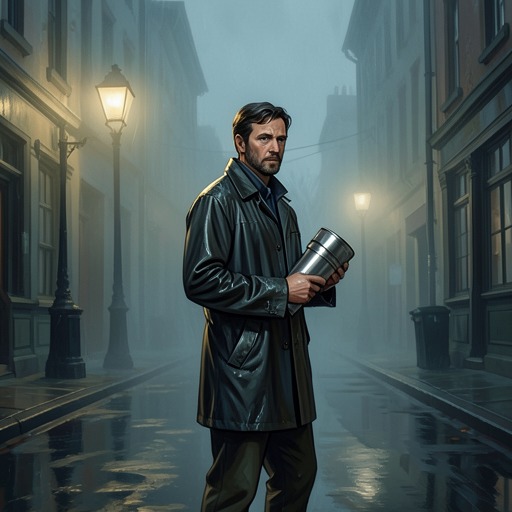
The war’s distance is measured in the objects left behind. After his father’s death, an old army trunk was moved from the spare room to Burke’s basement. It held an army uniform, a folded duffel bag, and orders documenting the movements of a man serving before Burke was born. Burke thinks of that time as simpler and cleaner than the present, a period in which enemies were unmistakable and were the people one killed. This is Burke’s idealized comparison, not an independent account of wartime life.
The Luger and Its Provenance
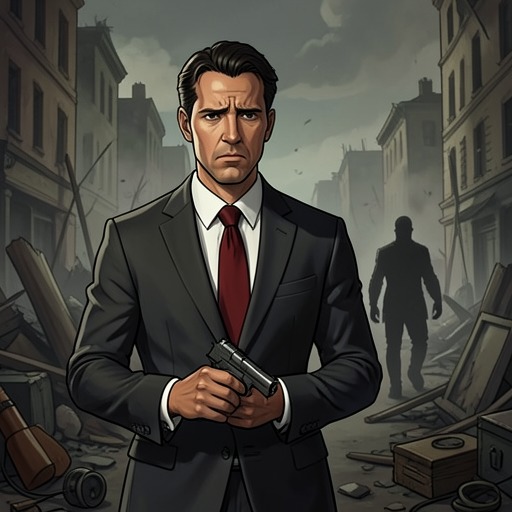
At the bottom of the trunk, beneath the musty olive-drab uniform, lay a Luger pistol in a small, dirty pillowcase, with its clip beside it. Burke’s father had taken the weapon from a dead German officer, who had been shot earlier that day from the other side of a hedgerow; Burke does not know whether his father or someone else fired the shot. During the war, his father transported the pistol in the pillowcase and kept its clip of bullets separately in a sock. He never fired the gun, as far as Burke knows. It remained a trophy of survival and victory rather than a weapon his father had used.
The Past as a Measure of Burke’s Decision
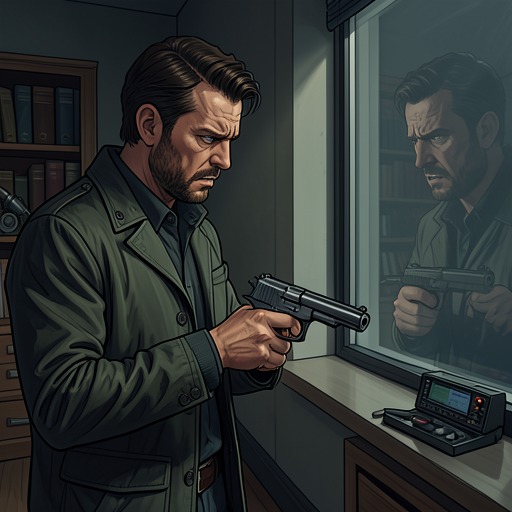
On the day he decides to pursue murder, Burke retrieves the pistol and clip from the trunk and studies them in the small spare room that has become his home office. The clip contains eight bullets. The weapon looks clean and efficient to him, but he has never fired it—or any gun—and is frightened that it might malfunction if he pulls the trigger. It is the only weapon readily available to him, and he believes there is no record of its existence in America.
The family relic thus connects the father’s wartime experience to Burke’s present preparations without making the two identical. His father’s gun came from a battlefield whose enemies Burke imagines as plainly defined; Burke, by contrast, is contemplating murder amid a personal and financial crisis. The Second World War functions in his reasoning as a borrowed precedent for violence, while the pistol’s passage from the old trunk into Burke’s overnight bag makes that inheritance materially immediate.