The child of automation
The AxThe child of automation is Burke Devore’s term for the computer-driven displacement of white-collar workers, a second wave of technological change that reaches beyond factory labor to managers and supervisors. The phrase turns a once-promised benefit of machines into a threat to the people left without work: in Burke’s account, computers make whole layers of employment unnecessary while companies grow stronger and shareholder returns rise.
From factory automation to office displacement
Burke traces the idea back to stories about automation that imagined machines taking over dull, repetitive work. As a child, he wondered what would happen to the people whose jobs disappeared and how they would support themselves. The question returns with force in his account of technological change: the work may be removed, but the workers still have to find a way to live.
He recalls news footage of a robot assembly line in a Japanese automobile factory. The machine resembled a dentist’s X-ray apparatus, jerked from side to side, and welded pieces of cars together. Though it looked clumsy, the announcer described it as more precise and efficient than a human worker. The contrast between awkward appearance and superior performance makes the machine’s advantage concrete, while its isolated motion anticipates the impersonal efficiency Burke associates with computerization.
The earlier wave of automation displaced blue-collar workers by the thousands in the 1950s and 1960s. Strong unions, built up over the preceding decades, fought the changes through long strikes in steel mills, mines, and automobile factories; Burke says those struggles somewhat eased the transition’s pain. In the later period he describes, factory workers are affected more sporadically, when companies move production to Asia or elsewhere in search of cheaper labor and more permissive environmental laws. The newer pressure, he argues, falls higher in the workforce.
The middle manager as organizational conduit
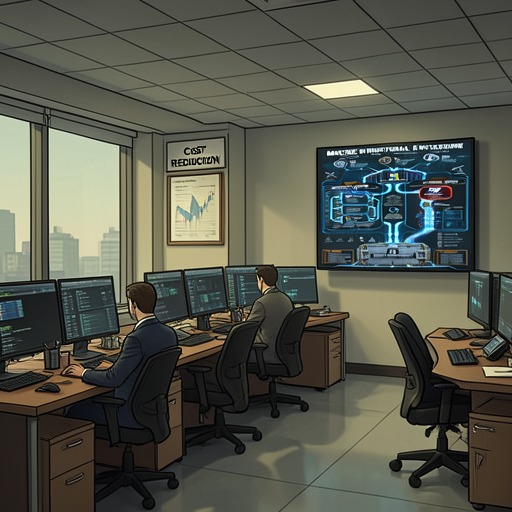
Burke describes a large company as having three levels: executives who represent stockholders and make decisions, workers who produce the goods, and middle managers between them. Middle management has served as the company’s conduit. Managers translate executive orders and requirements for workers, report accomplishments upward, tell suppliers what raw materials are needed, and inform distributors what finished products are available.
The computer changes that arrangement by taking over much of the information flow. Companies still need some people at that level to operate particular tasks and serve the computer, but, in Burke’s account, they no longer need the hundreds or thousands of managers previously required. The change is not simply the replacement of a person at one workstation: it contracts the organizational layer whose purpose was to connect the rest of the company.
Burke presents the transition as a contraction rather than an instant disappearance. Middle management will become far smaller, he says, but will not vanish entirely. A few human beings remain necessary to run a production line and communicate with its workers, leaving a narrow number of posts where managers still stand between the executives and the workforce.
Costs, gains, and competition
The phrase draws attention to an unequal distribution of the change’s costs and benefits. Burke observes that displaced managers may not understand why they were fired when their companies are profitable and doing better than before. His explanation is that computers make them unnecessary, make mergers possible, and allow the companies to become stronger and pay larger dividends with a more generous return on investment. Job loss and corporate success appear together: the reduction in staff is presented not as evidence of failure, but as part of what makes the enterprise more profitable.
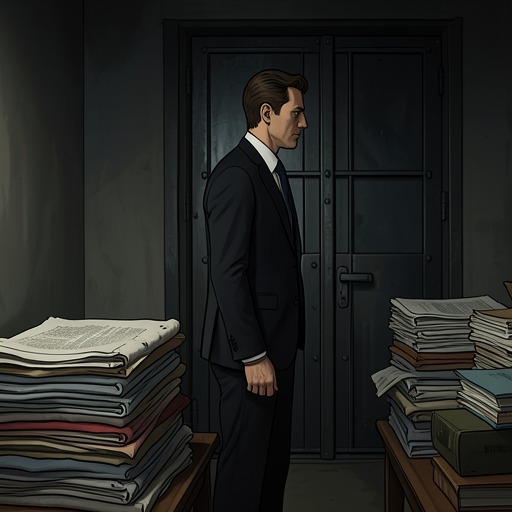
For the people seeking the remaining jobs, technological displacement becomes direct competition. Burke identifies Upton “Ralph” Fallon as the person holding a surviving production-line position for him, and describes six résumés he has pulled from a stack as immediate rivals. He widens the frame beyond these individual competitors to the prospect of a million educated, middle-aged, middle-class people looking for work. In this way, the expression links computerization to a wider fear of scarcity: even where jobs remain, fewer openings must serve a growing population of displaced managers.
Meaning within Burke’s crisis
Burke uses the idea to interpret his own firing and to explain the urgency of his job hunt. His account moves from the robot that welds automobile parts to the computer that reorganizes the company, then from that structural change to his personal need to secure a position before competition intensifies. He treats the continued existence of Fallon’s job as proof that an opening remains, but also as a reason to act quickly.
The expression therefore does more than name a technology. It gives Burke a historical and economic framework for his predicament: automation once displaced workers on the factory floor; its child now threatens the managerial class that had stood above that floor. Yet the framework also turns that broad process into a personal contest. Burke sees the displaced managers not only as victims of the same transformation but as rivals for the few places still available, and his account of automation leads directly to his resolve to find Everett Boyd Dynes.