The murders of Edward and Mrs. Ricks
The AxThe murders of Edward and Mrs. Ricks mark a collapse of Burke Devore’s attempt to carry out a controlled killing: an unexpected confrontation exposes his weapon, and panic turns his planned attack into two murders. Mrs. Ricks’s mistaken accusation brings her husband into the scene, while Burke’s effort to prevent either from alerting others drives the violence forward.
Causes and Background
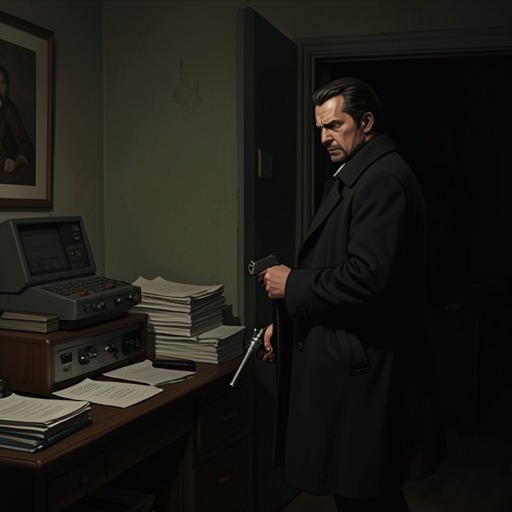
Burke waits in his Voyager near Edward Ricks’s home, watching for a chance to reach his intended target. The raised flag on the mailbox suggests that the mail has not yet been delivered and gives Burke reason to hope Edward may come outside to collect it. A Luger lies beside Burke on the seat, hidden beneath a folded raincoat. After twenty minutes of watching traffic pass along Berkshire Way, Burke sees a gray vehicle stop behind him. The sudden arrival makes him fear that he has been discovered, but the woman who rushes toward his vehicle is Mrs. Ricks, whom he recognizes from an earlier encounter. She believes Burke is pursuing her eighteen-year-old daughter, Junie, and confronts him with the accusation that he is harming her father. Her misunderstanding becomes dangerous when she enters the vehicle and sees the gun beneath the raincoat.
The Confrontation and the Killings
Mrs. Ricks’s protest is not a warning that Burke can easily answer: she mistakes him for a man involved with her daughter and insists that he is harming her father. Burke tries to interrupt her, but his explanation never reaches her. When she sweeps the raincoat aside and sees the Luger, both understand the scene differently at once. Her attempt to reason with him gives way to terror; she screams, retreats from the Voyager, and runs toward her house. Burke knows she has seen his face and the weapon. The waiting, concealment, and hope of a controlled approach have ended in exposure.
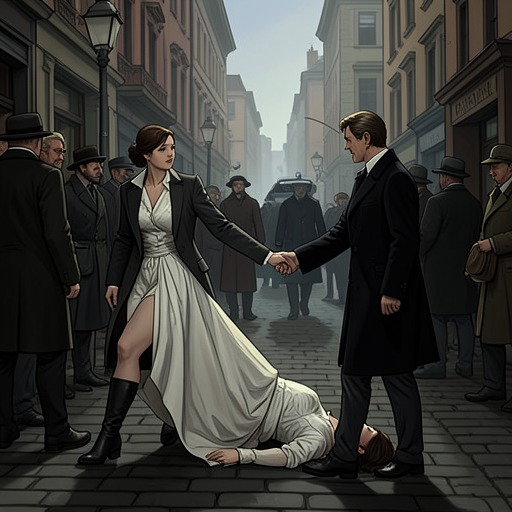
Burke follows her across the road toward the house. Both are out of breath as they angle across the lawn, while Mrs. Ricks calls for Ed. Burke catches up and shoots her. The killing is no longer an attack on the person he had been waiting for, but a desperate attempt to stop an eyewitness from reaching help. Her shout has turned his concealed plan into an immediate pursuit, and his fear of discovery determines what happens next.
Edward Ricks appears in the open doorway. Burke raises the Luger and fires, but the shot strikes the aluminum beside the doorframe. Edward slams the door and runs into the house; Burke, exhausted and intent on preventing him from calling for help, finds the front entrance locked. He goes around to the open garage and moves through the house toward another door. As Burke reaches it, Edward comes running out. They face one another, and Burke shoots him. The two deaths thus arise from a sequence of failed control: Mrs. Ricks interrupts the planned approach, the first shot at Edward misses, and the locked door forces Burke to pursue him through the house.
Consequences and Significance
The second killing leaves a scene sharply unlike the controlled, impersonal operation Burke had expected. Edward’s body is sprawled across the garage threshold, one arm extending back into the house, and Burke registers the blood and disorder as evidence of how badly events have escaped him. His questions about whether anyone else is home turn quickly into resentment toward the absent daughters, whom he blames for Mrs. Ricks’s confusion and for the confrontation that exposed his gun. Even in the immediate aftermath, he recasts his own choices as consequences of other people’s actions.
That rationalization does not restore his composure. Burke is shaking, sweating, and cold; he can barely keep hold of the Luger. He puts it inside his windbreaker and trots away with his left forearm pressed against it. The small, physical effort to secure the weapon follows the larger failure to secure the scene: the killings began with waiting and concealment, but end with disorder, exhaustion, and flight. Mrs. Ricks’s mistaken identification has not simply interrupted Burke’s plan; it has drawn him into a second murder and made the violence he meant to keep controlled unmistakably personal and chaotic.
Narrative Reversal
The episode is filtered through Burke Devore’s first-person account, which makes his fear of exposure part of the event’s immediate pressure. Before he recognizes Mrs. Ricks, the gray vehicle in his mirror summons an imagined scene of condemnation by his family; recognition briefly replaces that fear with bewilderment, but it does not restore control. The contrast is pointed: he has reduced Edward Ricks to the initials EGR while waiting for an opportunity to approach him, yet Mrs. Ricks’s mistaken identification forces Burke into a confrontation he cannot manage as an impersonal operation.
Afterward, Burke assigns blame outward, resenting the absent daughters for the confusion that brought Mrs. Ricks to his vehicle. That account sits against the actions the scene has shown: she discovered the concealed gun, fled, and called for help, while Burke chose to follow and shoot her. The gap between what he does and how he explains the chain of events reveals the episode’s deeper reversal: his effort to remain unseen ends not only in two deaths but in a narration that exposes his need to treat his own decisions as someone else’s fault.