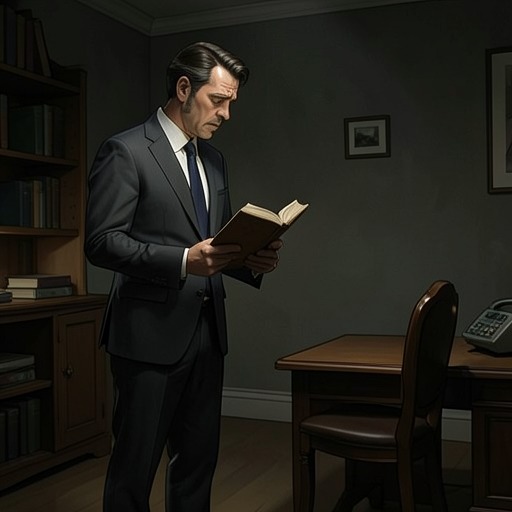
We’re like fleas living on a Dr. Jekyll who’s always in the middle of becoming Mr. Hyde.
The Ax“We’re like fleas living on a Dr. Jekyll who’s always in the middle of becoming Mr. Hyde.” is the narrator’s image for a world in which change is no longer an occasional transition but a permanent condition. It makes human smallness vivid: people live on the surface of something immense, unstable, and continually becoming something else.
From Transitional Technology to Constant Change
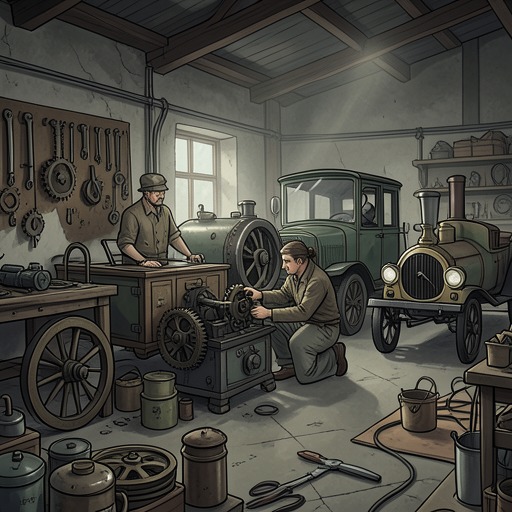
The expression grows out of the narrator’s reflection on the Erie Canal and railroads. A television program had described such systems as “transitional technology,” framing them as cumbersome arrangements left behind once easier methods arrived. The narrator questions that neat division between obsolete and modern: if every technology is transitional, then change is not a passage toward a final, settled state. It is the state itself.
That thought expands from technology to history. Two hundred years earlier, people could believe they would die in the same world in which they were born; in the present, the world “upheaves, constantly.” The flea metaphor condenses this contrast into an image of precarious habitation. The surroundings are not merely changing at a distance: the people living within them must endure the transformation as it happens.
The Image of the Unstable Host
The metaphor’s scale is deliberately unequal. Fleas are minute in comparison with the body they inhabit, while Dr. Jekyll’s continuing transformation into Mr. Hyde makes that body itself unpredictable. The image thus combines vulnerability with instability: people are small enough to be carried along by forces larger than themselves, and those forces have no settled form on which they can rely.
Rather than presenting change as a clean replacement of an old system by a better one, the expression stresses the unsettling middle of transformation. Its host is “always in the middle” of becoming, never simply one stable thing or the other. The result is a compact figure for living without confidence that the world will remain recognizable.
From Diagnosis to Strategy
The metaphor also prepares the narrator’s response to that condition. He recognizes that he cannot alter the circumstances of the world he has been dealt; what remains, in his view, is to play that hand better than anyone else. The movement is from a general diagnosis of upheaval to a personal rule of conduct: if the world cannot be made stable, adaptation and advantage become the available aims.
The closing resolve, “Whatever it takes,” gives that strategy its hard edge. The expression itself describes instability rather than prescribing a particular act, but its placement beside this resolve links the image of a transforming world to the narrator’s willingness to make the best of his circumstances by whatever means he considers necessary.