
Christine and Kenneth: Love Across Distance
The Bad SeedThis thread follows the affectionate marriage between Christine Penmark and Kenneth Penmark as separation, concealed fear, and Christine’s final secret reshape their bond.
increasing Bearing strength in each event
 decreasing
Bearing strength in each eventdecreasingA Courtship Built on Trust
An Intimate Beginning
Recognition and courtship
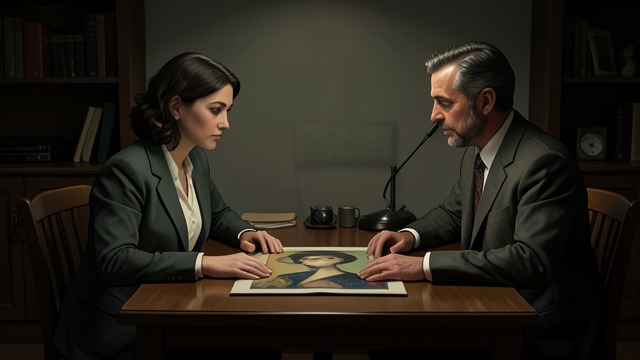
Christine meets Kenneth Penmark at a dinner arranged by a family friend. Their first conversation turns to art, and she leaves believing she has made little impression. Kenneth returns the next day, buys the Modigliani drawing she admired, and makes clear that his interest in her is serious.
Their courtship moves quickly from thoughtful conversation to shared confidence. Christine remembers his playful proposal through the drawing and the kiss he gives her before departing on duty. His direct affection answers the loneliness she had known while caring for her ill mother.
A marriage of reliance
Christine later considers the marriage deeply successful. Kenneth is not merely her husband but the person whose presence makes her feel secure and understood. That mutual reliance gives their later separation emotional weight: when trouble gathers around Rhoda, Christine longs for his judgment while also fearing what the truth may do to him.
Summer Separation
The Absent Partner
Duty and domestic life
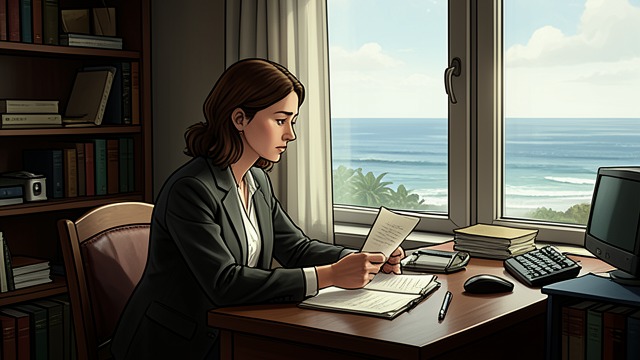
Kenneth leaves to survey port facilities along the western coast of South America, expecting to be away for the summer. Christine accepts that his work matters to his career, even though she misses him. The couple had considered whether she might accompany him, but Rhoda’s needs make leaving the child with anyone else seem impossible.
At home, Christine keeps their connection alive through letters. She reads Kenneth’s news closely, takes comfort in his affection, and writes back with domestic observations and reassurances. His physical absence becomes a quiet condition of her life just as the picnic tragedy begins to destabilize it.
The burden of silence
When Christine first suspects that Rhoda may have caused Claude’s death, she drafts a long letter describing her fear but decides not to send it. She does not want to interfere with Kenneth’s work or burden him with uncertainty. Her choice preserves the appearance of their usual partnership while forcing her to face the crisis alone.
Letters That Cannot Be Sent
Writing Toward a Husband
Confession at a distance
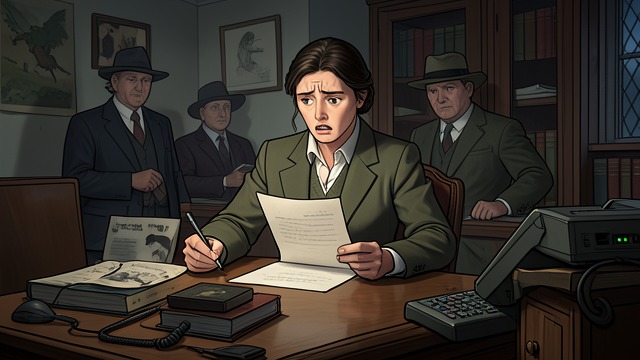
Christine writes to Kenneth about Claude’s drowning, the Fern school’s decision to dismiss Rhoda, and the earlier death of Clara Post. She does not claim certainty; instead, she admits that she cannot tell whether the troubling incidents are connected. The letter becomes a place where she can state suspicions she is not yet ready to speak aloud.
As the evidence accumulates, she writes again about finding the medal and questioning Rhoda. She imagines Kenneth holding her and dismissing her fears as excessive, yet she does not mail the letters. She wants both his reassurance and the freedom to keep him from knowing what she is beginning to suspect.
An uneven partnership
The unsent letters reveal how affection and concealment now coexist in the marriage. Christine still relies on Kenneth’s love as a source of comfort, but she has made herself the sole judge of what he may bear. Her silence isolates her and turns marital trust into something she remembers rather than actively shares.
A Secret Inheritance
The Past Enters the Marriage
A hidden identity
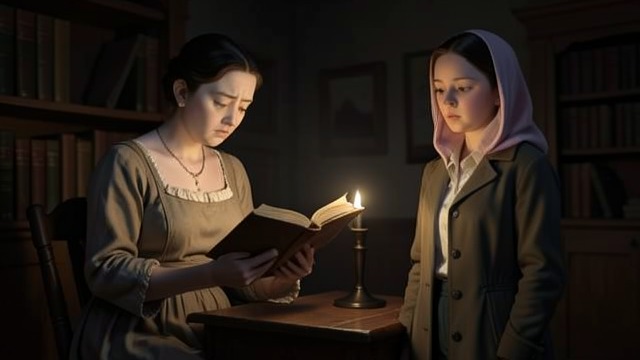
Christine learns through Reginald Tasker’s case material that she is the surviving daughter of Bessie Denker, a notorious murderer. Her discovery changes the meaning she assigns to Rhoda’s behavior. She begins to believe that she carried an inherited criminal disposition into her marriage and passed it to their daughter.
In another unsent letter, Christine tells Kenneth that his family may have sensed something wrong about her, though their objections to the marriage had been based on prejudice rather than knowledge. She presents herself as responsible for the danger now surrounding Rhoda and suggests that Kenneth should leave them and build a different life.
Love turned into self-accusation
Christine’s devotion to Kenneth persists, but it no longer gives her comfort. She sees herself as a source of ruin for him and believes he deserves a future untouched by the family’s secret. The affection that once made marriage a refuge now feeds her determination to take the burden upon herself without asking him to share it.
The Unanswered Farewell
A Marriage Left Unexplained
The last message
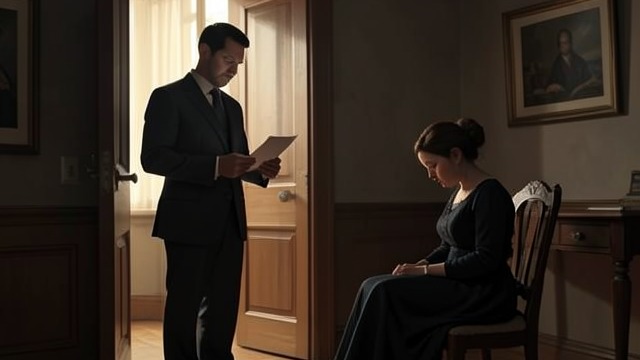
Kenneth’s final letter reaches Christine shortly before she acts. It says his work is progressing and that he hopes to return around mid-August. He sends his love and looks forward to seeing his wife and child. Christine reads the message repeatedly, knowing it will be her last contact with him, but she does not answer or reveal why she has decided on suicide.
After the funeral, Kenneth asks Monica Breedlove whether Christine gave any indication of what had happened. He is convinced there must have been a reason, and his questions show how little of Christine’s private crisis reached him. The letters she withheld leave him grieving a wife whose final decisions he cannot explain.
Love without closure
Kenneth’s return comes too late to restore the partnership Christine believed she had to protect from the truth. He has Rhoda with him, but no clear account of the danger that shaped Christine’s final days. Their marriage ends not through a loss of affection, but through the secrecy Christine thought was an act of love.
Several years before the main events, when Christine meets Kenneth in New York
Early June, as Kenneth begins his South American assignment
Mid-June, after Christine finds the medal and questions Rhoda
After Independence Day, when Christine identifies Bessie Denker as her birth mother
Early August, after Christine’s death and Kenneth’s return
