Christine Penmark discovers her identity as Bessie Denker’s daughter
The Bad SeedChristine Penmark discovers her identity as Bessie Denker’s daughter while reading a criminal case history that gradually turns from an account of a notorious murderer into a record of her own concealed childhood. The recognition links Christine to the one surviving child of Bessie’s family and transforms her efforts to understand Rhoda: what had seemed like a baffling resemblance now appears, to Christine, to be an inheritance passing between generations. The revelation is both personal and interpretive, but the novel leaves its biological explanation within the characters’ uncertain debate rather than establishing it as scientific fact.
The Case Files and a Growing Recognition
Christine’s discovery develops through the files Reginald Tasker has lent her. She has been reading criminal histories because she is trying to make sense of Rhoda’s actions and decide what responsibility, if any, should follow from them. Her questions range from whether Rhoda is sane to whether Christine should report her to the authorities. She fears that reporting her daughter would bring institutional consequences and public exposure, while keeping silent leaves unresolved the danger Rhoda may pose to others. The case files therefore offer both a possible framework for understanding Rhoda and a source of mounting anxiety.
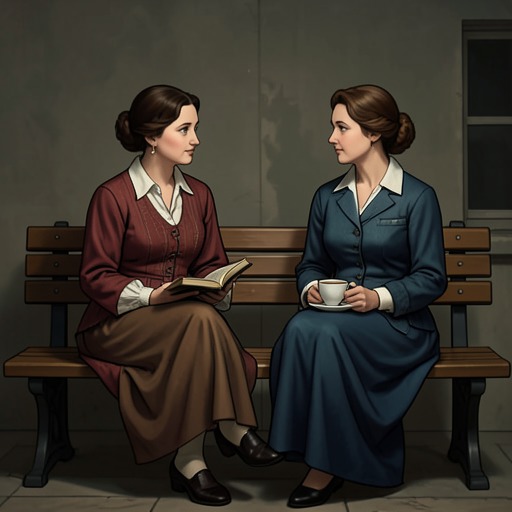
In one folder, Christine encounters a case titled The Unparalleled Bessie Denker. The name troubles her with a familiarity she cannot explain. The account identifies Bessie as Bessie Schober, born in Iowa in 1882, and relates that deaths and suspected violence had surrounded her family from her childhood. The record attributes her brother’s death to arsenic Bessie placed on his bread and butter when she was seven, mistaking it for sugar; her younger sister drowned in a well. It also recounts the later, unresolved shooting of her grandfather, who had been alone with eleven-year-old Bessie. Christine reads these details with unease, then tries to put the file aside.
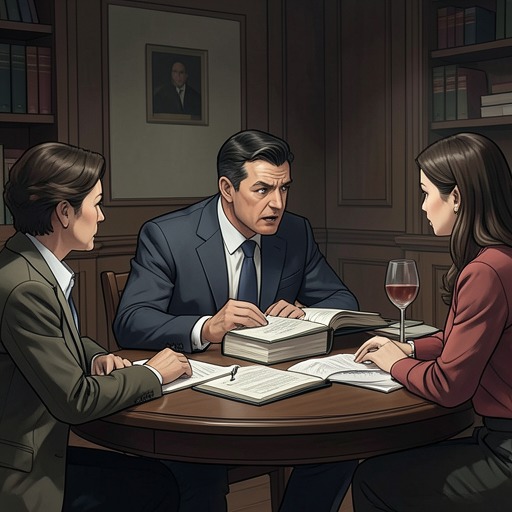
The names in the history continue to return even after she decides to stop reading. Christine finds herself recalling members of the Denker family, including children whose names she believes she already knows. Her recognition seems to precede her ability to explain it. At a party, she tells Reginald that the case gives her the feeling of having encountered it before, although she cannot say why. His acknowledgment that the sensation is familiar to him does not resolve her uncertainty. Instead, the conversation sharpens her attention to the details that might connect the case to her own past.
Ada Gustafson and the Identity Revealed
Christine interrupts Reginald’s account to ask about Ada Gustafson. He explains that Ada was a poor relation who came to live with Bessie’s family late in the sequence of events. She worked at the farm, helped with the household and children, and observed Bessie closely. Reginald describes her as the person whose observations eventually helped bring Bessie down: Bessie was tried and executed for Ada’s murder, a crime the record could establish more readily than some of the other family deaths.
As Reginald speaks, Christine recalls Ada dimly from her own childhood. She remembers that her family did not like Ada and that Ada had a dog named Spot. Christine also remembers the children’s different relationships with the dog, including that Spot never befriended Peter. These memories are not detached historical knowledge: they place Christine inside the family she has been reading about. Her questions become more direct, culminating in asking the name of Bessie’s youngest child.
Reginald answers that the child was named Christine, like her. He adds that the girl was blond like her father and that Christine’s own father, Richard Bravo, had met her and written about her plight. His essay, Reginald says, had been among Richard’s finest and was still occasionally reprinted. The coincidence of the name, the physical description, Christine’s childhood memories, and her father’s connection to the case converge into recognition. Christine is the surviving youngest Denker child described in the file; the protected identity that had made the child’s later life unknowable to the case’s readers is her own.
From Case History to Personal Past
The account Christine reads closes by saying that, when Bessie stood trial, the youngest child was the only Denker family member still alive. Its author speculates that the girl was adopted by a respectable family, that her new identity had been carefully guarded, and that her later life was unknown. The case history treats the child as an unresolved fate, inviting readers to wonder whether she remembered or understood what her mother had done. For Christine, those unanswered questions collapse into the present: she is not an observer trying to imagine the child’s future but the person whose identity the account has concealed.
Her response is immediate and disorienting. She drops the folder, lies down, and weeps as she recognizes herself in the history. The revelation does not merely add a forgotten branch to her family tree. It makes her own adoption of a new identity part of the story she has been reading, and it connects her father’s journalism to the account of her earliest life. Richard Bravo had studied Bessie’s trial and written about the child’s plight without, as far as the scene establishes, making the truth plain to Christine. The case file’s distance and speculation are overturned by the person it had rendered unknowable.
Inheritance, Guilt, and Uncertainty
After learning who she is, Christine interprets Rhoda’s behavior through the newly revealed family history. She concludes that Rhoda is not responsible for what she has done and that Christine herself is guilty because she believes she passed Bessie’s inheritance to her daughter. This belief intensifies her existing crisis: she has already been weighing her duty to Rhoda against her duty to society, and now she experiences the danger as something transmitted through her own line. The discovery thus alters not only her account of the past but her understanding of what she owes her child and the people Rhoda may harm.
Christine seeks reassurance from Reginald by asking whether a criminal disposition could pass between generations. He reasons that such a disposition might be the result of an absence in a person from the beginning rather than a quality acquired through experience, and compares its possible transmission with other inherited conditions. Earlier, he had argued that environment might modify the outward expression of such people but could not change their underlying nature. Those claims help explain why Christine reads the Denker history as a pattern recurring in Rhoda, but they remain Reginald’s views within the novel. When Christine asks what psychiatrists think, he points out that experts have disagreed, rather than supplying a single authoritative answer.
That uncertainty matters to the event’s significance. The discovery gives Christine a compelling explanation for Rhoda’s conduct, and the resemblance between grandmother and granddaughter makes hereditary evil feel to her like a revealed fact. Yet the evidence also shows how much of that conclusion is an interpretation made under pressure: Christine is frightened, burdened by guilt, and searching for a way to understand her child. The case history changes what she knows about herself, but it does not settle the competing questions of inheritance, environment, responsibility, or what action she should take.