Aeron and Neith
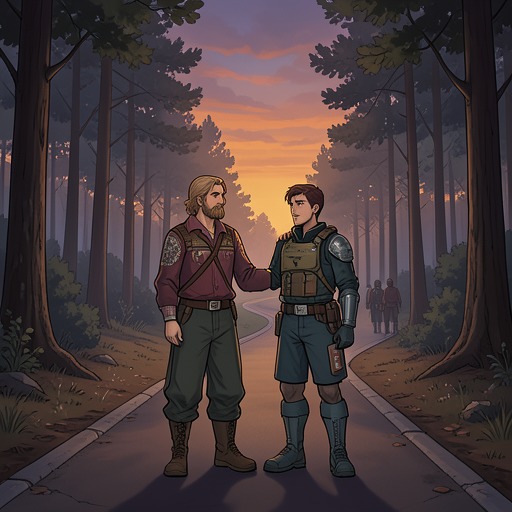
The Ballad of the Last DragonAeron and Neith are bound by a long friendship that begins in childhood and becomes one of the quiet emotional foundations of Aeron’s dragon quest. Their relationship survives an abandoned betrothal arrangement, years of intermittent letters, separation, and the dangers of the expedition. Neith’s decision to protect Aeron gives the friendship practical force, while Aeron’s final call for her reveals how completely he regards her as a trusted refuge and a piece of home.
Childhood Connection and the Failed Betrothal
Neith first knew Aeron through an arrangement proposed by his family when they were children. His family offered her a betrothal, but not to Aeron himself: their preference was Aeron’s older brother, the heir to the Fowler fortune. Neith presents the episode with irony, explaining that she was not considered worthy of the firstborn. The rejected match nevertheless created the circumstances for a different and more enduring bond. Instead of becoming marriage partners, Neith and Aeron became friends.
That origin gives their relationship a distinctive contrast. The Fowler family’s calculation is governed by inheritance and status, whereas the connection that actually lasts is built through personal attention. The arrangement fails as a social alliance, but its failure leaves room for a friendship neither family strategy nor rank can fully define.
Letters, Distance, and Mutual Recognition
After the betrothal proposal came to nothing, Aeron and Neith continued to exchange letters every few months, writing more often as Neith grew older and before she left. Their correspondence maintained a connection across distance and gave Neith a friend she urgently needed. The friendship is therefore not presented as a brief childhood attachment revived by coincidence; it is a relationship deliberately sustained over years through repeated acts of communication.
Neith remembers Aeron as someone who made life feel lighter. Her grief after his death is correspondingly restrained but pervasive: it enters ordinary conversation around the fire as regret and as the weight of memories that cannot be repaired. The loss is not only the death of an expedition companion. It is the disappearance of a person whose presence had repeatedly made hardship easier to bear.
Protection as the Friendship’s Practical Form
Aeron’s letter announcing his plan to hire a crew to hunt a dragon prompts Neith to ask Cadoc to watch for him. She already knows Aeron well enough to recognize the danger in his grand adventure, and she intends to prevent him from getting himself killed at the first step. At the port, she waits at the Rutting Goose in case he appears, even though she had not planned to join Cadoc aboard the Jaunty Loon.
Her protective purpose becomes entangled with the expedition’s chance formation. Captain Torrick is known for hiring anyone from the ports willing to travel, a practice that does not promise the best crew. Cadoc happens to abandon his own last-minute travel plans and is present when Aeron arrives. Once Cadoc explains the details, Neith cannot let Aeron leave without protection. Her eventual involvement thus grows from loyalty rather than ambition: the dragon quest becomes the setting in which an old friendship turns into direct responsibility.
Neith’s protection is also reciprocal in emotional terms. She does not merely remember Aeron from afar or mourn him after the fact; she acts on knowledge of his character and on a long-standing sense that he needs someone watching over him. The friendship becomes visible through what she is willing to risk and through the care she offers before the expedition has even properly begun.
Aeron’s Last Trust
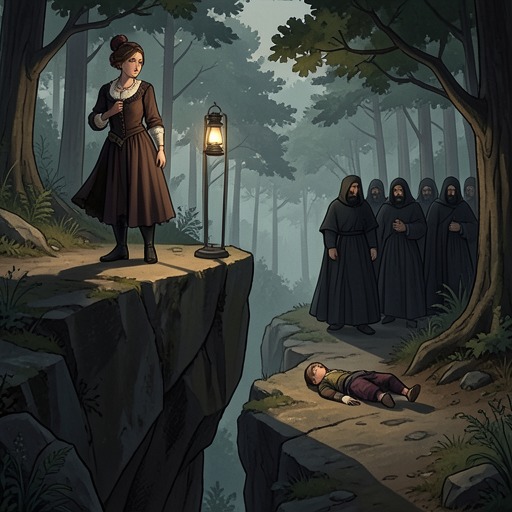
After Aeron’s death, Neith learns that he called her name in his final moments. His words identify her as his last hope and as the person he trusted to take him home while death was claiming him. This revelation transforms the meaning of her earlier protectiveness. What she understood as a duty to keep him safe is confirmed as something Aeron himself recognized as safety.
When told that Aeron loved her, Neith answers that she knows. The response is not framed as a new romantic revelation but as an acknowledgment of a love already understood within their friendship. Aeron’s final dependence on her, and Neith’s broken acceptance of it, establish a bond grounded in familiarity, loyalty, and home rather than in the failed marriage arrangement of their childhood.
The scene also makes their relationship a central emotional lens through which Aeron’s death is interpreted. His last thought is not connected to treasure, glory, or the dragon hunt, but to Neith. She becomes the person associated with return, trust, and the possibility of being brought home. In this sense, their friendship outlasts the quest’s physical failure: even after Aeron can no longer continue, his final act of recognition gives Neith a lasting place in the meaning of his life.