Aeron’s Ballad
The Ballad of the Last DragonAeron’s Ballad is the central artistic record of Aeron Fowler’s quest, created and performed by Sylvaine Abelan as the expedition travels from tavern to tavern. It begins as an ambition to write an epic account of pursuing a dragon, develops into a public campaign for Aeron’s fame, and ultimately becomes the form through which the company says farewell to him. The ballad does not merely describe Aeron’s deeds; it gives them shape, scale, and permanence, turning uncertain episodes and painful memories into a heroic story that can outlive the man himself.
Origin and Purpose
Sylvaine first imagines the ballad while the company is still on the road, after Jaromir’s abrupt movement leaves her thinking about more pleasant prospects. She wants to write the most epic ballad of pursuing a dragon and hopes that the journey may provide an adventure of her own. Aeron’s recruitment of Jaromir also gives the project an immediate social purpose. Aeron explains that a noticeboard advertisement brought Jaromir to the expedition just before he might have left for Kalinia, and he presents Sylvaine’s presence as a crucial part of the company: a real bard who can sing of their exploits.
The ballad therefore begins as both artistic aspiration and practical service. Sylvaine can make the expedition memorable while discovering her own place within it. When Aeron is recovering and the company is delayed for three days, she decides that composing its first section will be her task. She rejects the plain version of the quest’s origin—Aeron acquiring it through a merchant’s sale—as insufficiently heroic, even though she suspects the merchant did not understand the map’s value and that Aeron’s own telling makes him sound as if he had been swindled. For Sylvaine, this discrepancy demonstrates the power of narrative: a story can shape heroes, hopes, and futures.
Composition and Performance
The ballad grows through repeated performance rather than appearing fully formed. Sylvaine has not finished it when she first takes advantage of a tavern audience, but she understands the room instinctively. She adjusts her cap, readies her lute, and uses effortless plucking to establish authority before announcing Aeron as a man who shines brighter than the sun, whose year in darkness has made dawn more precious. Her opening portrait combines courage, honor, physical appeal, and theatrical exaggeration, presenting Aeron less as an ordinary adventurer than as a figure already marked for legend.
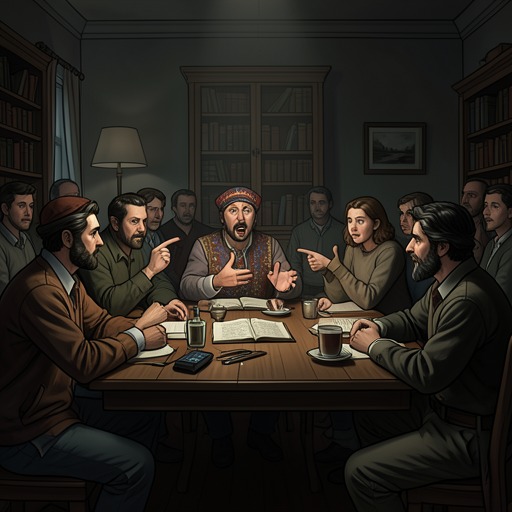
Its formal structure joins song, spoken narration, gesture, and audience management. Sylvaine introduces the quest as a perilous journey involving villains, danger, and tests of character, then shifts into spoken word against a minor-key accompaniment. The tale is explicitly too long for a single sitting, so she offers each tavern a portion and promises further installments. The audience is not passive: its cheers, laughter, drinks, and attention determine when she can advance from introductory spectacle to narrative detail. The ballad is thus serial, adaptive, and communal, changing as the company moves through the world.
Part one recounts the company’s secluded camp and the creatures drawn toward the travelers in the shadowy forest. Its climax is the defeat of the monstrous beetles and the destruction of their entire nest with the help of Aeron’s loyal crew. The performance costs Sylvaine physically: sweat runs into her eyes, new calluses ache in her fingers, and her neck burns. Yet the exertion confirms her vocation. Playing allows her to enter the role of storyteller completely, while the response of the audience turns private composition into public memory.
The recurring refrain gives the work its heroic center. Sylvaine sings that Aeron has “the heart of a warrior and the mercy of a saint,” that his warmth rivals the sun and drives darkness away, and that evil, whether human or monstrous, will fall before his sword. The lines make mercy as important as martial power. Aeron is not defined only by the enemies he defeats; he is praised as a source of warmth and moral protection. The repeated wording also makes the song memorable, allowing listeners to recognize and anticipate the hero’s attributes as the campaign spreads.
The Ballad Campaign and Aeron’s Disguise
The performances become a coordinated campaign to manufacture the public image of a hero. Before revealing the newest material, Sylvaine repeats a prelude that has succeeded in an earlier tavern. Jaromir has even encouraged the device, accepting some embarrassment if it will earn Aeron goodwill for rescuing his cursed body. This detail shows that the ballad is not solely Sylvaine’s private art: the company contributes to its staging, understands its political and social usefulness, and accepts calculated absurdity as part of the work.
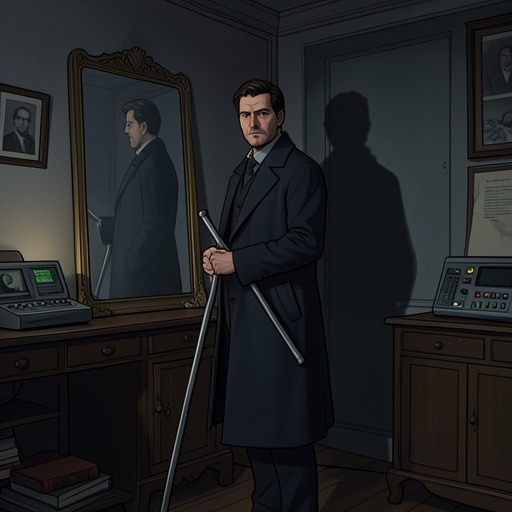
The most elaborate performances combine the song with impersonation. Cadoc enters wearing Aeron’s armor, polished until it shines like the equipment of a fierce guardian descended from the Welkin. Because the armor cannot be hidden beneath a helm in a crowded tavern, Cadoc’s face is visible, and Jaromir may also appear in the role on other occasions. Sylvaine deliberately reasons that conflicting eyewitness accounts will help produce a mythic hero, especially when the witnesses are drunk. The ballad therefore works through controlled uncertainty: Aeron’s identity is distributed across armor, voices, bodies, and incompatible memories.
Cadoc’s performance is flamboyant, culminating in an offer to buy the room a round of drinks. The cheers that follow are treated as nearly as important as the verses themselves. Generosity, spectacle, alcohol, and narrative reinforce one another, creating a shared emotional experience in which strangers can participate in Aeron’s reputation. Later, in Greenfell at the Golden Selkie, Jaromir takes over the display in Aeron’s chest plate after the rest of the armor proves too small. He moves through the room with an authority and friendliness rarely shown in public, quietly amusing men at a gaming table and offering to pay for everyone’s drinks. The crowd cries Aeron’s name while showering Jaromir with admiration, proving that the impersonation has successfully separated the heroic identity from the man who originally bore it.
Jaromir’s version of the role differs from Cadoc’s. Cadoc seizes attention through flair, whereas Jaromir creates the impression of modesty and humility while subtly orchestrating the room’s admiration. Sylvaine recognizes his quiet charm and his ability to make the desired image appear spontaneous. The ballad’s hero is therefore assembled through contrasting performances: bold theatricality, controlled generosity, physical presence, and the audience’s willingness to believe.
Completion, Loss, and Farewell
As the journey continues, the ballad becomes inseparable from Sylvaine’s commitment to Aeron. Even when little remains to give, she concludes that Aeron deserves whatever she can offer. The decisive recognition is artistic rather than romantic or political: his ballad will be finished, and she will be the bard who writes it. She identifies herself as a storyteller, and Aeron’s story as the work that confirms what she is. The project becomes an answer to uncertainty, grief, and the limits of personal possession.
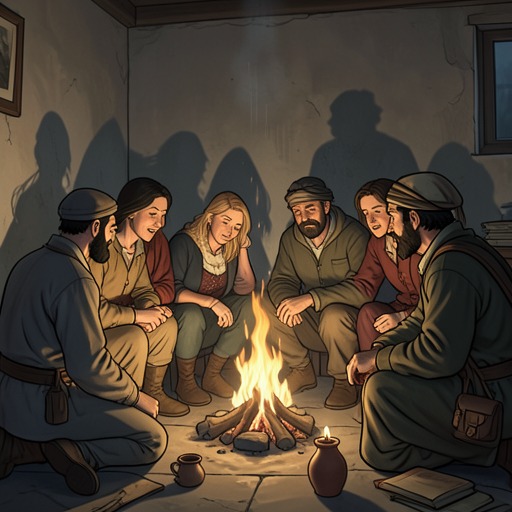
The completed performance carries the title “The Ballad of the Last Dragon” and “The Ballad of Sir Aeron.” Its recurring tune has accompanied the company in every tavern, in the privacy of the inns where Sylvaine and Jaromir pay to sleep, and beside their campfires. Repetition gives the song a ritual quality. Each performance renews Aeron’s presence, while the familiar melody binds separate places and stages of the expedition into one continuing remembrance.
At the final farewell, the seasonal setting changes the emotional meaning of the song. First Fruits Day and summer have passed; burgundy fabric and pumpkins announce the approaching Harvest Day, while warmer fires and flowing drinks create a sense of belonging rather than simple departure. Sylvaine begins the familiar tune, now explicitly naming it as the ballad of the last dragon and of Sir Aeron. The company’s material relics surround the performance: Cadoc places Aeron’s scorched chest plate on the table, tracing the grooves along its design, while Neith wears the dragon tooth around her neck. Jaromir gives Sylvaine a soft smile and a nod, confirming that the whole company shares this moment of completion.
The ending refuses to close the quest entirely. After recounting the journey, Sylvaine sings that they are not finished and that adventures remain beyond the present account. The narrative of Aeron can end, but storytelling continues, carrying his name into future journeys and regional variations. The surviving song is therefore both memorial and opening: a farewell to the dead hero and an invitation for later performances to extend, alter, and renew his legend.
Form and Significance
Aeron’s Ballad transforms episodic adventure into a coherent heroic arc. The company’s encounters may be difficult, comic, embarrassing, or morally complicated, but Sylvaine selects a pattern of peril, courage, loyalty, and deliverance. The song’s heroic language does not simply report what happened; it interprets events for listeners who were not there. Aeron’s uncertain quest becomes a story of destiny, his companions become loyal witnesses, and the expedition becomes material for communal belief.
The work also exposes the mechanics of legend-making. Sylvaine knowingly omits details that would weaken Aeron’s heroic image, adapts references to the audience, and learns that talk of the goddess or her guardians can alienate listeners in Greenfell. She changes her speech accordingly, presenting Aeron as the greatest hero of the age, descended from gods, unmatched in virility, and boundlessly generous. The exaggerations are not accidental distortions; they are part of her craft. By adjusting the performance to each crowd, she ensures that the story survives contact with different local expectations.
At the same time, the ballad remains grounded in witnesses and objects. Sylvaine rode beside Aeron and saw his courage directly. She remembers the beetle battle, the armor, the dragon tooth, the campfire, and the gestures of the companions who helped stage his identity. The song’s authority comes from this mixture of firsthand testimony and deliberate invention. It is emotionally true because it preserves what the company needs to remember, even when its public version makes Aeron brighter, purer, and more invincible than any human life could be.
Its deepest significance lies in the choice to continue telling the story after Aeron is gone. The company may not have lost him directly to a dragon, yet his absence feels like a dragon-shaped loss because words and memories kept him alive throughout the quest. The final performance makes that persistence visible: the scorched armor stands in for the body, the dragon tooth for the completed encounter, and the repeated melody for the companionship that remains. Aeron’s Ballad grants Aeron artistic immortality not by denying death, but by giving grief a form that can be carried from one audience to the next.