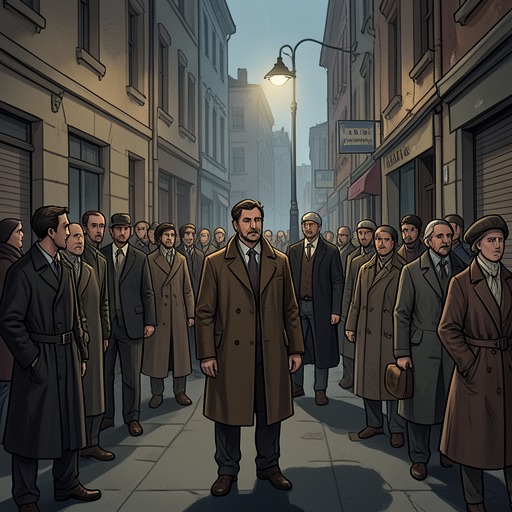
Aeron’s Death in the Mercenary Ambush
The Ballad of the Last DragonAeron’s Death in the Mercenary Ambush is the decisive rupture in the expedition: Aeron’s life is lost to mercenary violence, while his last appeal to Jaromir gives the death an intimate ethical force. The event does not end with the fallen man alone. It leaves the survivors watching pain they cannot undo, and it turns Aeron’s final words into a charge carried by those who remain.
The Ambush and the Fatal Reversal
The evidence presents Aeron’s death as the outcome of a mercenary ambush rather than a peaceful or expected ending. Its defining movement is a reversal from shared danger and companionship to helpless witness. For the surviving members of Aeron Fowler’s crew, the immediate value at stake is life itself; once the ambush claims Aeron, that value shifts irreversibly into mourning and obligation.
The aftermath is marked less by triumph than by the absence of agency. The witness describes the torment of seeing another person hurt without being able to take the pain away, becoming a bystander condemned to watch while the injured person suffers. That response gives the death its tragic shape: the violence is physical, but its lasting wound is the survivors’ knowledge that courage and loyalty could not restore their companion.
Aeron’s Final Appeal
Aeron’s last moments acquire particular significance through his invocation of Jaromir. He says Jaromir’s name as though Jaromir were his final hope, the one person he could trust to take him home even as death overtook him. The appeal makes Jaromir’s relationship with Aeron more than an ordinary adventure partnership. At the threshold between life and death, Aeron places his remaining trust in a friend and gives Jaromir a responsibility that survives him.
The request also changes the meaning of home. Aeron’s death occurs amid mercenary violence, but his final concern is not framed as vengeance or victory; it is the hope of being taken home. The contrast makes the ambush feel like a violent interruption of belonging, while Jaromir becomes the living bearer of Aeron’s last wish. Death removes Aeron’s ability to act, but his words continue to direct the actions and emotions of the survivors.
Jaromir and Neith Confront the Loss
The event is later disclosed through an emotionally restrained exchange with Neith. Jaromir is physically present but withdrawn, his normally attentive gaze replaced by a distant, glazed look. His silence makes grief visible as a condition of stunned endurance rather than as an articulated speech. The surrounding practical activity—Neith stitching Jaromir’s torn pants back together—continues while the emotional consequences of the ambush remain unresolved.
When Neith is told that Aeron said her name in his last moments, she identifies him simply as an old friend. Her reply confirms a deep prior bond without explaining it away. The brevity matters: Aeron’s death exposes a connection that had not been fully narrated, yet Neith refuses either sentimental elaboration or easy closure. Her still hands and refusal to look up communicate the force of recognition more sharply than an extended account might have done.
Consequences for the Survivors
Aeron’s death leaves the living with different forms of responsibility. Jaromir receives the direct burden of Aeron’s final trust and the implied duty to bring him home. Neith must confront the fact that Aeron remembered her at the point of death, revealing that their friendship remained emotionally present even when she was not beside him. The broader crew inherits a loss that cannot be reduced to the disappearance of a fighter or expedition leader.
The death therefore becomes a hinge between action and remembrance. Before the ambush, Aeron can pursue objectives alongside his companions; afterward, his companions must interpret what he left behind and decide how to carry it forward. The event’s consequence is not only bereavement but a redistribution of agency: Aeron can no longer protect, choose, or speak, while Jaromir, Neith, and the others must act in the space his absence creates.
Narrative and Thematic Significance
As a plot event, Aeron’s Death in the Mercenary Ambush combines the quest’s external danger with an intimate revelation of trust. The mercenaries produce the violent reversal, but Aeron’s final naming of Jaromir and Neith gives the death its enduring narrative meaning. The ambush destroys a body; the last words preserve relationships that the violence cannot entirely erase.
The event also defines heroism through dependence rather than invulnerability. Aeron’s final strength lies not in escaping death but in placing trust in those who will survive him. The survivors’ grief similarly becomes an ethical encounter: they are compelled to respond to a person who can no longer ask anything of them except through the memory of what he said. In that sense, Aeron’s death is both an ending and a summons, converting private loss into the responsibility to remember, return, and continue.