Dragon-fire formula
The Ballad of the Last DragonThe Dragon-fire formula is an alchemical recipe concealed in the Dragon’s Cave and intended to make the cave’s artificial dragon-fire mechanism function. It is both a practical weapon and the material key to understanding the cave’s false legend: the danger surrounding the treasure is not the breath of a living dragon, but a designed reaction between the formula’s mixture and steam sent through hidden pipes. Sylvaine Abelan’s decision to burn the parchment prevents that knowledge from passing into another set of hands and turns the object into a test of what the expedition is willing to inherit.
Origin and Function
The formula is found among the papers of the man who spent three years acting as “the dragon” while his lungs slowly failed. His letter explains that he deliberately made the Dragon Lair Map difficult to translate and created trials that few people survived. The formula was kept in the top-right-hand drawer of his desk, presented as part of the reward for reaching the end of the trials rather than as an ordinary piece of treasure.
Its stated purpose is explicitly military as well as theatrical. The dying maker says that he could have sold the formula to the highest-paying nation seeking an incendiary weapon at sea, but chose not to do so because he had little use for wealth he could not spend before his death. That refusal does not make the formula harmless. It establishes its destructive potential while also showing that the cave’s designer regarded danger, spectacle, and legacy as more meaningful than responsible concealment.
The mechanism depends on a precise physical interaction. The alchemical mixture reacts with steam released through the cave’s pipes, igniting anyone who ventures into the Dragon’s Cave. The formula therefore completes the cave’s system of traps: the trials, hidden passages, triggers, and treasure are joined to a device capable of burning intruders alive. The supposed supernatural threat is consequently explained as engineered violence, though its effect on those entering the cave remains terrifyingly real.
Discovery and Revelation
After surviving the Tempest Trials, Sylvaine and Jaromir discover the letter and the surrounding hoard. The letter presents the successful survivors with the wealth and invites them to keep the tradition alive, while also explaining that the maker has no heirs and no interest in leaving his fortune to a kingdom that denies him a title without noble blood. He claims to have forged his own title and a legacy that no one will soon forget. The formula is part of that self-created legacy: a lethal secret preserved beside the story that gives it meaning.
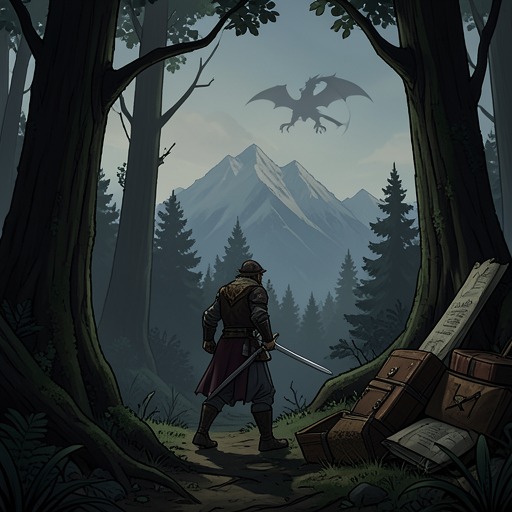
The discovery changes the expedition’s understanding of The Dragon. What first appears to be the lair of a legendary creature is revealed as the constructed domain of a dying man who used maps, puzzles, traps, steam, and fire to manufacture the experience of confronting a dragon. The formula is the clearest physical proof of that deception. It exposes the gap between the myth people pursue and the mortal mechanism beneath it, while preserving the danger that made the myth persuasive.
Destruction by Sylvaine Abelan
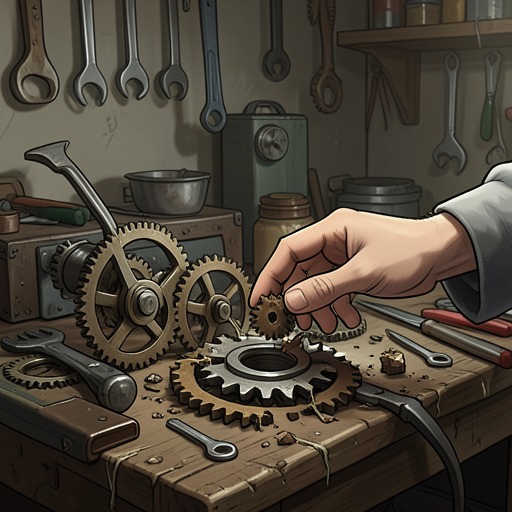
Jaromir examines the map showing the underground tunnels, exits, secret passages, and methods for avoiding traps and triggers. Sylvaine, meanwhile, searches the drawers for more stories and perhaps a real name behind the moniker of The Dragon. Instead, she finds a messy page of handwriting, numbers, and symbols that she cannot understand. She recognizes it as the Dragon-fire formula and immediately wants to burn it, fearing that no good can come from preserving it.
Jaromir urges her to find the others, cutting through her thoughts at the moment when the parchment’s future is still undecided. Sylvaine holds the formula over the flame of a half-melted candle. Its edges glow, curl, and disintegrate; she then drops it onto the desk and watches the fire consume the alchemical instructions. The act is deliberate rather than accidental. She knows she is destroying something that is not hers, and recognizes that the page is also a memory belonging to someone else, yet she cannot regret removing the formula from the world.
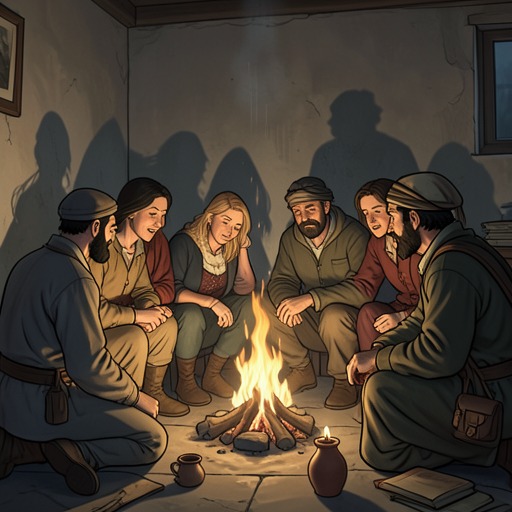
The destruction separates the useful inheritance from the dangerous one. The expedition keeps the gold, an ancient elven prayer stone, and the means to leave by the tunnels, but refuses to preserve the device that enabled The Dragon to send countless people to their deaths for sport. After taking the treasure, the group uses blackpowder to collapse the cave entrance. The formula’s ashes and the sealed entrance together prevent the cave from continuing its cycle of challenge, spectacle, and fatal repetition.
Ethical and Narrative Significance
The Dragon-fire formula embodies knowledge detached from care. Its creator understands its value, its destructive applications, and its ability to create an unforgettable legend, yet places it inside a succession of lethal trials. Even his apparent generosity is bound to danger: the formula is offered as a prize after survival, and the tradition can continue only if future seekers are exposed to the same machinery. The object thus makes inheritance morally unstable. To receive the legacy is also to decide whether its violence should be reproduced.
Sylvaine’s response contrasts sharply with the logic of possession that governs the cave. She and her companions take the treasure because it can support their future, but she destroys the formula because its power would enable further harm. The choice is especially significant for Sylvaine, who has repeatedly confronted the vulnerability produced by anti-elf prejudice, gendered violence, poverty, and life as a traveling performer. In the tavern, a man calls her “knife-ear” and treats her presence as an offense; in the pasture, three men isolate and attack her, leaving her to fight for control of her own body. Against that history, the formula represents another form of power placed in the wrong hands: an instrument that can make fear command the vulnerable.
Her rejection of it also parallels the moment when she holds a sword over the pulse and belly of the wounded man who assaulted her. She possesses the immediate power to make another person afraid and to kill him, but stops because she does not want his death as a permanent companion. The formula offers a less intimate version of the same temptation. It would allow the group to preserve a mechanism of domination in the name of legacy, profit, or legend. Burning it refuses to convert survival into permission for future cruelty.
The formula consequently transforms the end of the dragon quest from a simple treasure recovery into a moral act of selection. The expedition leaves with material wealth and an elven sacred object, while the most dangerous portion of The Dragon’s inheritance becomes ash. The false dragon’s legacy survives as a story of ingenuity and death, but its incendiary instrument does not survive as a usable object. That distinction gives Sylvaine’s destruction its decisive meaning: she does not erase the past, but she refuses to let its violence dictate what comes next.