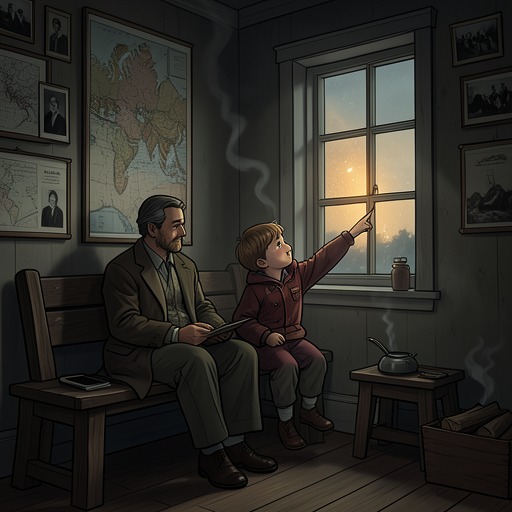
Hollowden
The Ballad of the Last DragonHollowden is the small town that transforms from a temporary refuge into Sylvaine Abelan’s home. Its importance lies less in grandeur than in the ordinary securities it offers: a stage, a meal, familiar people, and a place where an elven bard can continue working despite poverty and anti-elf prejudice. The town frames Sylvaine’s movement from survival toward artistic purpose, then receives her again after adventure has made the glamorous future she once desired feel unexpectedly hollow.
Setting and Local Character
Hollowden is presented as a modest rural community rather than a celebrated cultural center. Sylvaine contrasts it with Lindale, where bards are treated almost like nobility and can expect greater wealth, while Hollowden is populated by plain, local people without the elaborate trappings of city life. Summer usually brings stray travelers and traders to its taverns, but the town’s patronage is inconsistent; around First Fruits Day, many residents and visitors leave for larger festivals and grander accommodations. Even so, Sylvaine regards the work of entertaining Hollowden’s people as a genuine artistic challenge, because her audience may find her strange or unsettling and she must still make her songs reach them.
The town’s central establishment is the Rusty Nail. Kingsley originally ran little more than an alehouse from his home, then expanded the building, constructed a bar, altered its layout, and turned it into a tavern. When Sylvaine first arrived, there was not even a stage. After six months of begging and odd jobs, she persuaded Kingsley to build one for her. The stage therefore records more than her employment: it is a material sign that Hollowden has made room for her art.
The Rusty Nail’s physical details reinforce its intimacy and imperfection. Sylvaine performs from a stool at center stage, avoids a loose board that always creaks beneath a performer’s foot, and later recognizes mismatched chairs made by Kingsley from leftover scrap wood. These objects make the tavern feel improvised rather than prosperous, but their familiarity gives Hollowden a texture unavailable in the grander places Sylvaine imagines conquering.
Sylvaine’s Arrival and Refuge
Sylvaine reaches Hollowden after fleeing Birchfield under desperate circumstances. At the Red Wyvern Tavern, its sleazy owner attempted to make food conditional on sexual access after finding her scraping half-eaten food from dirty plates. She left without a plan, carrying only her lute, a few coins earned from her performance, and her bright cap pulled over her ears. Days later, she arrived at the Rusty Nail barely able to stand.
Her first foothold in Hollowden comes through performance. She convinces Kingsley to let her sing, while Brigitta asks her to sample dishes prepared for the Winter Solstice celebration. Sylvaine later understands that this was not merely a practical audition or an accidental meal: Kingsley and Brigitta were looking out for her. The town’s hospitality is therefore shown through small acts rather than public ceremony, with food and employment becoming the first forms of protection available to a penniless, displaced elf.
Hollowden does not erase the dangers surrounding Sylvaine. She knows that she has become accustomed to the town without ever being fully secure there: she has not been booed off the stage, and as long as she keeps her ears covered, no one hassles her. At the Rusty Nail, an intoxicated patron later calls her a knife-ear and says she is lucky to be allowed inside, exposing how quickly local belonging can be revoked when anti-elf hostility becomes explicit. Her panic response shows that refuge remains conditional, especially where elven identity, gender, poverty, and dependence on tavern work overlap.
Departure, Return, and the Meaning of Home
Hollowden initially serves as a temporary base. Sylvaine tells herself that she has settled there only to refill her artistic well before attempting a city such as Lindale. Her ambitions reach beyond the town: she wants recognition, adoring fans, reliable food, and the respected status she associates with a successful bard. When she joins the expedition connected to Aeron Fowler’s quest, she expects that the adventure and the ballad of a great hero may finally provide access to concert halls and prosperous taverns.
The prospect of leaving also reveals the depth of Hollowden’s attachments. After the expedition is complete, Sylvaine assumes she will need to return for no more than a farewell to Kingsley and Brigitta. Yet the thought of that farewell carries more weight than her earlier dreams of fame. The heroic ballad travels widely, but its success does not settle the unease she feels when imagining a future built only on artistic prestige. Hollowden becomes the absent place against which the value of that success is measured.
After the expedition’s violence and the destruction of her lute, Sylvaine prepares to go back to Hollowden. She imagines washing dishes or serving at Kingsley’s tavern until she can earn enough for a replacement instrument, while the legendary hoard remains unclaimed and the story’s dragon remains undefeated. The return is not a triumphant reward in conventional quest terms. It is a retreat toward work, shelter, and survival after the dream of the invincible hero—and the dream of effortless artistic glory—has been damaged.
The epilogue confirms that Hollowden can receive her again. Sylvaine returns to the Rusty Nail near the end of autumn, as the cold season approaches and the first snowfall threatens. Kingsley has left her stool where it has always stood, and she deliberately finds the familiar creak in the floorboard. The empty mismatched chairs and the tavern’s lack of Winter Solstice decorations suggest that the place has been waiting rather than theatrically celebrating. Her return is shaped by nostalgia, but it is not immobilized by grief: she begins the familiar song “While the Fisherman’s Away” and allows sorrow and happiness to coexist.
Community, Memory, and Narrative Significance
Hollowden’s significance rests on the contrast between public recognition and private care. The town cannot offer Lindale’s wealth or noble treatment, and its inhabitants include people capable of racialized abuse. Nevertheless, Kingsley and Brigitta provide the practical continuity that allows Sylvaine to remain alive, fed, and artistically active. Hollowden’s value is consequently not that it is perfect, but that its imperfect community contains relationships strong enough to make return possible.
The town also functions as a recurring narrative frame. Sylvaine’s first performance there establishes the motif that the show must continue even when the audience is nearly absent. Her later return repeats the bow, the cap, the stool, the creaking board, and the song, but each repetition carries altered meaning. What first looks like a platform from which she must escape becomes a ritual of recognition: the same stage now holds the history of flight, labor, adventure, loss, and chosen belonging.
By the ending, Sylvaine does not define home as a place where no danger or work remains. She defines it through the possibility of offering refuge to others. Standing with Jaromir by her side, she understands that she has made an impossible dream real and can use her services to help those who come searching for shelter. Hollowden thus becomes more than the town where her story began and ended. It is the place that teaches her that artistic immortality and belonging are not secured by reaching the most prestigious audience, but by returning to a community whose ordinary gestures have made survival—and a future—possible.