Kalinia Inheritance Reform
The Ballad of the Last DragonKalinia Inheritance Reform is the amendment that ends Kalinia’s practice of absorbing inheritances when a family lacks a suitable male heir. Secured through Rhosyn’s demand, Sylvaine Abelan’s drafted legislation, and Jaromir’s physical pressure on the magistrate, it protects Rhosyn’s home and establishes a local version of Queen Dhara’s inclusive land and title policies. Its decisive significance lies in converting grief and family obligation into institutional change: rather than merely rescuing one household, the reform prevents other vulnerable people from being expelled after a family tragedy.
The Law and the Crisis It Created
Kalinia’s local inheritance regime preserved an archaic rule under which property passed to an acceptable male heir or, if none existed, was absorbed by the town magistrate. Although Queen Dhara had promoted inclusive policies allowing broader access to land and titles, Kalinia had not adopted them. Each town retained its own governing structure, and local magistrates enforced the laws; in Kalinia, the magistrate still refused to recognize kinship claims that did not fit the male-heir system, even when supported by a will or testament.
The conflict became urgent after Damir’s death. His land, farm, and house passed to his brother Jaromir rather than to Rhosyn, Damir’s widow, or their daughters. Jaromir explained that his proposed marriage to Rhosyn was intended to protect her only in title: without a binding change to the inheritance arrangement, she and the girls could lose their home. Rhosyn had already petitioned the magistrate repeatedly, asking for permission to bypass the inheritance rules, establish herself as steward, or purchase the deed, but every attempt had failed. The law therefore made Jaromir’s family duty inseparable from his unwanted betrothal arrangement.
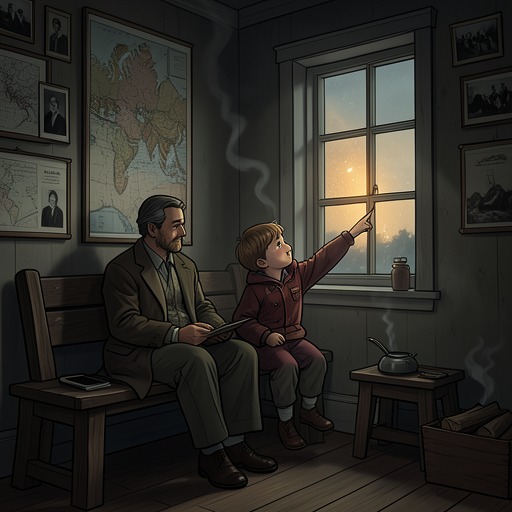
Rhosyn’s attachment to the property was not merely financial. Damir had built the house, and its ordinary details preserved his presence: a creaking floorboard and a nail in the third step that he had never fully hammered down. The land had belonged to earlier generations of the family and represented the future Damir and Rhosyn had imagined for their daughters. Losing it would mean more than losing shelter; it would sever the surviving family from the material traces of its dead.
Drafting and Securing the Amendment
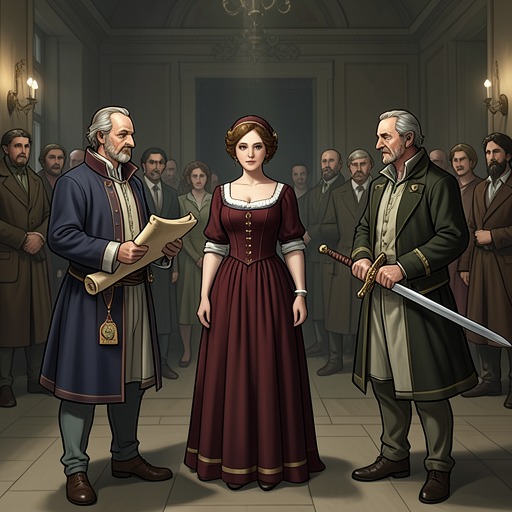
Sylvaine Abelan chose coercion after confirming the circumstances with Rhosyn. Rhosyn had exhausted the respectable legal route, so Sylvaine entered the magistrate’s office prepared to make his refusal costly. She and Jaromir confronted William M. Ridion while Sylvaine occupied his finely furnished office with deliberate irreverence, placing her road-worn self in opposition to the authority represented by his ornate desk and privileged surroundings.
Rhosyn made the demand herself. She required Ridion to abandon the antiquated inheritance law, amend it so that no person could be thrown from a home after family tragedy, serve the people rather than profit from their vulnerability, and enact Queen Dhara’s inclusive land and title policies in Kalinia. The demand joined personal protection to public reform: Rhosyn sought security for her daughters, but she also insisted that the law itself stop producing the same injustice for others.
Ridion attempted to delay the process by claiming that legal documents, a scribe, and a notary would be needed. Sylvaine had anticipated the objection. She produced a legislative document written on Rhosyn’s table while Rhosyn paced around the kitchen and offered to witness Ridion’s signature and official seal herself. When he yielded, Sylvaine required three copies so that the amendment could not conveniently disappear. Ridion signed and stamped each document, while Jaromir’s presence at the desk supplied the threat behind the legal procedure.
The reform was therefore produced by several kinds of authority operating at once. Rhosyn supplied the injured claimant’s knowledge of the law and the moral demand for change. Sylvaine supplied performance, drafting skill, memory, and blackmail. Jaromir supplied the family obligation that had made the crisis urgent as well as the physical intimidation that prevented Ridion from simply dismissing them. Ridion’s signature made the change official, but the scene makes clear that formal legality followed pressure rather than initiating justice.
Ownership, Proof, and Immediate Consequences
Once Ridion signed, Sylvaine handed one copy to Rhosyn and kept another, giving Rhosyn documentary proof of ownership. Rhosyn reacted with disbelief before repeating her joy and embracing Sylvaine, calling her an absolute seraph. The reaction marks the reform’s immediate human consequence: a threatened home becomes something that can be defended through a written instrument rather than through Jaromir’s marriage, continued petitioning, or the magistrate’s discretionary mercy.
The amendment also changes the meaning of Jaromir’s proposed union with Rhosyn. He had offered his hand as a protective title because he believed Damir’s property would otherwise leave Rhosyn and the girls without a claim. Rhosyn, however, did not want to marry Jaromir; she regarded him as Damir’s brother and her friend, despite their friendship and respect. By securing the amendment, the group removes the legal pressure that had made marriage appear necessary. Rhosyn can retain her home without converting family responsibility into a marital obligation.
Sylvaine’s victory is not entirely clean or conventional. Before leaving, she took Ridion’s coin purse from his desk and intended to give the money to the mothers of his forgotten children. The gesture extends her improvised civic justice beyond Rhosyn’s case, but it also shows that the new law emerges from a world where official institutions remain exploitative and informal redistribution still seems necessary. Legal reform and theatrical retribution coexist in the same action.
Wider Political Meaning
Kalinia Inheritance Reform exposes the conflict between overlapping systems of legitimacy. Local custom and magistrate-enforced law favor a suitable male heir; family duty binds Jaromir to Damir’s widow and daughters; Rhosyn’s lived relationship to the house gives her a claim rooted in care, memory, and residence; and Queen Dhara’s policies provide a broader royal model of inclusive ownership. The reform succeeds when these competing norms are forced into a single enforceable document.
Its implications extend beyond gender and property. The surrounding society already treats Elves as legally and socially vulnerable: they were forbidden to speak in official councils, denied titles and land, and, during the raids, exposed to hunting licenses that allowed humans to pursue fugitive Elves for sport. Against that history, the Kalinia amendment represents a limited but important refusal to let inherited hierarchy decide who may belong to a place. Its language about allowing any person to create a life in Kalinia counters a broader pattern in which law converts difference into dispossession.
The reform also belongs to a recurring contrast between violence and restraint. Sylvaine once held a sword over a defeated attacker and chose not to kill him, declaring that she was not human and did not want to be. In Kalinia, she again confronts an unjust power but seeks a durable alteration of the rules rather than a death that would leave fear and blood as her constant companions. The amendment gives her anger a public form: protection is achieved not by reproducing the logic of domination, but by changing who the law is permitted to protect.
Legacy and Narrative Function
The reform’s immediate legacy is Rhosyn’s retained home and the removal of the inheritance threat that helped sustain her nominal betrothal to Jaromir. Its wider legacy is the possibility that Kalinia’s local law can be brought into alignment with Queen Dhara’s inclusive land and title policies. The signed triplicate documents matter because they turn an emotional victory into evidence, making ownership portable, legible, and harder for the magistrate to erase.
Narratively, the amendment transforms a domestic conflict into a political resolution. Damir’s death, Rhosyn’s endangered daughters, Jaromir’s sense of duty, and the strain placed on other relationships all originate in a rule that treats property as the privilege of male succession. The successful confrontation does not undo the death or restore the family’s former life, but it prevents the law from taking the remaining home as well. In that sense, Kalinia Inheritance Reform is both a practical safeguard and a statement that belonging can be secured through collective action, written law, and the insistence that vulnerable people are entitled to remain where their lives have been made.