The Elven Raids
The Ballad of the Last DragonThe Elven Raids were the historical campaign through which long-growing human distrust of elves became organized social violence and institutional persecution. Remembered by elves as The Great Loss, or An Call Mòr, the raids destroyed communities, erased sacred and written heritage, stripped elves of land and titles, and forced survivors into flight. For Sylvaine Abelan, they are not distant history: they explain why her ears remain hidden beneath a velvet cap, why ordinary encounters can trigger panic, why Smarighad ceased to be home, and why protecting vulnerable people becomes inseparable from resisting the systems that made her vulnerable.
Causes and Historical Background
The raids grew from a political history in which humans and dwarves were celebrated as heroes against the ancient elves. The Hawthokian alliance with humans during The Unification helped place dwarves on the victorious side; although dwarven communities had experienced dissent and infighting, those who fought were rewarded with land and minor titles in Targgein. Human and dwarven histories preserved this triumph while presenting the ancient elves as beings of power and malice. Elven accounts, by contrast, retained the memory of the catastrophe as The Great Loss, a name that measures not merely military defeat but the destruction of a people’s place in history.
The older fears were sustained by stories that elves could control human minds through their voices or drink the blood of human children. For a time, rational judgment kept such tales from becoming open violence, but distrust continued to accumulate until it became politically useful. The first practical conflicts appeared as disputes over land. Town magistrates could favor a human’s testimony over an elf’s because elves were forbidden to speak in official councils, ostensibly to prevent supposed magical influence. Fabricated accusations then supplied a social language for dispossession: an elf had supposedly hypnotized someone into sex, or used magic to manipulate a bargain. Once prejudice could be presented as public safety, legal exclusion required little further justification.
Course and Mechanisms of Persecution
The raids followed the removal of elves from the rights that made settled life possible. Elves lost the right to hold titles, including land. Those who refused to surrender their property and move into cities where searches and curfews controlled their movements were branded fugitives. The state then converted persecution into a revenue system by granting humans licenses to hunt fugitive elves for sport in exchange for a taxation fee. Some hunters wore severed elf ears on chains around their necks as trophies, making bodily identity itself an object of public triumph.
The violence also attacked the conditions under which elven memory could survive. Elven texts were destroyed along with sacred structures, and the historical record of the ancient culture was reduced to what could be carried through spoken word. Sylvaine’s father passed down knowledge of the ancient elven alphabet and elven history, an act that she understands as rebellion because preserving forbidden knowledge counters the destruction intended to make the past disappear. The raids therefore operated on two fronts: they expelled elves from land and attempted to expel them from time by destroying the archives, temples, and written forms through which a people could name its own history.
The consequences were ecological and material as well as cultural. Elves understood themselves as bound to their land through memory and generations of ancestors, yet after the raids that inherited landscape was no longer home. Those who could leave fled for safer shores, but transport was scarce and expensive. Sylvaine’s family could afford only one boarding pass. She left her parents behind while knowing that imprisonment, or something worse, awaited them. Her displacement is thus not an adventurous departure but a choice forced by a system that made family loyalty, survival, and belonging impossible to keep together.
Sylvaine Abelan’s Inherited Trauma
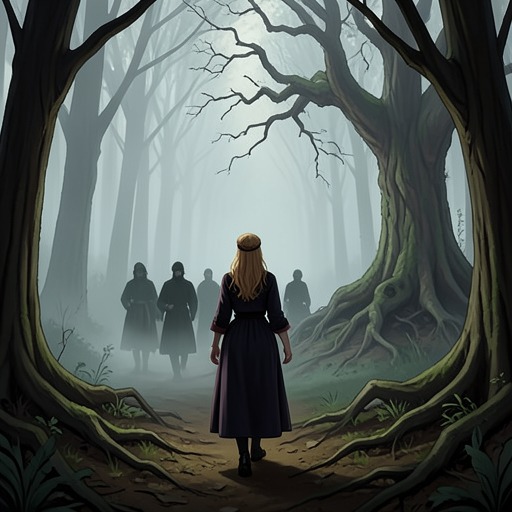
Sylvaine remembers Smarighad as a place of childhood magic, with enormous trees and giant oyster mushrooms broad enough to climb. That landscape is interrupted by the gradual disappearance of everyone around her: friends, neighbors, and other members of the community vanish without goodbyes or explanations. Only later does she understand that the absences were part of the elven raids. The child’s bewilderment becomes the adult survivor’s historical knowledge, and the change from free play to hiding gives the persecution its most intimate measure.
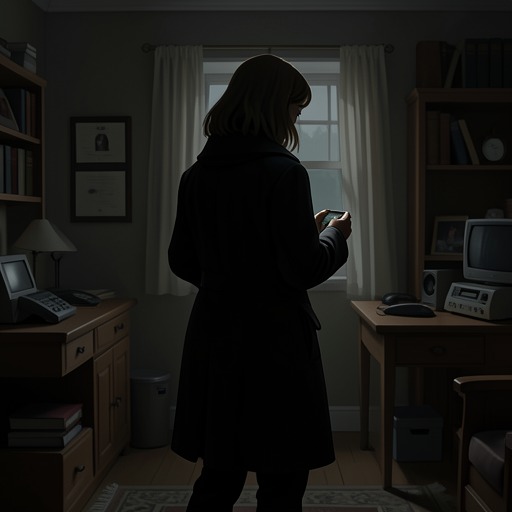
In Tarrgein, the hatred is less openly lethal, but it has not vanished. Sylvaine can walk the roads without fearing immediate attack, yet she checks her cap before every performance to ensure that her ears are covered. Her red crushed-velvet cap with its black plume is part of her stage identity, but it is also protective concealment. She has learned that audiences appreciate her more when her elven features remain hidden, and she performs sweaty and uncomfortable rather than risk losing the coins on which her survival depends. The insult of the raids persists in this apparently minor routine: a performer must hide the most visible sign of her ancestry in order to eat.
The same history becomes physically present in moments of confrontation. When a patron calls her a knife-ear and tells her she is lucky to be allowed into the tavern, the old hierarchy speaks through a contemporary threat. Her body responds before her wit can: her throat tightens, her legs go numb, and panic fills her chest. When three men later follow her into a field, she climbs into a tree rather than allow them to see her alone, carrying the short sword Neith insisted she take and a shepherd’s sling in her pocket. The raids have made vigilance part of ordinary life, especially where elven identity, poverty, and womanhood overlap.
Violence, Survival, and Ethical Refusal
The raids create a moral danger that extends beyond what was done to elves. After Sylvaine survives an assault, she gains the power to kill one of her attackers. With the blade poised at his pulse and then pressed lower into his belly, she confronts the possibility of making fear answer fear. She stops. Her refusal does not erase the violence or make her safe; she still expects that men like him may threaten her again. It does, however, prevent the attacker’s death from becoming a permanent companion in her own memory. Her declaration that she is not human and does not want to be rejects the persecutors’ logic without accepting their definition of elven identity as monstrous.
This choice distinguishes justice from simple repetition. The raids treated domination, punishment, and killing as legitimate tools of social order, while Sylvaine refuses to reproduce that order merely because violence has placed a weapon in her hand. Her mercy is not passive forgiveness. It follows resistance, survival, and a clear recognition of what the attacker intended. The ethical achievement lies in preserving her capacity to choose after a system of violence has tried to make choice impossible.
Political Aftermath and Continuing Significance
The raids remain active in later institutions. The old prohibition against elven ownership is part of the same historical structure as the inheritance law that threatens Rhosyn’s home: both treat property and belonging as privileges controlled by authorities rather than as conditions of a livable life. When Sylvaine and Jaromir confront Magistrate W. M. Ridion, she identifies herself as a defender of written and spoken word and uses her notarial authority to help force change. Rhosyn demands amendments ensuring that no one can be expelled from a home after family tragedy and calls for Queen Dhara’s inclusive land and title policies, which would allow any person to build a life in Kalinia. Sylvaine has already prepared the legislative document and can witness the magistrate’s signature and seal.
This reform answers the raids at the level where they became durable: law. It does not restore Smarighad, return Sylvaine’s parents, or rebuild the destroyed texts and sacred structures, but it contests the principle that officials may convert vulnerability into dispossession. The response to historical persecution is therefore both personal and institutional—survival in the body, preservation through speech, and alteration of the rules governing land and inheritance.
The same restorative orientation appears when Sylvaine learns that a woman is rescuing elves and charging nothing for their transport. Her relief comes from discovering that escape is not being turned into another market for desperate people. Against the raids’ licensed hunting and extraction, free passage offers aid without exploitation. The contrast clarifies the event’s lasting significance: persecution makes the vulnerable pay for their own exclusion, while repair begins when communities protect movement, memory, and home without demanding further sacrifice from those already driven out.