
The Failure of Prophecy
The Beast in the JungleThis flow traces how Marcher’s confident prediction fails as prophecy but proves accurate as a description of the life he creates through waiting.
increasing Bearing strength in each event
 decreasing
Bearing strength in each eventdecreasingA Prediction Without Form

A Prediction Without Form
Certainty Without Detail
Marcher feels sure that an exceptional event will happen but cannot identify its form. The prediction is powerful precisely because it can accommodate many possibilities.
He imagines the event as something that will overwhelm or transform him. The lack of detail allows him to keep believing without testing the belief.
An Unfalsifiable Expectation
As long as the event remains undefined, ordinary life cannot disprove it. Marcher can continue waiting while treating uncertainty as evidence of depth.
May Tests the Meaning
May Tests the Meaning
Love Proposed as Possibility
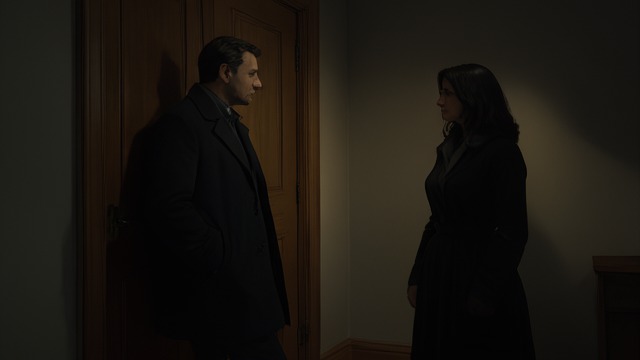
May asks whether Marcher’s expected danger might be the experience of falling in love. He rejects the suggestion because earlier attachments did not feel sufficiently overwhelming.
His answer reveals that he expects a dramatic event rather than recognizing an emotional possibility. May’s question briefly points toward the truth he will later miss.
Prediction Protected
Marcher preserves his belief by defining love as something his previous experience cannot have been. The prophecy remains intact because he does not allow ordinary intimacy to count as fulfillment.
A Prediction Reinterpreted

A Prediction Reinterpreted
Fulfillment Announced
May tells Marcher that the event has already happened. She rejects the idea that his fate has passed him by and insists that it has made him its own.
Her account preserves the reality of his conviction while changing its meaning. Marcher’s lack of awareness becomes part of the fulfillment rather than proof that nothing happened.
A Prophecy About Perception
The prediction appears less like foreknowledge of an external event than a truth about Marcher’s inability to recognize his life. His prophecy concerns not only what happens but what he fails to see.
The Evidence of Another Life
The Evidence of Another Life
Grief Reveals the Event
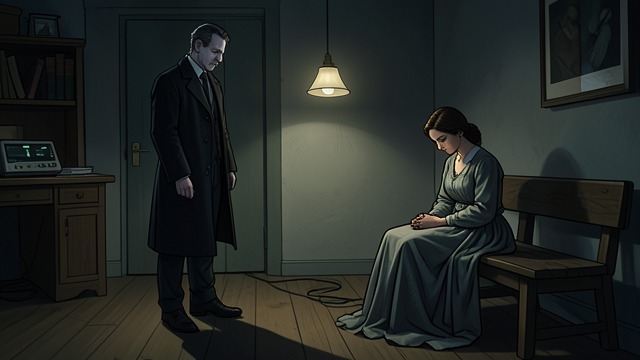
A stranger’s sorrow shows Marcher the emotional reality that his prediction failed to name. Love and loss, not spectacular disaster, give a life its transformative force.
Marcher realizes that May was the experience waiting within his ordinary life. His prophecy was fulfilled in the very relationship he did not recognize as extraordinary.
Accuracy and Failure
The prediction was accurate in sensing that his life would be marked by something profound. It failed because Marcher imagined the event as fate acting upon him rather than as love requiring his response.
The Fate He Made

The Fate He Made
Prophecy Completed
Marcher understands that his destiny was to be the man who let life pass without entering it. The outcome was not imposed by a mysterious force; it emerged through his habitual refusal of intimacy.
The Beast becomes an image for the catastrophe his way of living produced. The prediction comes true because he has lived as though experience must arrive from elsewhere.
Knowledge Too Late
Marcher’s final recognition cannot change the choices that formed his fate. His collapse marks the cost of discovering that a prophecy can describe a life one has helped make.
From Marcher’s early adulthood
At the Weatherend reunion
During May’s final illness
At the autumn cemetery encounter
At the final collapse
