
The Unseen Cost of Self-Absorption
The Beast in the JungleThis flow traces how Marcher’s inward fixation makes him mistake May’s love for support and turns his apparent innocence into a profound failure.
increasing Bearing strength in each event
 decreasing
Bearing strength in each eventdecreasingA Solitary Center

A Solitary Center
The Self as Main Subject
Marcher organizes his thoughts around the event that may happen to him. Even when he participates in social routines, his attention returns to his private suspense.
He considers himself considerate because he keeps his secret to himself and avoids burdening others. This self-image hides how completely his inner life remains centered on his own fate.
The First Blindness
Marcher does not recognize that attention can itself be a form of selfishness. His restraint looks generous while insulating him from reciprocal claims.
May’s Care Recruited

May’s Care Recruited
A Witness Welcomed
Marcher is grateful when May remembers and protects his secret. He asks her to watch with him, inviting her into the story he tells about himself.
He treats her understanding as a gift that answers his loneliness. He does not yet consider whether he is asking May to organize her life around his need.
A One-Sided Framework
The pact is mutually agreed, but Marcher’s interpretation makes its focus his own fate. May’s care enters the relationship without her emotional needs becoming equally visible.
Consideration as Cover

Consideration as Cover
The Self-Conscious Gentleman
Marcher gives May gifts, takes her to performances, and worries about being selfish. He uses these gestures to reassure himself that the relationship is fair.
His thoughtfulness is real but limited. It does not force him to ask whether May wants a different relationship or whether he is withholding what she needs.
Beneath the Manners
May sees that Marcher’s polished conduct conceals detachment. His consideration can therefore serve as a cover for the deeper failure to engage with her as an equal beloved person.
The Final Self-Centered Question

The Final Self-Centered Question
A Narrow Focus
As May stands before him, Marcher asks whether he will consciously suffer. His question fixes on the personal consequences of the fate he expects rather than on May’s presence and intention.
May’s reply tries to guide him toward a truth beyond the question. He does not recognize that the person before him is making a final offer of intimacy.
The Cost of Inattention
Marcher’s failure is not a cruel refusal but a profound inability to attend. The habit of reading every event through his own suspense leaves him blind at the decisive moment.
The Judgment of the Stranger
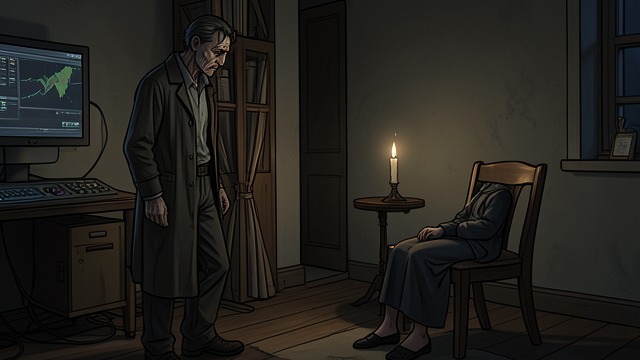
The Judgment of the Stranger
An External Measure
The stranger’s grief exposes the emotional poverty of Marcher’s life. He sees that May had loved him for himself, while he had valued her for what she gave his private story.
His supposed innocence cannot withstand the contrast. The life he thought he was merely waiting through has been shaped by repeated self-absorption.
Recognition Without Repair
Marcher understands the cost only after May’s death. The truth does not restore the relationship; it reveals the human consequence of his failure to see her.
Before Marcher confides in May
At the Weatherend reunion
During the London friendship
During the spring conversation before May’s death
At the ending in the cemetery
