
The Battle Between Fate and Choice
The Beast in the JungleThis flow follows the conflict between Marcher’s belief in an appointed destiny and the choices that quietly determine his actual life.
increasing Bearing strength in each event
 decreasing
Bearing strength in each eventdecreasingFate as Authority

Fate as Authority
An Unquestioned Law
Marcher treats his premonition as a law that will define his existence. He believes the decisive event lies beyond ordinary choice and will arrive in its own time.
That conviction allows him to interpret passivity as obedience to destiny. He waits for an external force to give his life meaning.
Choice Disguised
By claiming that the outcome is not his to choose, Marcher avoids responsibility for shaping his relationships. His faith in fate quietly governs decisions he believes he is not making.
A Witness Within Reach
A Witness Within Reach
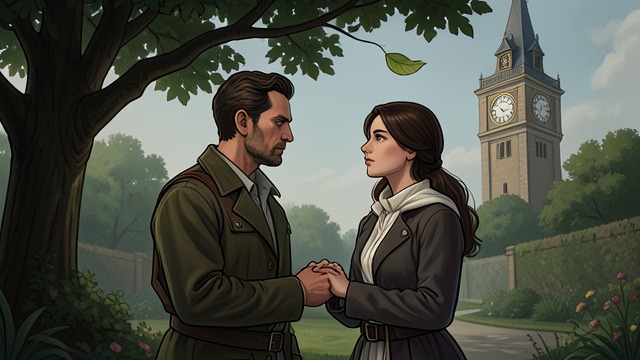
The Secret Shared
May’s memory proves that Marcher once confided his expectation in another person. He invites her to watch for its fulfillment, making a present choice in response to his supposed fate.
The pact gives him companionship, but its terms keep the future event at the center. Marcher chooses a witness rather than a mutual life with May.
The First Divergence
May’s presence could draw him toward reciprocal intimacy. Instead, the arrangement allows him to feel accompanied without revising his fatalistic framework.
A Rule of Avoidance
A Rule of Avoidance
Marriage Rejected
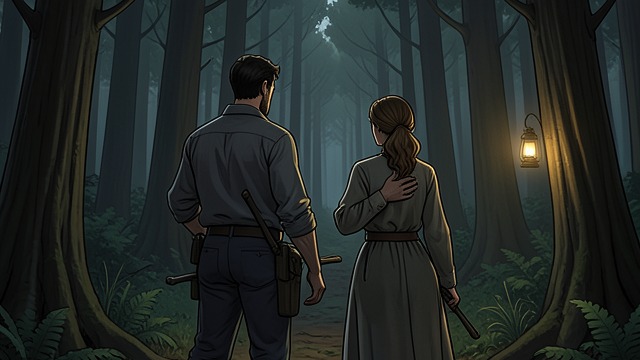
Marcher decides that May should not accompany him on his imagined hunt for the Beast. He casts his refusal as a rule of decency toward a woman.
The principle turns an emotional choice into an apparent necessity. It permits him to avoid love while believing he acts selflessly.
Fate Made an Excuse
The supposed law of his future becomes a reason to reject the possibilities of the present. Marcher’s actions, not an external Beast, gradually shape the life he will later regret.
The Event Without Awareness
The Event Without Awareness
Fate Declared Fulfilled
May tells Marcher that his expected fate has already happened. She insists that its strange feature is his failure to know it while it occurred.
Marcher resists because the claim seems to remove his role as a conscious witness to his own life. He still expects fate to announce itself as a recognizable event.
Choice in the Past
May’s words shift the question from what fate may do to what Marcher has already done or failed to do. The conflict moves from prophecy toward responsibility.
The Choice He Did Not Make
The Choice He Did Not Make
A Life Reinterpreted
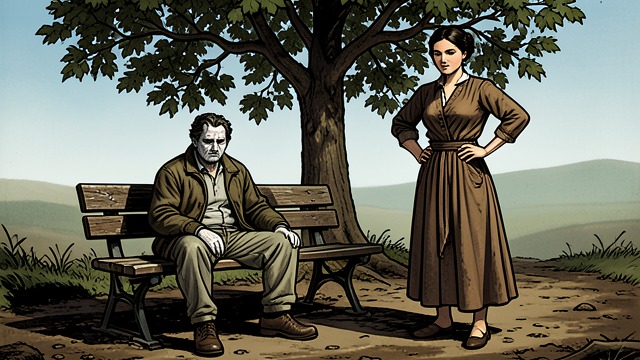
The mourner’s grief shows Marcher what love can cost and what its absence means. He realizes that May’s love gave him a chance to enter life, but he never answered it.
His fate was shaped through inaction rather than imposed by an outside event. The Beast names the consequences of living as if choice were irrelevant.
Responsibility Too Late
Marcher sees that the defining moment was an available relationship, not an unavoidable calamity. Recognition cannot return him to the time when he might have chosen differently.
Before Marcher tells May his secret
October afternoon at Weatherend
During their early years of shared watching
During May’s final conversations
At the ending in the cemetery
