Marcher’s journey to recover his lost consciousness
The Beast in the JungleJohn Marcher’s journey to recover his lost consciousness begins after he accepts May Bartram’s assurance that the event he had awaited has already happened, though he cannot identify it. What follows is not a search for a future revelation but an attempt to regain access to an unrecognized past. Travel offers the possibility of suggestion, yet the journey repeatedly draws him back to May Bartram’s tomb: the place that confirms his altered understanding while keeping its meaning beyond his reach.
The Search for a Lost Past
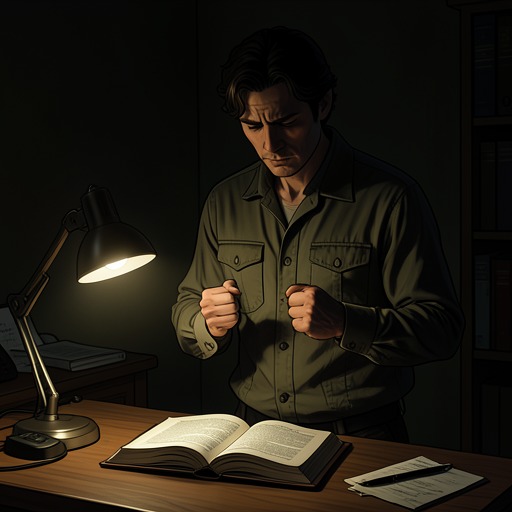
Marcher cannot rest with May’s instruction not to guess or with her denial that he can discover what happened. He insists to himself that he does not want the past event to recur; what he cannot accept is having slept through it so completely that he cannot recover its lost substance by thinking. That distinction becomes the justification for his search. He makes the recovery of consciousness his single motive, and the possibility of guessing becomes an occupation on which he feels his continued life depends.
The lost consciousness takes on the image of a strayed or stolen child, and Marcher pursues it with the urgency of a father searching from door to door and appealing to the police. The image gives emotional force to an inquiry that has no clear evidence to follow: he is looking for something that belongs to him but cannot be located or described. He resolves, at moments, either to win it back or to have done with consciousness altogether. His journey is therefore driven less by confidence that travel will solve the mystery than by his inability to live peacefully without trying.
The First Pilgrimage to the Tomb
Before leaving London, Marcher goes to May Bartram’s tomb through the long avenues of a vast suburban cemetery. He sets out intending only to renew his farewell, but once he reaches the grave he remains there for an hour, unable either to turn away or to penetrate the darkness of death. He fixes his eyes on May’s inscribed name and date, as if the stone’s visible record might yield the secret that it preserves.
Marcher beats his forehead against the fact of that concealment and waits for some sense to rise from the stones. He kneels, but the tomb gives nothing back. In his perception, May’s two names become eyes that do not know him; he gives them a final, prolonged look, and no light appears. The visit thus makes the grave both the focus of his search and its first failure: it brings him into the presence of the person who knew his history, but her death leaves him unable to recover it from her.
A Year in Asia
After this visit, Marcher stays away for a year, travelling through the depths of Asia and spending himself on scenes of romantic interest and superlative sanctity. Yet the scale and solemnity of what he sees do not restore the distinction his former sense of expectation had given him. In retrospect, the state of mind in which he had lived for years seems to him like a light that coloured and refined experience; beside it, the glow of the East appears garish, cheap, and thin.
The loss is not simply that he can no longer find the world impressive. Marcher feels that he has lost, along with everything else, the distinction that once separated his experience from ordinary life. What he sees seems common because he has become common in looking at it. Even before temples of gods and the sepulchres of kings, his thoughts turn for nobility of association to the barely distinguished slab in the London cemetery. The journey across Asia therefore intensifies rather than resolves his attachment to the tomb: distance makes that grave, not the celebrated sacred and royal sites, the remaining proof of a past he can value.
Return to the Cemetery
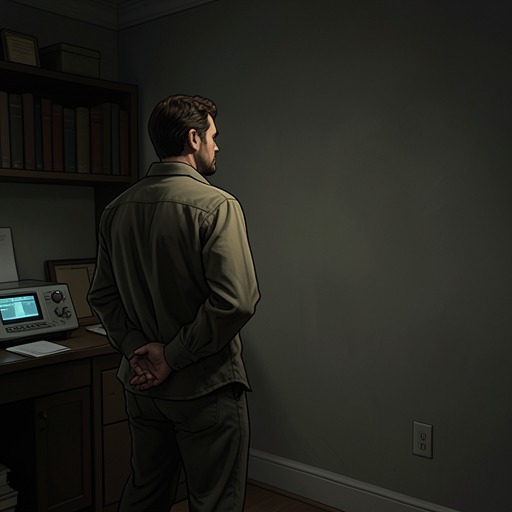
On the morrow of his return, Marcher goes back to May Bartram’s tomb. The months abroad have altered his expectations. He has settled into a sense of safety and accepted what he understands as his extinction; he no longer approaches the cemetery with his former insistence on asking what has happened. He has also imagined himself as resembling little old men remembered from the past, men who looked meagre and wizened but were said to have fought many duels or been loved by princesses. Their wonder had mattered to others; his, by contrast, had existed only for himself. That difference helps explain why he hastens back: he wants to recover contact with the part of himself he still values.
At the tomb, the place no longer seems blank or mocking. The plot of ground, the graven tablet, and the tended flowers appear to belong to Marcher, as if they recognize a connection formed by his repeated returns and his knowledge of May’s rare experience. He stands there with assurance and something like elation, not because the secret has been disclosed, but because the grave has become a witness to the past whose significance he cannot recover. The journey ends in renewed presence rather than recovered memory: Marcher reaches the place he has made central to his search, while the lost consciousness remains beyond his grasp.
Significance of the Journey
The movement from London to Asia and back measures the collapse of Marcher’s former distinction. He seeks a suggestion from the other side of the globe, but the most meaningful place in his changed inner geography proves to be the suburban tomb he had visited before leaving. The contrast makes travel an unsuccessful route to new knowledge and a means of recognizing how thoroughly he depends on May’s buried testimony.
The return also changes the emotional character of the cemetery without removing its silence. The tomb once confronted Marcher as an impenetrable secret; after his year away, it seems almost to greet him and to confirm that the past belonged to him. That altered feeling offers attachment and assurance, not an explanation. His journey thus recovers neither the event itself nor the consciousness that might have named it; it reveals how completely his remaining sense of identity has gathered around May Bartram’s tomb and the past it keeps inaccessible.