May Bartram’s Final Conversation and Death
The Beast in the JungleMay Bartram’s final conversation with John Marcher reveals that the fate he had spent his life expecting has already happened: May’s death and the solitude it leaves him with. She dies soon after telling him so, turning their long vigil into an irreversible loss. The scene makes his belated recognition inseparable from her devotion: she had shared his suspense, understood what it meant, and stayed beside him, while he remained unaware of the significance of her presence.
The Return to May’s Sickroom
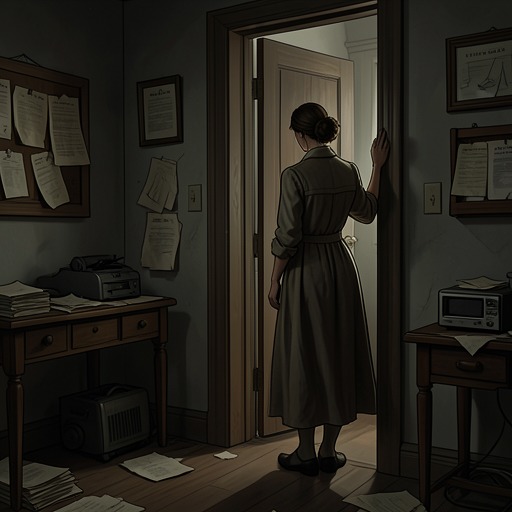
After Marcher’s first recognition that May’s dying might be the event he had awaited, he understands that she had accompanied him through the long passage of suspense, giving herself to bring it to an end. He also sees that leaving her behind would be to lose the person whose aid had sustained him. That recognition does not immediately resolve their business. May keeps him waiting through a series of restless days, and each time he asks after her he has to turn away. At last she receives him in the room where she had always received him.
Their meeting takes place amid the visible traces of their shared past, but May’s gentleness cannot simply soothe Marcher or undo the history between them. Although her condition affects him so deeply that he is moved to let the subject go, she herself returns to the unfinished matter before dismissing him. Her effort to put their business in order gives the conversation its urgency: this is not another renewal of the vigil, but her final attempt to make him understand what has happened while she can still speak to him.
The Fate Has Already Happened
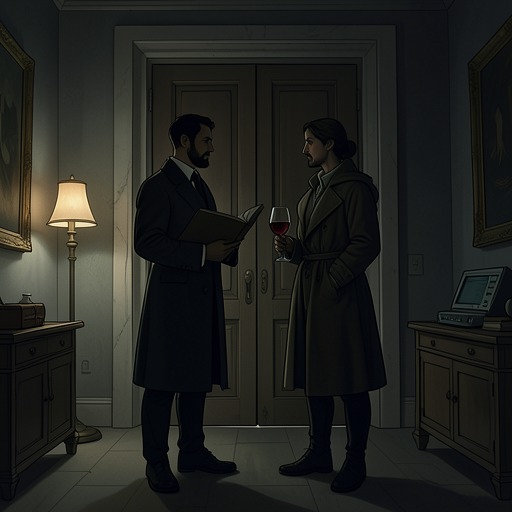
May states the conclusion plainly: “You've nothing to wait for more. It HAS come.” Marcher asks whether she means it, and she confirms that she does. For him, the announcement initially collides with the expectation that the awaited event would be unmistakable. He asks whether it has passed him by because he was not aware of it and had not felt it touch him. May answers that his failure to recognize it is itself the strange part: the event has touched him and has made him its own, even though he did not know it.
She therefore distinguishes the occurrence of his fate from his conscious experience of it. The event was not a spectacular stroke that would make him rare or immortal in the eyes of the world. As Marcher had begun to perceive, it was the ordinary human doom of a loved person’s death and the survivor’s solitude. He had already been prepared, in his first response to May’s impending death, to accept that common loss as sufficient fulfillment of his expectation. Her explanation confirms that the fate was not still waiting somewhere in the future; it had taken shape in the life he had shared with her and in the loss he was about to suffer.
May’s Knowledge and Devotion
May tells Marcher that he will never know the event in the way he had expected to know it, and that he should be content because he has already had it. When he asks what has marked him out, she calls it the proof of his law: it has acted, although he could not recognize its action. She is glad, she says, to have been able to see what it was not. Her words position her as the witness to a fate that Marcher himself could neither identify nor interpret. For him, knowledge arrives only through her account; for her, it has been present throughout their shared years.
The conversation also exposes the cost of that unequal knowledge. May’s comprehension does not mean that Marcher has understood what she has given him. When her words and wasted face finally make him grasp what her knowledge has meant to her, he asks whether this is what she is dying of. May first watches him, as if gauging where his understanding has reached, then tells him, “I would live for you still--if I could.” She briefly closes her eyes, as though making one last inward effort, before opening them to take leave of him and saying that she cannot. The exchange brings devotion and death into the same moment: she would remain with him, but can no longer do so.
Death and the Aftermath
May’s death follows promptly. After their final talk, Marcher sees her no more; access to her sickroom is almost wholly denied him. Doctors, nurses, and relatives surround the dying woman, while Marcher discovers how little formal claim his intimacy with her appears to give him. Though May had been indispensable in his life, their relationship does not provide him with a publicly recognized place among those entitled to attend her. Even a distant relative seems to possess more standing in the closing days.
At May’s funeral in a great grey London cemetery, the small gathering treats Marcher as scarcely more concerned than an ordinary member of the crowd. He suffers not only the loss of May but also the absence of the public recognition he associates with being markedly bereaved. Her death thus completes his fate while exposing the gap between the inward scale of their bond and the outward arrangements through which society recognizes intimacy. In the weeks afterward, he sometimes wants to assert the importance of his loss, but that impulse gives way to helpless irritation and the question of whether he should have begun further back. The end of the vigil grants him the knowledge he had sought, but only when its living witness is gone and the life they shared cannot be recovered.