The cemetery encounter that awakens Marcher
The Beast in the JungleThe cemetery encounter that awakens Marcher is the turning point in which an accidental meeting makes John Marcher recognize what his lifelong waiting has cost him. On a grey autumn afternoon, the grief visible in a stranger’s face becomes the shock that unlocks his understanding: May Bartram had loved him, while he had treated her chiefly as a companion to his vigil. The encounter transforms his idea of fate into a recognition of missed love, and its final consequence is his collapse on May’s tomb.
The Autumn Encounter
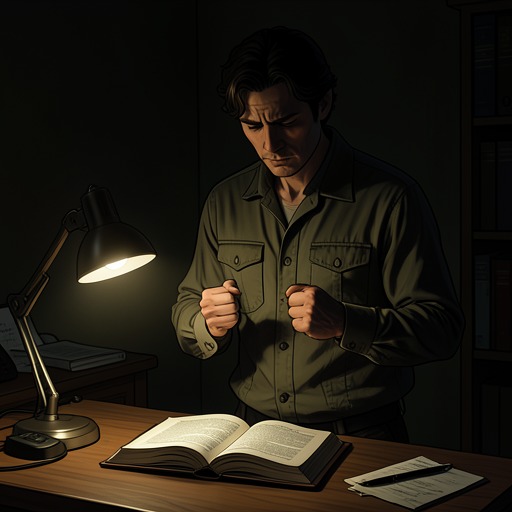
Marcher is at the cemetery, resting on the low stone table that bears May Bartram’s name. The afternoon is grey, and leaves lie thick in the walks. Nearby, a middle-aged man in mourning has been absorbed at what appears to be a fresh grave. Marcher notices him but initially gives him little attention: the apparent freshness of the grave suggests a private grief, and the bowed figure among the monuments and yews seems separate from Marcher’s own purpose.
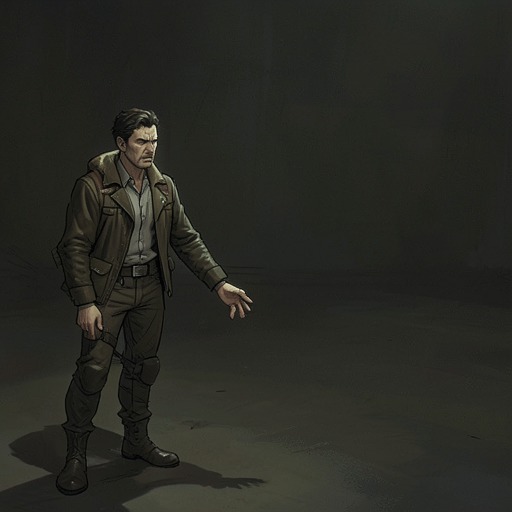
The stranger eventually leaves his grave and walks toward one of the cemetery gates. His pace is slow, and his look has a quality Marcher perceives as hunger; for a minute the two men face one another directly. Marcher recognizes in the stranger one of the deeply stricken. The man’s age, dress, and presumed social position recede from notice; what commands attention is the visible ravage of grief. The stranger seems to show that grief deliberately, moved by an impulse that might be sympathy or a challenge to another person’s sorrow. Marcher cannot know the man’s story, but he feels that the stranger, too, has registered something discordant in Marcher’s smooth composure.
Grief as the Trigger
The stranger passes, but the force of his expression remains with Marcher. He wonders what loss could have wounded the man so deeply and left him still alive. The question turns inward: the stranger’s anguish seems to testify to having possessed something that Marcher never had. Marcher’s life, by contrast, appears arid. He has survived, wandered, and pined, but cannot identify any comparable ravage within himself.
This contrast is not knowledge Marcher has acquired through intimacy with the stranger. It arrives as an accidental impact, outside his own experience, and unsettles the habitual account he has made of himself. The visible grief gives him an image of what it means to mourn a woman loved for herself. That image makes absence legible: the stranger’s suffering seems to possess a depth Marcher’s life has never known. The encounter thus reverses the meaning of his apparent composure. What once might have seemed like protection from catastrophe now looks like evidence that passion never reached him.
May’s Name and the Recognition
Turning from the departing stranger, Marcher sees the inscription on the stone table again. May’s name brings the insight into focus: she was what he had missed. The stranger’s face has opened the question, but the name supplies its answer. Marcher understands that May had loved him, while he had regarded her through the coldness of his own self-absorption and the usefulness she seemed to have for his vigil.
The realization also changes the meaning of Marcher’s long suspense. He had expected an extraordinary fate to arrive in the future; now he understands that waiting itself was his portion. May had recognized this while he had not, and, at the moment she told him his fate had already come, she offered him a chance to defeat its consequence. He had stared at that possibility without understanding it. The escape, as he now sees it, would have been to love her; that mutual possibility was what could have made his life fully lived.
The April Memory and the Failed Escape
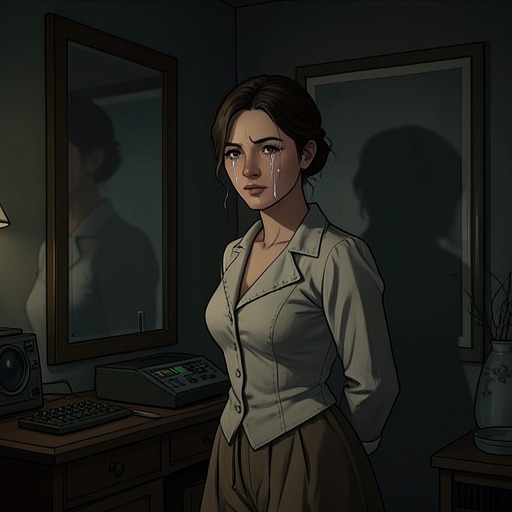
The cemetery recognition carries Marcher back to a cold April twilight and May’s last conversation with him. She had been pale, ill, and wasted, though perhaps still recoverable. She rose from her chair and stood before him, leaving him the possibility of guessing what she was offering. He did not guess. She turned away in hopelessness, and the mark of his failure had already fallen by the time he left her.
The remembered scene now gives the cemetery encounter its full force. May had lived through loving Marcher; he had never thought of her except in relation to his own fear and the service she performed as companion to his vigil. The Beast in the Jungle, once imagined as a future catastrophe waiting to spring, takes on a bitterly precise meaning: it sprang when May offered the chance to live and he failed to recognize it. His dread was fulfilled not by some separate event that interrupted his life, but by the life he had let pass while he waited for one.
Consequence and Significance
Marcher sees himself as the man to whom nothing on earth was to have happened. The cemetery scene makes that phrase more than a description of uneventful years: it becomes the judgment he draws on a life in which he avoided the very attachment that might have made experience consequential. May’s love and the offered escape had been present, but his fixation left him unable to receive either. His fate was therefore not merely an unexplained force imposed from outside; his own blindness helped bring it about.
The knowledge comes too late to alter the relationship. Marcher tries to hold the painful insight before himself, and for a moment even its bitterness has something of the taste of life. But the bitterness sickens him. In the final image, the Beast rises in his vision as if for a leap; Marcher turns instinctively to avoid it and flings himself face down on May’s tomb. The encounter has awakened him to the love he missed, but recognition cannot restore it. Its decisive movement is from passive suspense to painful knowledge, ending not in recovery but in collapse.