The death of May Bartram
The Beast in the JungleMay Bartram’s death closes the long vigil she shared with John Marcher, but it does not give him the public place of a bereaved partner. Her final conversation makes her devotion unmistakable; her death then leaves him unable to explain the intimacy that has shaped his life or to claim its loss before others.
Final Conversation
In the closing weeks of her life, May watched Marcher closely as he began to understand what her knowledge had meant. He asked whether that knowledge was what she was dying of, but she did not directly confirm his interpretation. Instead, she told him she would live for him still if she could, then closed her eyes briefly as if making one last inward effort. When she opened them again, she said she could not, and took leave of him.
Her words turn the conversation from Marcher’s belated recognition toward the fact of her imminent death. The offer to live for him, immediately withdrawn as impossible, expresses both the depth of her attachment and the final limit imposed by her condition. He has begun to grasp what she has carried for him, but there is no time for that recognition to become a shared life.
Death and Separation
May could not live, as Marcher soon understood with painful sharpness. After their last conversation, they had parted for ever. Access to her chamber of pain was rigidly guarded and almost wholly forbidden to him; doctors, nurses, and a few relatives occupied the space around her as her illness advanced. The practical restrictions made his exclusion tangible, even though May had been indispensable to his life.
At her death, Marcher discovered how little formal claim he could make. He had no recognized relationship that entitled him to the rights accorded to family, and their intimacy had not been named in a way that others could acknowledge. The discrepancy is stark: May had been a defining presence in his life, yet in the arrangements surrounding her last days he could seem less entitled to closeness than a distant relative who had meant nothing to her.
Funeral and Unrecognized Grief
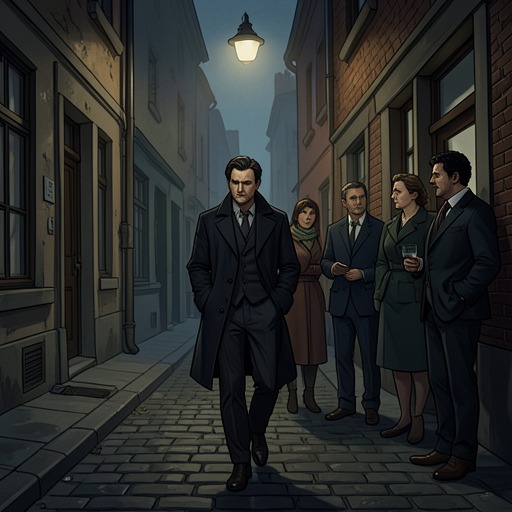
The last offices for May took place at a great grey cemetery in London. The gathering at her grave was small, but Marcher still felt treated as scarcely more concerned than if a thousand other people had been present. Her death therefore brought not only grief but a second deprivation: he lacked the distinction and social dignity of a man visibly bereaved. In the eyes of others, he seemed not to have suffered a loss that required recognition.
At times, he wished to assert the intimacy of that loss so that someone might challenge him and allow him to answer. But irritation gave way to helpless reflection. He could not publicly explain that May had been watching him, because doing so would have exposed the belief in the Beast that had governed their vigil. The secret that had shaped their bond also prevented him from making that bond legible after her death.
Consequences for Marcher
May’s death ends the suspense around which Marcher had organized his life, yet its ending does not feel like release. With the Beast gone and the Jungle empty, the element of suspense is abruptly extinguished; the narration compares the change to music being stopped in a place accustomed to sound. May’s absence removes not only the person who understood his expectation but also the possibility of explaining why her loss should count so much.
The death thus exposes the cost of a relationship preserved under secrecy and deferred understanding. Marcher is left to confront a bereavement that society cannot recognize and a devotion he understood only when it could no longer be answered. May’s final offer gives his loss its clearest human measure: she would have lived for him, but could not; he, meanwhile, has survived her without having learned how to live with her.