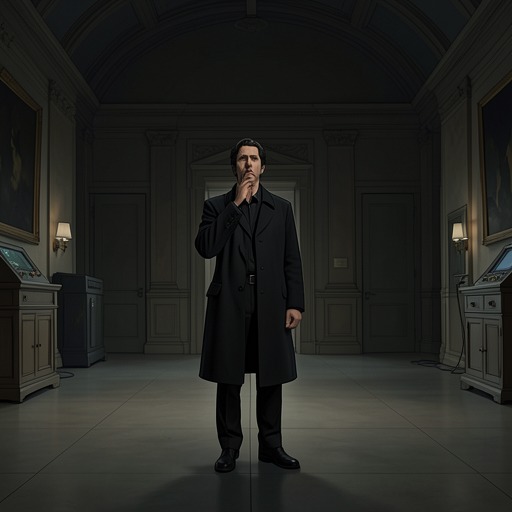
The man to whom nothing on earth was to have happened
The Beast in the Jungle“The man to whom nothing on earth was to have happened” is the phrase that crystallizes John Marcher’s final understanding of his life: he has not escaped a decisive fate but fulfilled one through years of waiting, and through his failure to love May Bartram. Its force lies in the reversal between the event he expected and the empty, suspended life he actually lived.
Meaning of the Phrase
At the climax, Marcher recognizes himself as “the man of his time, THE man, to whom nothing on earth was to have happened.” The emphatic repetition makes the phrase sound less like a description of a passive life than the name of a destiny. He had imagined that some extraordinary event remained ahead; now he understands that the long wait itself was his allotted experience. His fate was not an approaching incident that would interrupt his life, but the life produced by waiting for one.
The recognition also changes what “nothing” means. Marcher has survived, pined, and spent his days anticipating a future revelation, but he sees that he has never undergone the deep emotional upheaval he now identifies with passion. His apparent safety from catastrophe has been inseparable from his deprivation of love. The phrase therefore describes not mere inactivity but the cost of a life organized around anticipation rather than emotional commitment.
The Reversal in Marcher’s Understanding
The insight comes when the sight of a stranger mourning someone he has loved makes Marcher understand what such grief reveals. The stranger’s face gives him an experience he has not learned from within his own life: the pain of losing a woman loved for herself. Turning back to May Bartram’s name, he understands that she was what he had missed. The discovery gathers his past into a single explanation and exposes the blindness with which he had interpreted their relationship.
Marcher realizes that May had understood the truth before he did. When she told him that his fate had already come down, she had offered him a possible escape: he could have loved her, and then he would have lived. Instead, he stared without understanding. The phrase’s apparent claim that nothing happened thus conceals a specific missed possibility. May had loved him for himself; Marcher had regarded her through what she could do for him, as a companion in his vigil and a means of making his private expectation bearable.
The Phrase and the Ending
The passage connects Marcher’s fate to the Beast he had feared would one day spring. In his final understanding, it did spring—not as the external calamity he had anticipated, but in the moment he failed to recognize May’s offer of love. The danger he had imagined as future and separate from himself was bound to his own way of living: by waiting for destiny, he missed the relation that could have made his life emotionally real.
This knowledge arrives too late to change what happened. Marcher remembers that May had prayed he would not understand, yet he tries to hold the painful truth before him because, belatedly, pain has something of the taste of life. The illumination ends not in recovery but in horror: as the Beast rises in his vision, he turns instinctively and flings himself face down on May Bartram’s tomb. The phrase thus culminates in an irony of recognition: Marcher finally discovers the meaning of his fate only when he can no longer choose otherwise.