
The Bell Jar Returns
The Bell JarThis flow traces the novel’s bell-jar image from Esther’s first sense of disconnection to her recognition that recovery cannot guarantee permanent release.
increasing Bearing strength in each event
 decreasing
Bearing strength in each eventdecreasingThe Empty Center

Success Without Contact
A city seen at a distance
Esther moves through New York’s parties and magazine events as if unable to hear the city. The streets and lights appear present but offer no connection.
Isolation takes form
Her silence is described as her own rather than the city’s. The early estrangement establishes the emotional enclosure that the bell-jar image later names.
The Glass Enclosure
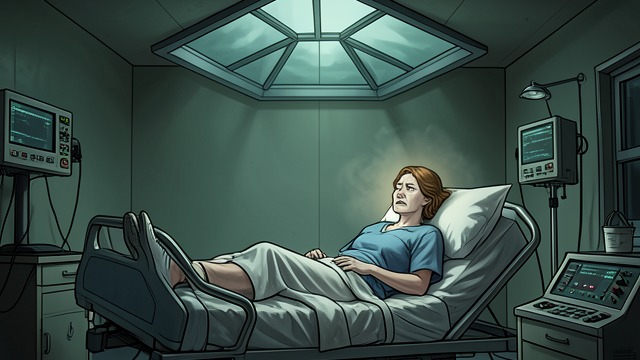
Air Made Unbreathable
A persistent condition
Even after Esther receives a private room and better care, she imagines herself beneath the same bell jar. Changing location has not changed her inner experience.
The metaphor’s reach
The image describes not simply sadness but a distorted world in which every place reproduces the same confinement. Material comfort alone cannot lift the pressure.
Brief Circulating Air

A Temporary Opening
Relief after waking
Esther wakes beside Doctor Nolan and feels unexpectedly peaceful. For a time, the oppressive enclosure hangs above rather than sealing her in.
Recovery remains conditional
The image does not disappear permanently. Treatment can create breathing room, but the future still depends on care, time, and Esther’s continued participation.
The Shared Jar

Ordinary Life Reconsidered
Other enclosures
Esther wonders whether the women in college also sit beneath bell jars of their own. The thought expands the metaphor beyond a single patient without erasing the distinct severity of her illness.
A social image
Conventional routines may confine people even when they appear well. Esther’s perception links private illness to the pressures embedded in ordinary expectations.
The Jar May Descend

Hope Without Assurance
Facing the board
Esther enters the room where doctors will assess whether she can return to college. She has no complete certainty about what awaits her outside.
A qualified ending
She knows the bell jar might descend again, yet proceeds through the door. The ending makes recovery a real but precarious opening, not a promise that vulnerability has ended.
early in Esther’s New York stay
after Esther enters the private hospital
after Esther’s first properly conducted shock treatment
during Esther’s final preparations to leave hospital
at the final hospital interview
