Doctor Quinn
The Bell JarDoctor Quinn is a physician at Belsize whose brief appearances frame the final crisis surrounding Joan’s disappearance and death. She moves from seeking Esther Greenwood’s knowledge of Joan to reporting that Joan has been found dead, and her restrained delivery makes her the institutional messenger through whom Esther receives the news. Though the novel gives little account of her beyond these encounters, her role crystallizes the contrast between clinical procedure and the intimate shock of loss.
Identity and Introduction
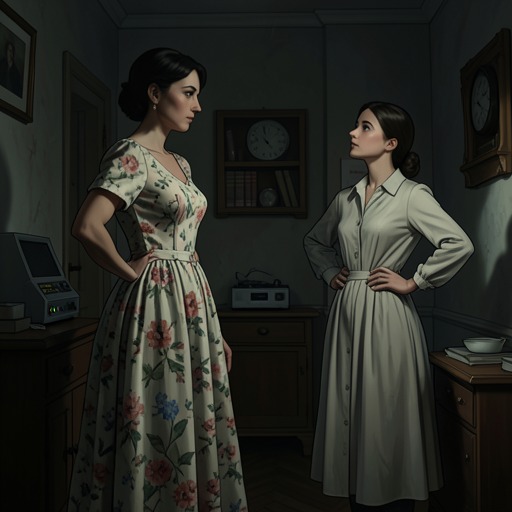
Esther recognizes Doctor Quinn before they have spoken: she has often passed her in the asylum hall with only a brief nod. Their relationship begins not with treatment or personal familiarity, but with that muted recognition across the institution’s corridors. When Doctor Quinn comes to Esther’s room after midnight, her brisk, dark head appears in the doorway; she wears an immaculate navy suit and a plain white blouse. The neatness of her appearance and the formality of her request distinguish her from the intimate confidante Esther considers Doctor Nolan, even as Quinn approaches her at the bedside rather than summoning her elsewhere.
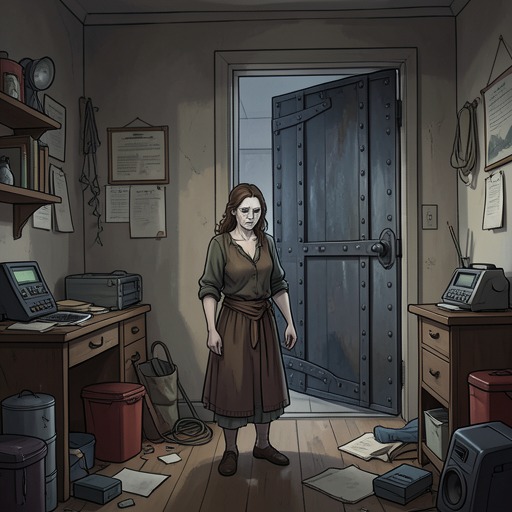
The late visit follows an earlier change in Joan’s circumstances. After returning to Belsize from the Emergency Ward, Joan has resumed living at the asylum while retaining the freest of town privileges. When Joan fails to return from a permitted trip to a movie, the hospital must establish where she is. Doctor Quinn comes to Esther because she may know something, making Esther’s limited knowledge part of an institutional search whose outcome neither woman yet knows.
The Search for Joan
Doctor Quinn sits on the edge of Esther’s bed with a grave expression and asks where Joan is. The hour is well past the Belsize curfew, and Quinn explains that Joan had permission to go into town to see a movie but has not come back. Her question places the immediate responsibility on finding an absent patient; it does not initially disclose what has happened or imply that Esther is being accused of causing Joan’s departure.
Esther nevertheless considers whether Quinn might blame her for Joan’s return to the asylum. She is unsure how much Joan knows about their earlier trip to the Emergency Ward, and she wants to dissociate herself from Joan completely. Esther answers coldly that she does not know and asks whether Joan is in her room. The reply reveals more about Esther’s self-protective distance than about Joan’s whereabouts: faced with a request that could make her a witness or companion, she retreats into denial of any special knowledge.
The News of Joan’s Death
At frost-gray dawn, Doctor Quinn returns to Esther’s door and tells her that Joan has been found. Her posture is formal, almost military, but Esther perceives her outline as curiously blurred. Quinn explains that an orderly discovered Joan while coming to work. The details narrow the search to its final, irreversible answer: Joan has been found, not returned safely to the asylum.
Doctor Quinn then states directly that Joan is dead and has hanged herself. The passive phrasing of the announcement first slows Esther’s response, as if the grammatical distance could soften the news; Quinn’s next words remove any uncertainty. The doctor’s concise report carries the authority of the institution, but the scene is organized around Esther’s reception of it: the facts arrive in stages, and each one changes the meaning of the previous night’s search.
Narrative Role and Significance
Doctor Quinn’s appearances form a compact sequence of inquiry, return, and disclosure. At night she asks Esther to help establish Joan’s whereabouts; at dawn she supplies the information that ends the search. She does not become a sustained confidante or an interpreter of Joan’s state. Instead, her significance lies in the boundary she occupies between institutional knowledge and personal grief: she can report what the asylum has learned, while Esther must absorb what the report means.
The contrast between the two visits also sharpens Esther’s ambivalence toward Joan. Esther initially wants to separate herself from her, yet Doctor Quinn chooses to ask her where Joan might be, placing them together in the crisis whether Esther welcomes that connection or not. By morning, the question of Joan’s whereabouts has become news of her death. Quinn’s restrained professionalism does not explain or console; it gives the loss a precise, unavoidable form, bringing Esther’s story to the threshold of its final reckoning.