Esther Rejects Buddy's Proposal
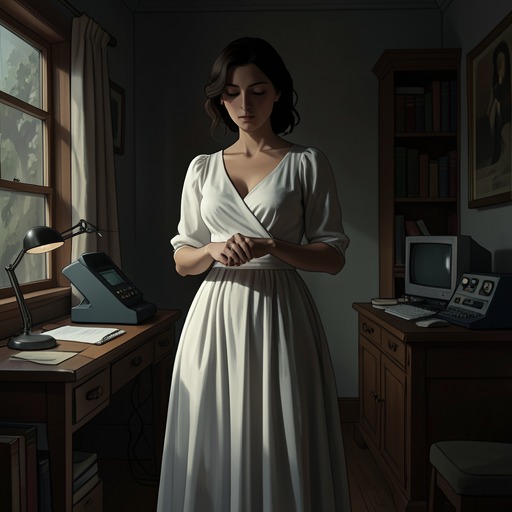
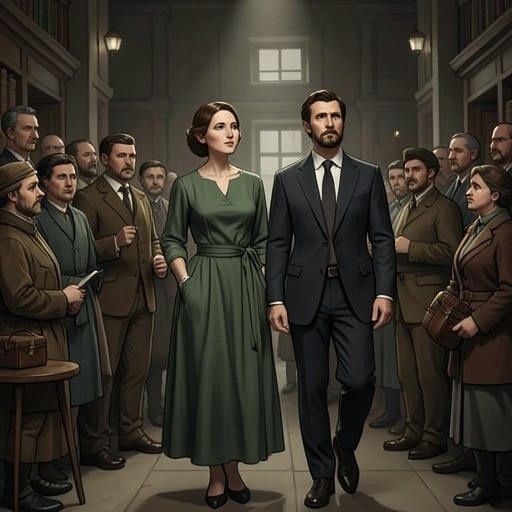
The Bell JarEsther Rejects Buddy's Proposal is the moment when Esther Greenwood answers Buddy Willard’s long-awaited marriage question with a refusal: she says she is never going to marry and insists that her mind is made up. The scene overturns the expectation that their renewed closeness will lead naturally to marriage. Esther’s answer also crystallizes a wider conflict: she wants incompatible possibilities at once, while the social rules surrounding sex and pregnancy make a husband seem less like a solution than a means of control.
The Proposal and the Refusal
Buddy sits beside Esther, puts an arm around her waist, and brushes the hair from her ear before asking, “How would you like to be Mrs. Buddy Willard?” Esther does not move; instead, she has an impulse to laugh. The question would once have overwhelmed her: she recalls having adored Buddy from a distance for five or six years. That remembered attachment gives the refusal its force. She is not responding to a stranger or dismissing a proposal that never mattered; she is confronting a future she had once imagined as desirable.
Buddy quickly acknowledges that he is not yet ready to marry. He is still on P.A.S., may lose a rib or two, and expects to return to medical school by the following fall or, at the latest, a year from spring. Esther does not answer by negotiating a later date. She says there is something she should tell him, then states, “I'm never going to get married.” Buddy assumes she has met someone else, but she denies that explanation. When he tells her she is crazy and will change her mind, she answers, “No. My mind's made up.” His cheerful response does not alter the finality of her position.
Marriage, Sex, and Unequal Risk
The refusal is illuminated by the views of sex and marriage Esther has encountered. Her mother had mailed her an article from Reader’s Digest, “In Defense of Chastity,” written by a married woman lawyer with children. The article argues that women should not sleep with anyone but their husbands and that marriage joins the supposedly different emotional worlds of men and women. Esther recognizes the force of its warning even as she resists its prescription: the article says there is no completely reliable way for a woman to avoid pregnancy, and the possibility of having a baby hangs at the edge of sexual intimacy.
Esther has already witnessed childbirth beside Buddy. From a few feet away, she sees a woman whose raised stomach hides her face and upper body, her legs held in stirrups while she makes a continuous, inhuman whooing sound. Buddy explains that a drug will make the woman forget the pain. Esther instead imagines the drug as something a man would invent: it may erase conscious memory, but the woman is in terrible pain, and the prospect of further childbirth remains. Her response connects marriage and sexual respectability to bodily consequences borne by women, rather than treating them as abstract matters of sentiment.
Later, Esther tells Doctor Nolan that she hates the thought of being under a man's thumb. She says that a man has no comparable worry, while a baby hangs over her like a stick to keep her in line. When Doctor Nolan asks whether she would act differently without the fear of pregnancy, Esther says yes and recalls the chastity article. The proposal scene’s refusal thus belongs to an ongoing argument about choice: marriage cannot be separated from the unequal conditions under which Esther expects women to have sex, become pregnant, and assume domestic responsibility.
A Conflict Without a Romantic Resolution
Esther names the instability behind her decision when she says, “If neurotic is wanting two mutually exclusive things at one and the same time, then I'm neurotic as hell. I'll be flying back and forth between one mutually exclusive thing and another for the rest of my days.” The statement gives the refusal a complication that a simple declaration of independence would miss. Esther is not claiming to have resolved every conflict within herself; she is asserting that marriage will not settle them. Buddy responds, “Let me fly with you,” but the scene offers no agreement to marry and no promise that he can remove the contradictions she describes.
The refusal also resists the polished ideal of romance circulated by popular culture. In Esther’s New York magazine month, the twelve contest winners receive paid work, gifts, fashion opportunities, and staged social experiences; one photograph presents them in martinis and formal clothes beside anonymous young men hired or loaned for the occasion. The magazine image promises a conspicuous, enviable life, but Esther says she is not steering herself: she moves between hotel, work, and parties like a numb trolleybus. Against that public performance of feminine success, her private answer to Buddy is not an image of fulfillment but a decision about what she will not accept.
Significance
The event is decisive because Esther speaks her choice aloud at the point when Buddy offers the role she once might have welcomed. Her refusal does not erase her former admiration, nor does it produce a settled alternative life. Instead, it exposes the distance between romantic expectation and the material conditions shaping a woman’s future. The scene’s lasting tension lies in the contrast between Buddy’s confidence that she will change her mind and Esther’s insistence that she has decided: marriage is presented as a socially expected destination, but she refuses to let that expectation answer the conflicts she still has to live with.