Joan as Esther's double
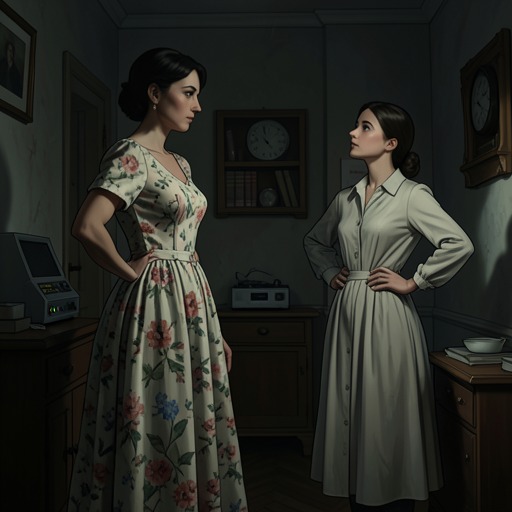
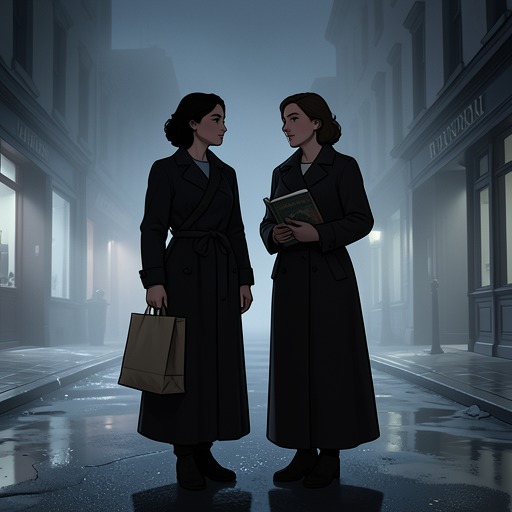
The Bell JarJoan as Esther's double is an uneasy pattern of resemblance through which Esther sees her own former self and ongoing crisis at a troubling remove. Joan is neither simply Esther’s replica nor a reassuring opposite: her independent thoughts and feelings form what Esther calls a wry, black image of her own, making their likeness both intimate and alienating.
A Double Seen from a Distance
At Caplan, Esther gathers news of Joan’s privileges into what she calls a bitter heap. Joan has gained permission to walk, shop, and go into town, while Esther hears of these advances with outward gladness and inward resentment. She imagines Joan as the beaming double of her old best self, specially designed to follow and torment her. The image makes progress painful: Joan’s movement toward the nearly well becomes a measure against which Esther experiences her own distance from recovery.
Esther does not know whether Joan will still be at Belsize when she arrives. The possibility of meeting her is bound up with Esther’s hope of leaving Caplan and its shock treatments, but Joan’s presence would also bring the comparison with her nearly well self into the next stage of treatment. The double therefore marks a divide as much as a likeness: Joan’s apparent progress seems to display a version of Esther that she cannot yet inhabit.
Resemblance Without Identity
When Esther looks at Joan, her fascination persists despite her dislike and the eerie feeling Joan gives her. She compares the experience to observing a Martian or a warty toad, figures that stress the strangeness of the person before her. Yet Joan’s thoughts and feelings seem close enough to Esther’s to become a distorted reflection. The relationship does not erase their difference; it makes difference the means by which Esther recognizes a likeness she would rather keep at a distance.
That unstable recognition leads Esther to wonder whether she invented Joan. At other times, she imagines Joan appearing at each crisis to remind her of what she has been and endured, while Joan carries on a separate but similar crisis beside her. This uncertainty gives the doubling a formal as well as psychological force: Joan can be read as an independent character, yet Esther’s narration repeatedly makes her a figure through whom the past returns and the present becomes legible.
The Public Self and Its Image
The novel places this doubling within Esther’s wider unease about prescribed images of feminine success. In New York, the magazine contest presents its twelve winners as lucky young women: Esther imagines readers seeing her in a silver-lamé bodice and white tulle, surrounded by handsome hired men, and concluding that she has made a dazzling ascent. In practice, she feels numb, moving between hotel, work, and parties without feeling that she is steering even herself. The public image of a successful young woman and Esther’s private sense of emptiness already stand apart before Joan becomes an explicit double.
The contest’s prizes give that image a material form. The winners receive a month of New York jobs and a stream of fashion-related gifts and opportunities, including tickets, fashion shows, salon appointments, and professional advice. Esther later recognizes the advertising purpose behind the gifts, but remembers taking pleasure in them and keeping objects such as the makeup kit and shell-decorated sunglasses case. These details sharpen the contrast between a marketable image of womanhood and the unstable self Esther experiences; Joan’s resemblance likewise offers not a finished ideal but a troubling likeness that returns through crisis.
A Distorted Mirror of the Novel’s World
The mirror pattern resonates with the novel’s images of manufactured appearance. At Ladies’ Day, Esther sees the glossy kitchens where food is staged for photographs, including apple pie à la mode whose melting ice cream must be propped up with toothpicks and replaced when it looks too soft. The polished image depends on continual adjustment behind the scenes. In a different register, Esther dislikes Technicolor films because their lurid costumes and heightened colors make people seem posed amid exaggerated scenery. Both episodes make visible the distance between a display and lived experience, a tension echoed by Joan’s role as a reflection that can never be identical to Esther.
Even Esther’s encounter with a group of people who ask why she feels lousy carries the pressure of other people’s expectations: she resents being asked cheerfully how she is when they expect her to say she is fine. Her suspicion that people connected to Buddy might gossip about her makes the social gaze feel threatening rather than supportive. Against that pressure, Joan’s double function remains ambivalent. She is a separate person with her own crisis, but Esther’s account also makes her a recurring image of what Esther has been through—and of the self Esther cannot yet securely claim as past.