Lenny Shepherd
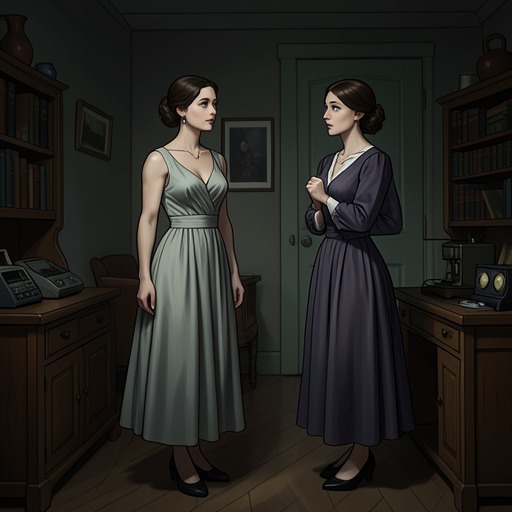
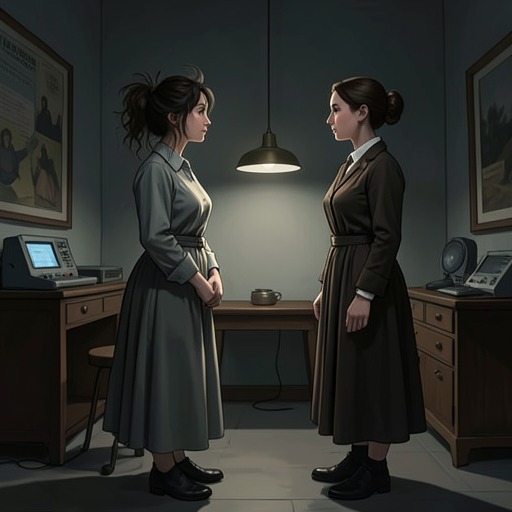
The Bell JarLenny Shepherd is a disc jockey whom Esther Greenwood meets during a night out with Doreen. At his apartment, professional celebrity, flirtation, and physical force run together: Lenny introduces himself as famous, handles Doreen as though their intimacy is already established, and turns their dancing into a rough display. Esther watches, registers Doreen’s discomfort and apparent willingness in uneasy combination, and leaves before the encounter can go further. Lenny’s brief appearance matters less as a developed biography than as a scene in which his masculine self-assurance becomes a source of tension.
Identity and Introduction
When silence settles around the group, Esther asks Lenny what he does in New York. He slowly draws his eyes away from Doreen’s shoulder and identifies himself as a disc jockey, adding that she has probably heard of him. Doreen says that she knows him; Lenny laughs and boasts that he is famous. His introduction therefore presents public recognition as part of his self-image, though the scene gives no further account of his career or the extent of his fame.
His attention is already directed toward Doreen before that exchange. After looking at Frankie, he asks where Frankie comes from and what his name is, but the scene’s focus returns to Doreen when Lenny identifies her to the others. He slides a hand around her bare arm and squeezes it. Esther is struck by the contrast between this possessive gesture and Doreen’s composed manner: Doreen does not openly acknowledge the touch, but continues to sip her drink delicately. The episode establishes Lenny through what he does in company rather than through background or explanation.
At Lenny’s Apartment
Lenny asks Doreen’s companion to stay, and Doreen explains that she would have no chance if he tried anything funny, pointing to his muscles. The remark is delivered with a giggle, but it also makes Lenny’s physical advantage explicit and gives Esther a role as a witness and potential safeguard. Lenny then emerges from the back room, mentions that he has twenty thousand dollars’ worth of recording equipment there, and begins mixing drinks at the bar from several bottles. The expensive equipment and the display of drink-making give the apartment the atmosphere of a private space organized around his resources and hospitality.
Lenny and Doreen begin to jitterbug while still holding their glasses. Esther sits apart, trying to appear impassive; the bed rolls away from the wall when she leans on it, and she moves to the floor beside a bearskin instead. Her drink seems to rise back to the level of its painted pink lasso after she has sipped it. These details place her as an uneasy observer, physically and socially apart from the pair, while the dancing brings Lenny and Doreen into closer contact.
Physical Escalation and Esther’s Departure
The dance turns abruptly rough. Doreen tells Lenny to let go; he stoops, lifts her over his shoulder, and spins her while her glass flies against the pine paneling. Esther sees Doreen’s dress shift and her breasts become exposed as she thrashes and cries out. The scene then changes in tone: they begin laughing and slow down, and Lenny tries to bite Doreen’s hip through her skirt. Playfulness and coercive-looking handling remain entangled, with Doreen’s protest and laughter both present rather than resolved into a simple account of consent or danger.
Esther leaves before anything more can happen. She exits the apartment and makes her way downstairs by gripping the banister with both hands and half-sliding. Outside, the stale heat of the pavement strikes her after the air-conditioned apartment, and she finds herself unsure where she is. She briefly considers taking a cab to the party she had meant to attend, then rejects the idea because the dance may already be over and she does not want to arrive at an empty ballroom scattered with confetti, cigarette butts, and crumpled cocktail napkins. Lenny’s scene thus ends not with a judgment from him but with Esther’s withdrawal and a return to her own uncertain night.
Characterization and Narrative Role
Lenny is characterized through a compact sequence of boasts, gestures, and actions: he claims celebrity, advertises costly recording equipment, mixes drinks, and confidently initiates physical contact with Doreen. His manner can appear convivial—the broad smile, the dancing, and the laughter—but the strength Doreen jokes about is also the force with which he hoists and spins her. The narrative keeps the tension visible without supplying a definitive explanation of what either participant intends.
Because the encounter is filtered through Esther’s attention, Lenny’s significance lies in the effect of his behavior on the scene and on her. Esther first stays at Doreen’s request, then watches the physical play intensify and finally leaves. Lenny remains a sharply drawn, limited presence rather than a character whose later development is traced: the episode uses his apartment as a place where celebrity, sexual confidence, physical power, and Esther’s impulse to get away meet in a single unsettling encounter.