The Amazon
The Bell JarThe Amazon is the women-only New York hotel where Esther Greenwood stays during a month of work awarded through a fashion-magazine contest. Its orderly rooms, restricted windows, and rooftop frame a widening contrast: the hotel offers safety and the appearance of opportunity, yet Esther feels unable to steer her life within the very world that presents her as a fortunate young woman. As her crisis deepens, the Amazon’s spaces acquire different meanings, from a dormitory-like residence to a place of isolation and a setting for a dangerous rooftop decision.
Identity and Residents
The Amazon houses the twelve contest winners in single rooms along the same wing and floor. The arrangement reminds Esther of her college dormitory, but she distinguishes this women-only hotel from a conventional hotel where men and women share a floor. The Amazon’s separation is purposeful: its residents are largely young women whose wealthy parents want them protected from men who might deceive them.
Many of the other residents attend, or have graduated from, secretarial schools such as Katy Gibbs, where students wear hats, stockings, and gloves to class. Some graduates work as executives’ secretaries while waiting to marry a career man. Esther sees them yawning, painting their nails, and maintaining their Bermuda tans on the sunroof. One woman’s accounts of yachts, flights, skiing in Switzerland, and men in Brazil sharpen Esther’s envy: she has scarcely travelled beyond New England, and feels that her own first major opportunity is slipping away even as she inhabits a place associated with privilege.
The Contest and Its Promise
The hotel’s residents have won a fashion-magazine contest by writing essays, stories, poems, and fashion blurbs. The prize brings a month of paid New York work, alongside gifts and invitations: ballet tickets, fashion-show passes, hair appointments at an expensive salon, meetings with successful professionals, and advice about complexion. The hotel is thus not only accommodation but part of a carefully packaged introduction to the fashion and magazine world.
That promise is conveyed through images as much as through work. Esther imagines readers seeing her in a magazine photograph, wearing a skimpy imitation silver-lamé bodice and white tulle, drinking martinis beside anonymous, conventionally handsome young men. The picture would make her seem to be enjoying a glamorous whirl. Her actual experience is the opposite: she moves between the hotel, work, and parties like a numb trolleybus, feeling still and empty amid the surrounding commotion. The Amazon’s setting makes that discrepancy concrete: she is inside the winning story the magazine sells, but does not feel that she controls its direction.
The hotel’s gifts likewise turn personal experience into commercial display. Esther keeps a make-up kit selected for brown eyes and brown hair, with mascara, blue eyeshadow, three lipsticks, and a small gilt mirror case. She also retains a white plastic sunglasses case decorated with colored shells, sequins, and a green starfish. She recognizes that the presents advertise the firms that provide them, yet takes pleasure in receiving them; later, after recovering, she brings them out again, uses the lipsticks, and cuts the plastic starfish off for a baby to play with. The objects preserve both sides of the hotel’s world: consumer promotion and the particular memories Esther attaches to its giveaways.
Rooms, Windows, and Social Separation
The Amazon’s architecture alternately protects and frustrates Esther. The women-only floor is presented as a safeguard for its young residents, but the hotel’s windows cannot be opened far enough for a person to lean out. After returning to her room, Esther pushes the button for the window vent and becomes furious at the restriction. From the side of the window, pressing her cheek to the woodwork, she can see downtown and the United Nations glowing green in the dark, along with traffic and bridges whose names she does not know. The view offers contact with the city while the fixed window keeps her physically apart from it.
The same room can also feel like a sealed enclosure. One night Esther returns to find it full of smoke left by Doreen. She initially imagines the smoke as a judgment before remembering its ordinary source and opening the vent. Later, alone in the quiet, she describes the silence not as silence in general but as her own. The distinction turns a private hotel room into a measure of her estrangement: the city remains visible outside, while the experience of being cut off is internal and personal.
The Hotel in Moments of Crisis
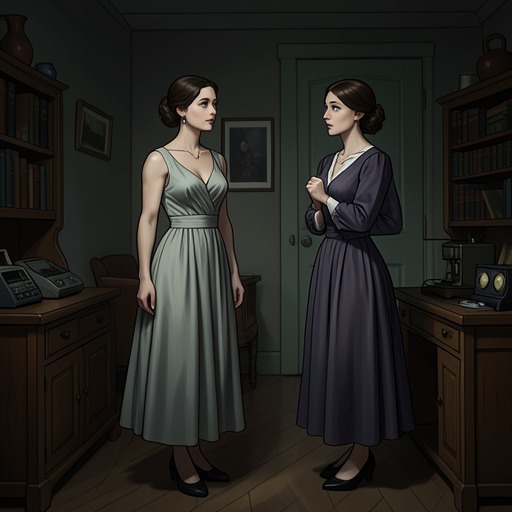
The Amazon’s rooms hold both Esther’s efforts to regain composure and the interruptions that unsettle them. After a night of drinking and distress, she lies in a bath until she feels clean and pure, then wraps herself in a large white hotel towel and falls asleep. She wakes to knocking and at first does not respond to the name Elly, because she does not recognize it as hers. A second voice calls her Miss Greenwood and identifies the visitor as Doreen. The two forms of address make the hotel room a place where Esther is confronted with competing versions of herself even as she tries to retreat into sleep.
The hotel also marks the limits of Esther’s connection to the contest group. At a Ladies’ Day luncheon, Doreen’s place beside Esther remains empty because she is spending the day with Lenny Shepherd. Esther saves the place card, a pocket mirror with Doreen’s name and frosted daisies around its silver centre. The group has been given a tour of the magazine’s glossy kitchens, where melting ice cream must be propped up with toothpicks and replaced whenever it looks too soft for a photograph. The staged food and the vacant place beside Esther bring the magazine’s manufactured surfaces into the hotel’s social world: abundance is displayed, while the relationship Esther might have shared with Doreen is absent.
At another point in the novel, the Amazon appears in recollection from a later, institutional setting. Esther passes a lounge where a girl named Valerie offers an introduction, but Esther pretends not to hear and walks away. She notices nurses behind a waist-high door; one is repeatedly writing E. Greenwood on strips of adhesive tape. The repeated name and the barrier at the nursing area make institutional identification and restricted movement part of the scene’s atmosphere. Later, Esther watches Miss Norris being moved by a nurse, who explains that Miss Norris is going to Wymark and is not moving up like Esther. The Amazon is not the institution in these scenes, but it belongs to the wider sequence of enclosed spaces and uneven permissions through which Esther’s movement is narrated.
Rooftop and Narrative Significance
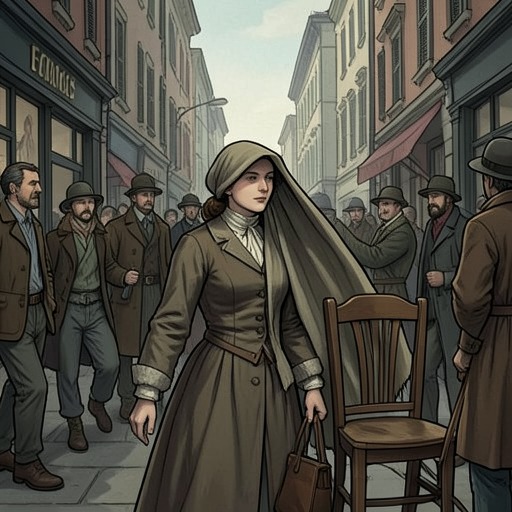
The Amazon’s sunroof becomes especially charged at the hour between night and dawn. After leaving a dance, Esther returns in a cornflower-sprigged bathrobe, finds the roof deserted, drags a folding chair to the parapet, and climbs onto its precarious seat. A stiff breeze lifts her hair; below, the city has extinguished its lights and its buildings look blackened, as if for a funeral. The height, chair, and parapet transform the hotel from sheltered residence into a threshold at which the city is at once near and remote. The scene’s quiet contrasts with the parties and publicity that had been supposed to define Esther’s New York month.
Across these episodes, the Amazon is neither simply refuge nor simply prison. Its women-only rules promise protection, while its fixed windows and separated rooms materialize limits; its magazine-sponsored rewards promise access, while Esther experiences numbness and estrangement. The rooftop gathers those tensions into one stark image of proximity without belonging. The hotel’s importance lies in how its different spaces register the difference between a life made attractive for public display and Esther’s uncertain, increasingly precarious experience of living it.