
The Meaning of Gifts
The Best Christmas Pageant EverThis flow contrasts decorative religious gifts with the Herdmans’ practical offering and follows how generosity becomes visible through an unexpected object.
increasing Bearing strength in each event
 decreasing
Bearing strength in each eventdecreasingThe Traditional Gifts
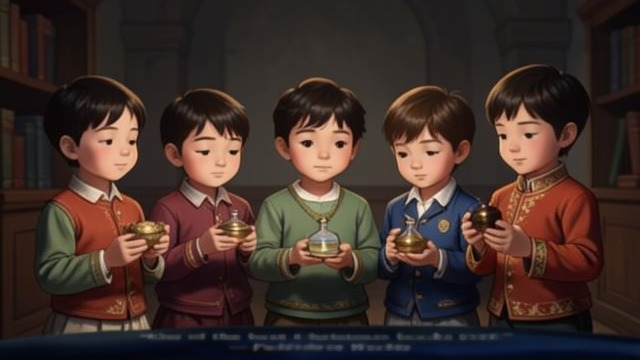
Gifts in the Story
Precious Oils and Resins
The children hear that the visitors bring gold, frankincense, and myrrh. The traditional names are unfamiliar, and their material significance is not immediately clear to the Herdmans.
A Distance from Ordinary Need
The gifts are elegant and ceremonial in the pageant’s usual presentation. Imogene questions whether oil is a worthy present for a baby’s family.
A Practical Standard
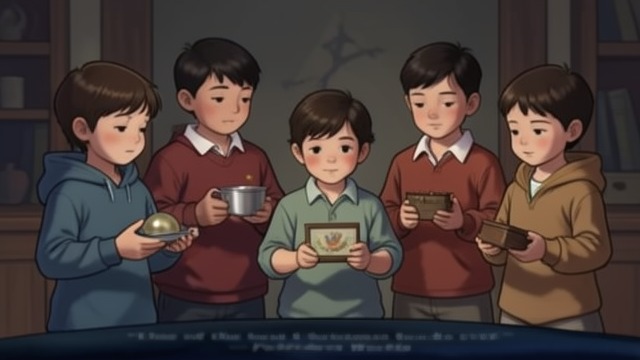
The Children Ask What Helps
Imogene’s Objection
Imogene compares the oils unfavorably with the gifts distributed by firefighters. Her judgment is comic but grounded in a practical sense of what counts as useful.
Value Reconsidered
The question shifts attention from ceremonial value toward the needs of a family in hardship. A useful gift may be more meaningful than one that merely looks impressive.
The Family’s Ham
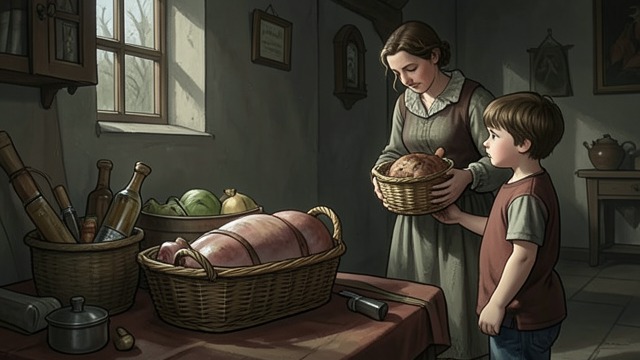
A Useful Present Leaves the Basket
Food from the Church
The Herdmans have received a Christmas food basket that includes a ham. Their brothers select it for the Wise Men’s offering.
Giving What They Have
The choice turns a practical resource into a gift. The children do not imitate the pageant’s fancy props; they bring something their family can actually eat.
A Gift Misread as Theft
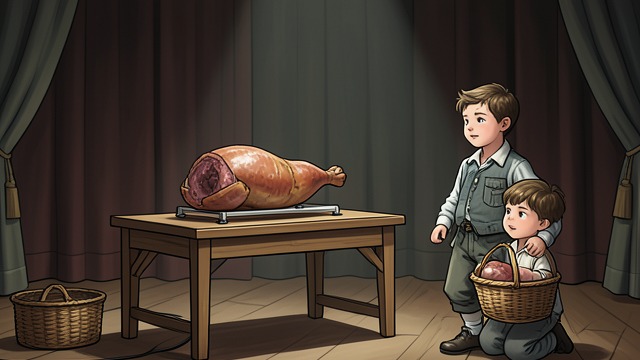
The Audience Questions the Ham
Suspicion Comes First
Alice assumes the brothers stole the ham. The narrator explains that it came from their own food basket and that they may give away what belongs to them.
Generosity Becomes Legible
The object looks odd on the stage, but its origin gives it moral weight. The audience must revise its expectations about who takes and who gives.
A Gift That Defines the Visitors

The Wise Men Carry Ham
A New Memory
The narrator imagines the Wise Men as Leroy and his brothers bearing a ham rather than perfume jars. The gift becomes inseparable from the children who chose it.
Material and Spiritual Meaning
The pageant does not reject the traditional gifts, but it makes generosity concrete and familiar. The family’s offering links the sacred scene to everyday provision.
During the first Bible-reading rehearsal
After the gifts are explained at rehearsal
Before pageant night
During the Wise Men’s entrance
After the pageant ends
