“Silent Night”
The Best Christmas Pageant Ever“Silent Night” is the traditional final carol of the Christmas pageant, but during the Herdman Christmas pageant it becomes the moment that gives the performance its unexpected emotional force. The congregation sings every verse together, while the narrator notices Imogene Herdman crying in the candlelight; afterward, people agree that this was the best pageant they had seen, even though they cannot explain exactly why.
Place in the Pageant
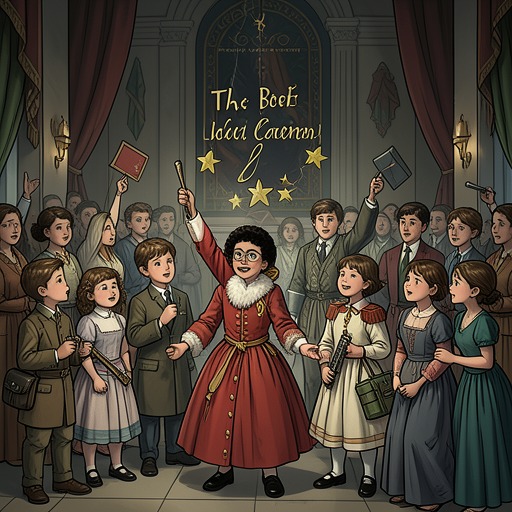
The carol belongs to a performance ordinarily governed by familiar roles and routines. The pageant’s script, costumes, and casting are standard, and “Silent Night” has always come last. The Herdman children’s involvement unsettles expectations before the performance begins: Mother resolves to make the pageant the best she can, with the children included, after they volunteer when nobody else does. Even when the show starts, its usual mishaps appear—the crowded stage, stumbling shepherds, and wavering spotlight—so the carol arrives within a ritual that seems at first to be proceeding much as usual.
A Change in the Narrator’s Expectation
The narrator’s response to the final carol changes before its decisive moment. Usually, by the time “Silent Night” begins, the narrator is tired of the pageant and eager for it to end. This time, the narrator almost wants the performance to continue, imagining further ways the characters might protect the baby Jesus from King Herod. That imaginative investment is so absorbing that the narrator misses the beginning of the song. The familiar ending no longer feels like a cue to leave; the altered performance has made its next possibility worth waiting for.
Imogene’s Tears
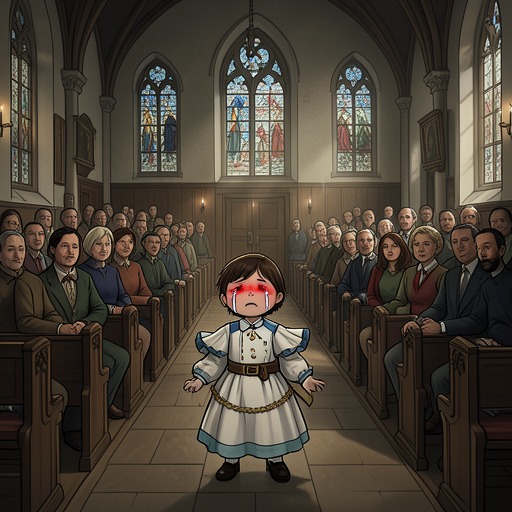
The carol’s central turn comes as everyone sings all its verses, including the audience. At the words “Son of God, Love’s pure light,” the narrator looks toward Imogene and sees her crying. She does not wipe away her tears; in her crooked veil, she simply keeps weeping. The sight overturns the audience’s expectation that the Herdmans will produce some disruptive surprise. Imogene’s unexpected response, rather than a comic mishap or a new improvisation, becomes the performance’s defining revelation.
Meaning and Aftermath
The song gives the pageant’s communal ending a meaning the congregation cannot readily put into words. When the performance is over, people gather in the Church lobby and agree that something was special, while struggling to identify what had changed. Their uncertainty contrasts with the narrator’s specific memory of Imogene crying during the carol: the pageant’s effect is widely felt, but its decisive image is private and concrete. By placing Imogene’s tears within the familiar final song, the story turns a routine ending into the moment when the Herdmans’ participation changes how the community experiences the pageant.