Alice Wendleken
The Best Christmas Pageant EverAlice Wendleken is the community pageant’s customary Mary, a role that makes her seem an obvious fit for its orderly, familiar tradition. Yet her place in that tradition does not protect her from Imogene Herdman: fear of Imogene helps determine what Alice is willing to do, and Alice’s notes later reach a network of concerned adults.
Identity and Established Role
The Christmas pageant follows a standard script and familiar casting pattern. Alice is Mary because she is smart, neat and clean, and, above all, holy-looking. Her suitability is presented as part of the community’s established arrangement rather than the result of an open contest; the children already expect to know their parts before the annual gathering to settle the main roles.
That routine gives Alice a visible position in the pageant, but it also places her within narrow expectations. Mary is already understood to be Alice’s part, just as the younger children, intermediate pupils, and older boys are assigned other customary roles. The pageant’s predictable order frames Alice as a reassuringly conventional choice before the Herdman children begin to unsettle its arrangements.
Concern About the Casting
When the pageant roles are discussed again, Alice turns to the narrator with a sticky smile and says she hopes the narrator will be in the angel choir again, praising the narrator’s suitability for that group. The narrator interprets the remark as Alice’s wish to prevent her from becoming Mary merely because the Narrator’s Mother is running the pageant. Alice’s concern is therefore expressed indirectly: she does not openly claim the role, but appears anxious that the usual casting might change.
The narrator says she does not want Mary, but does not want the angel choir either; participation is compulsory, and everyone has to take some part. Alice’s apparent concern about the narrator’s possible promotion sits beside that reluctance. The exchange shows how the familiar assignment of roles can matter to Alice even as the pageant’s routine leaves other children feeling they have little choice.
Imogene’s Threat and Alice’s Silence
After Alice’s remark, Imogene digs the narrator in the ribs and asks what the pageant is. Later, when the children are leaving, the Narrator’s Mother asks Alice why she did not raise her hand to be Mary. Alice says she does not know and looks angry. The narrator supplies the reason: she had heard Imogene threaten Alice if she dared volunteer.
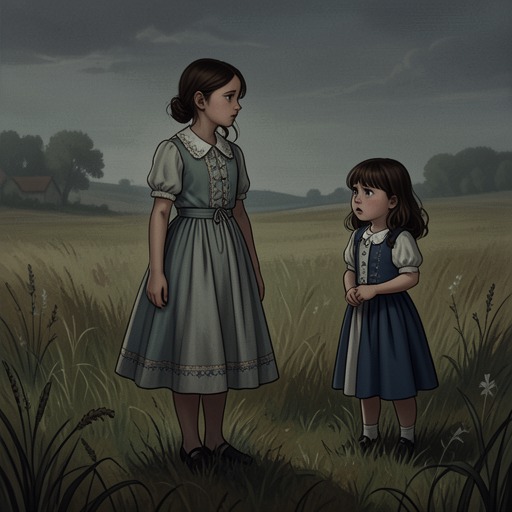
The threats are described through ordinary, specific acts of intimidation: Imogene might clonk Alice on the head, draw over her homework papers, or put worms in her coat pocket. Alice’s failure to volunteer is thus not evidence that she has no interest in the role; the narrator connects her silence to the practical danger of defying Imogene. Her accustomed status as Mary and her inability to assert that status freely exist side by side.
Notes and Adult Response
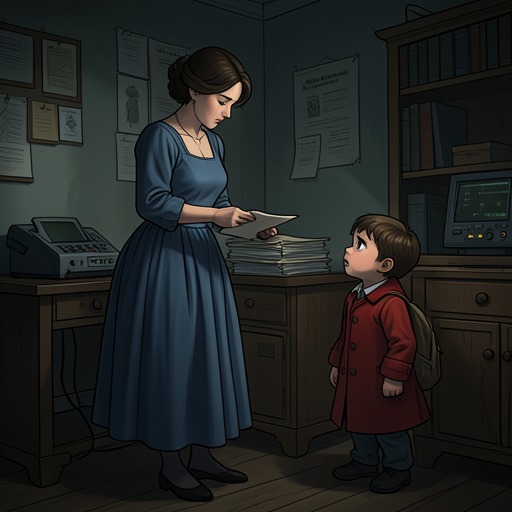
Later, Alice says her mother will be angry about the confusion surrounding the Herdman children. Mrs. Wendleken reads Alice’s notes that night and telephones people she can think of in the Ladies’ Aid and Women’s Society, members of the flower committee, Sunday-school teachers, and Reverend Hopkins. Alice’s notes become a route by which reports about the children circulate among adults, although their precise contents are not established here.
The calls do not produce a single clear account. Reverend Hopkins tells the Narrator’s Mother that people disagree about whether the Herdman children set fire to the ladies’ room or the kitchen, and that another report says Imogene threw a flower pot at Ralph. He also repeats Mrs. Wendleken’s claim that the children talk about sex and underwear. The Narrator’s Mother corrects the rumors: the children did not set fire to anything; the only fire was in the kitchen, where the pot-luck committee let its applesauce cake burn. Through this episode, Alice is connected not only to the pageant’s casting but also to the adult community’s attempt to make sense of the disruptions around the Herdmans.