Church principle of “Suffer the little children to come unto me”
The Best Christmas Pageant EverThe Church principle of “Suffer the little children to come unto me” is the rule of inclusion that settles whether the Herdman family may take part in the Christmas pageant. Invoked by Reverend Hopkins when church members object, it turns a general religious teaching into a concrete obligation: the children who have come forward must be welcomed, and the pageant must make room for them.
Meaning and Application
The principle enters the dispute after the usual order of the annual pageant has already been disrupted. Its script, costumes, and casting are familiar, and Alice Wendleken has long been assigned Mary partly because she is regarded as neat, smart, and holy-looking. When the Herdman family raises its hands to take part, however, familiar expectations give way to an argument over who belongs in the performance.
Narrator's Mother chooses to proceed with them rather than treat their participation as an inconvenience. She resolves to make the pageant the best she can, emphasizing that the Herdman family volunteered when no one else did. Her decision establishes the principle’s practical force: welcome is not conditional on having the most conventional performers or on preserving the community’s preferred arrangements.
The Dispute and the Church’s Response
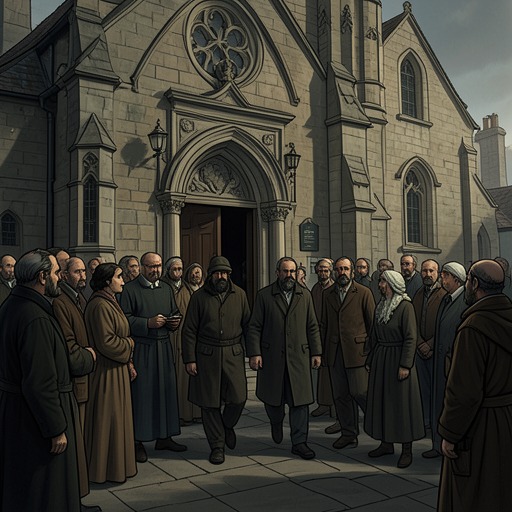
The objections do not end with Narrator's Mother’s decision. Other people complain, and nobody else is willing to take over the pageant. Reverend Hopkins finally intervenes, reminding the congregation that Jesus’s invitation to children includes the Herdman family. The appeal directly answers the attempt to draw a boundary around which children may approach the church and its activities.
The reminder silences the complaints, including those of Alice Wendleken’s mother, and rehearsals begin the following Wednesday. The principle thus has an immediate institutional consequence: it does not merely express kindness toward children in the abstract but helps authorize their participation in a shared church event, despite adult discomfort and the family’s reputation.
Inclusion in Practice
Welcoming the Herdman family also means accommodating the fact that they do not know the Nativity story. They know Christmas is Jesus’s birthday, but the shepherds, Wise Men, star, stable, and crowded inn are all new to them. Narrator's Mother responds by reading the story from the Bible rather than assuming that participation requires prior knowledge.
Their questions expose what the regular cast has stopped noticing. Imogene Herdman is startled that there was no room for Jesus at the inn; Leroy Herdman asks whether a manger is a bed and why there would be one in a barn; Imogene recalls that the family put Gladys Herdman in a bureau drawer. The children’s unfamiliarity does not disqualify them. Instead, their concrete questions bring poverty, a lack of shelter, and the practical vulnerability of a newborn into the foreground of a story the other children already know by heart.
Consequences for the Pageant’s Meaning
At the performance, Imogene Herdman and Ralph Herdman appear as Mary and Joseph, looking uncertain in the crowded church. Imogene’s veil is crooked, Ralph’s hair sticks out around his ears, and she carries the Baby Jesus doll over her shoulder before burping it and placing it in the manger. These details depart from the polished image expected of the pageant, but they make the Holy Family’s precarious circumstances newly legible to the narrator: the people in the stable might have been untidy, displaced, and subject to the indifference of others.
The principle’s effect therefore extends beyond admitting the children to the cast. By making space for people who approach the story without the congregation’s settled assumptions, it allows their responses to alter how familiar material is seen. The narrator recognizes that the Herdman family’s participation has made the wonder of Christmas less abstract: the story is also about a baby and parents in trouble, with no money, no place to go, and no doctor or familiar person to turn to. Inclusion changes not only who may stand in the pageant, but what the pageant can make its community understand.