Imogene’s emotional response to Christmas
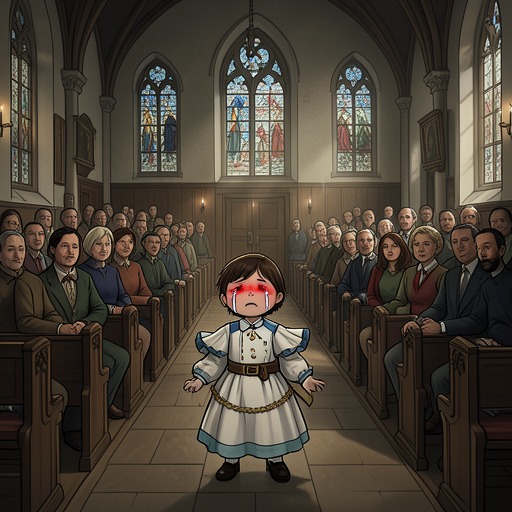
The Best Christmas Pageant EverImogene Herdman’s emotional response to Christmas transforms the pageant’s expected climax. As the congregation sings “Silent Night,” she cries without trying to hide it. Her tears are startling precisely because everyone has been waiting for the Herdmans to do something unexpected, yet the surprise is not disruption or defiance: it is an unguarded encounter with the Christmas story. The moment changes how the narrator understands both the pageant and the story it presents.
The song and the reversal
By the time the pageant reaches “Silent Night,” its usual final carol, the narrator would ordinarily be ready for everything to end. This time, however, the performance has held the narrator’s attention. The Herdmans have taken charge, and the possibility of their next unorthodox choice has made the familiar sequence feel open-ended. The narrator even imagines new ways Joseph, Mary, and the Wise Men might protect the baby from Herod. That imaginative detour means the narrator misses the beginning of the carol, but the song is being sung by everyone, audience included, and all its verses are sung.
When the singing reaches “Son of God, Love’s pure light,” the narrator looks at Imogene and nearly drops the hymn book onto a baby angel. The small, physical jolt marks a larger reversal in expectation. Everyone has been waiting for the Herdmans to do something startling; Imogene does, but not in the way the audience anticipates. She simply cries. The pageant’s most consequential unexpected act is not another intervention in the plot but a visible response to it.
Tears in the candlelight
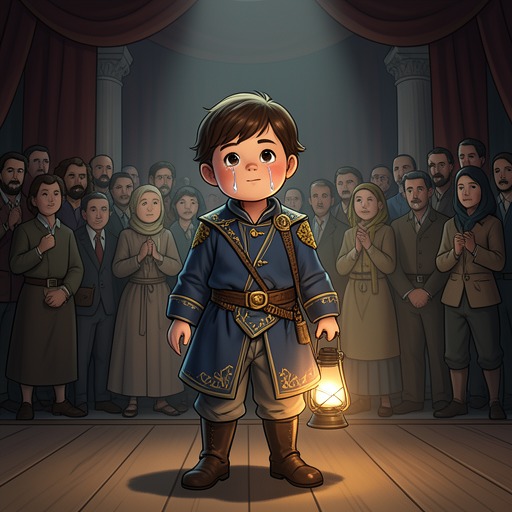
Imogene’s emotion becomes legible through her body. In the candlelight, her face shines with tears; she does not wipe them away, but sits crying in her crooked veil. The description lingers on the repeated crying rather than assigning her an explanation in her own words. Nothing in the scene reports a confession or a speech from Imogene. Her response is public, wordless, and difficult to mistake, even though its precise meaning remains something others must interpret.
The swollen appearance of her eye adds a detail that could have encouraged the congregation’s familiar assumptions about the Herdmans. Mrs. Wendleken later remarks on Mary having a black eye, as though such an injury were to be expected of a Herdman. But no one hit Imogene, and she hit no one; her eye is puffy because she walked into the corner of the choir-robe cabinet while in a daze. The injury is thus not evidence of a fight. It accompanies the same overwhelmed state as her tears, and the narrator reads her dazed collision as if she has just caught onto the idea of God and the wonder of Christmas.
That interpretation is carefully presented as the narrator’s, not as an explanation Imogene supplies. The account says that Christmas seems to come over her all at once, like a case of chills and fever, and links that sudden intensity to her crying and walking into furniture. The comparison conveys an experience that overtakes her before she can organize or explain it. The pageant’s religious meaning is shown not through an argument from Imogene but through a sudden, physical response that the narrator can witness without claiming to know all that she feels.
A changed understanding
Imogene’s response also alters the narrator’s relation to the story. For years, the narrator has thought about the wonder of Christmas and the mystery of Jesus’ birth without really understanding it. Now, because of the Herdmans, the mystery seems less remote. The change does not come from new plot information: the narrator already knows the story. It comes from seeing its familiar events under the pressure of the Herdmans’ attention and, most decisively, seeing Imogene moved by them.
Earlier, when Imogene asked what the pageant was about, the narrator answered that it was about Jesus, but recognizes that this was only part of the answer. The story also concerns a new baby and parents in trouble: they have no money, nowhere to go, no doctor, and no one they know. Rich friends arrive from the East. The narrator’s account grounds the sacred story in need, danger, and help arriving from far away. Imogene, the narrator guesses, does not encounter it in quite that explanatory way; Christmas comes over her all at once. The contrast leaves her experience partly mysterious while showing how it has made the story newly immediate to the narrator.
The moment’s aftermath
Afterward, the pageant’s audience can agree that this has been the best Christmas pageant they have ever had, yet people in the church lobby cannot put their finger on what made it special. Mrs. Wendleken identifies the swollen eye as an unusual feature of Mary, but that joke also shows how readily Imogene’s response can be misread through the Herdmans’ reputation. The narrator knows that there was no fight and connects the eye and the tears to Imogene’s dazed absorption instead.
The ending gives the emotion a quiet material setting: the costumes are put away, the collapsible manger is folded up, and the narrator’s father snuffs out the last tall white candle. These practical acts bring the performance to a close, but they do not undo its effect. The pageant leaves the narrator with a less abstract understanding of Christmas, while Imogene’s tears remain the clearest sign of what happened in the room. Her response is decisive not because she explains the story, but because the sight of her crying lets the narrator see that a familiar account of a vulnerable baby and troubled parents can still become newly moving.