Mrs. Wendleken
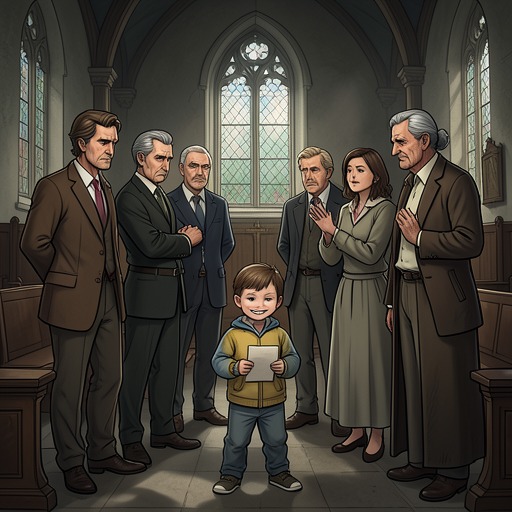
The Best Christmas Pageant EverMrs. Wendleken is Alice Wendleken’s mother and a prominent adult voice in the church community surrounding the Christmas pageant. Her actions show how the Herdman children’s reputation fuels opposition and rumor, while her comment after the performance exposes the assumptions through which she views them.
Identity and Opposition
When Alice’s mother tells the Ladies’ Aid that it is sacrilegious to let Imogene Herdman play Mary, she makes clear that her objection is not simply to an unconventional casting choice: she considers the role religiously improper for Imogene. Her opposition places her among the adults who resist the Herdman children’s participation, in contrast to the decision to let Imogene take the central role.
Mobilizing Church Rumors
After reading Alice’s notes, Mrs. Wendleken spends that night telephoning people across the church network. She calls everyone she can think of in the Ladies’ Aid and Women’s Society, most of the flower committee, all the Sunday-school teachers, and Reverend Hopkins. The calls help turn the pageant’s troubles into a church-wide uproar.
The reports attributed to her are not all reliable. Reverend Hopkins tells the Narrator’s Mother that Mrs. Wendleken says the Herdman children talk about sex and underwear; the Narrator’s Mother corrects him, explaining that Hobie Carmichael was the one talking about underwear. The scene distinguishes Mrs. Wendleken’s rapid circulation of alarming accounts from the facts the adults are trying to establish, and shows how quickly rumor can multiply around the Herdmans.
The Pageant and Her Interpretation
After the performance, Mrs. Wendleken remarks, “Well, Mary the mother of Jesus had a black eye; that was something special. But only what you might expect”. She treats the mark as fitting the familiar image of a Herdman: someone likely to be in a fight. But Imogene had not hit anyone, nor had anyone hit her. Her eye was puffy and swollen because she had walked into the corner of the choir-robe cabinet while dazed by the idea of God and the wonder of Christmas.
That contrast gives Mrs. Wendleken’s remark its significance. She recognizes the unusual detail but explains it through the Herdmans’ feared reputation, while the actual cause belongs to Imogene’s absorbed response to the story. Mrs. Wendleken thus embodies the gap between the community’s expectations of the Herdman children and what the pageant allows its audience to see.