The Herdman Christmas pageant
The Best Christmas Pageant EverThe Herdman Christmas pageant is the church’s annual Nativity performance transformed by the Herdman children’s unpolished participation. Cast in the leading roles and encountering the story as something genuinely new, they disrupt familiar stage conventions without erasing the story’s emotional force. Their mismatched gestures and unexpected gift of a food-basket ham make the Holy Family’s hardship feel concrete; Imogene’s tears at the final carol then change how the narrator and congregation understand the performance—and Christmas itself.
Background and Casting
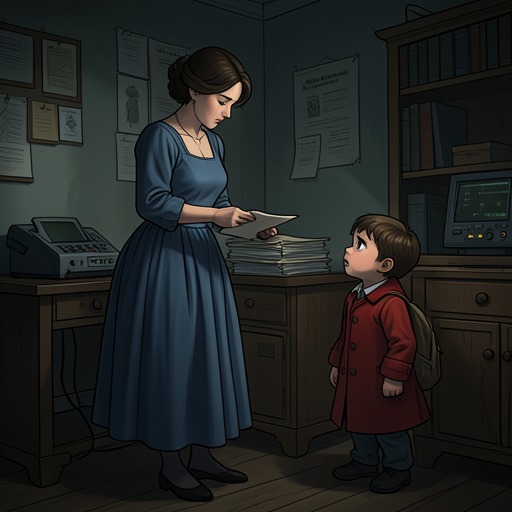
The pageant begins with an unusual problem: the Herdman children know that Christmas is Jesus’ birthday, but almost nothing else about the Nativity. The shepherds, Wise Men, star, stable, and crowded inn are all new to them. Their unfamiliarity is striking beside the usual children, who already know the story and mainly need instructions about where to stand and which roles to play. The narrator explains that the Herdmans had little access to the story: they read only comics, their secondhand television worked poorly, and their father had left before telling them about it. The children had even drawn mustaches and tails on the disciples in an illustrated Bible. Rather than start with stage directions, the narrator’s mother has to read the Christmas story aloud and explain it from the beginning.
The reading becomes a series of practical questions. The Herdmans call out when the language is unclear, react with surprise to the absence of room at the inn, and ask why Mary and Joseph had no proper bed for their baby. When they learn that the child was laid in a manger, they wonder why there would be a bed in a barn. Imogene offers that the family once put Gladys in a bureau drawer. The questions expose the material circumstances beneath a story the other children have learned by rote: an expectant mother, no room, and no proper place for a newborn.
The casting leaves the narrator’s mother with the Herdmans in the central parts. Alice Wendleken declines Mary, and nobody else volunteers to be a Wise Man, but Leroy, Claude, and Ollie Herdman accept those roles. Imogene becomes Mary, Ralph becomes Joseph, and the remaining main role naturally goes to Gladys as the Angel of the Lord. Gladys asks what she must do; her role is to bring the shepherds the good news. The arrangement that might have seemed like a staffing problem places the children who know the least about the story at its center.
The Performance
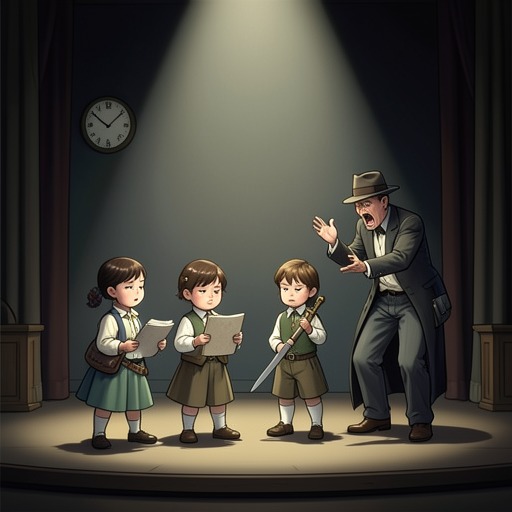
At first, the pageant looks much like its usual chaotic self: small angels poke one another with their wings, shepherds stumble over bathrobes, and the spotlight swings across the church. It begins at 7:30. Candles are lit around the room, and the spotlight becomes the star, leaving the audience unable to see much of the stage. After two verses of a carol, the congregation hums while Mary and Joseph are due to enter from a side door. Their delay stretches the humming until Alice fears that the pageant has lost its central couple.
Ralph and Imogene finally appear, not pushing one another through the door as usual, but pausing as if unsure where they have arrived. In the candlelight, with the church full of people, they remind the narrator of refugees waiting in an unfamiliar place with their belongings. Their disarray makes the Nativity’s lack of shelter newly visible: Imogene’s veil is crooked, and Ralph’s hair sticks out around his ears. Imogene carries the Baby Jesus doll over her shoulder instead of cradling it. Before placing it in the manger, she pats its back twice, as if burping a real infant. Alice finds the gesture improper; the narrator recognizes that it makes the baby seem like an ordinary newborn—possibly fussy or hungry—rather than a figure descended from a comic-book fantasy.
Gladys enters from behind the angel choir, pushing past the other children and stepping on their feet. Because she is the only performer with spoken lines, she delivers her announcement at full volume: “Hey! Unto you a child is born!” The shepherds tremble, ostensibly with fear, but chiefly because of Gladys. Her blunt delivery makes the announcement sound, to the narrator, like the best news in the world.
The Wise Men’s scene also departs from the familiar staging. The congregation has heard that they bring gold, frankincense, and myrrh, and the Herdmans question the value of the gifts, especially the oils and resins. In the performance, Leroy sets down a ham in front of the manger rather than the fancy bath-salts jars usually used to represent the gifts. The ham still bears the ribbon from the Christmas food basket distributed by the church charitable works committee, on which the narrator’s father serves. The narrator knows where it came from and understands that the Herdmans are giving away their own food. After placing it, Leroy and the others sit in the only space left. They do not perform the customary conference and exit by another door; the narrator sees their decision to stay and rest as fitting rather than as a ruined scene.
The Final Carol and Its Aftermath
By the last carol, the narrator usually wants the pageant to end. This time, the improvised scenes have prompted thoughts about how Mary and Joseph might evade Herod and protect the baby, and the narrator wants to see what the Herdmans will do next. The song begins while the Wise Men remain seated. As the congregation sings, the narrator sees Imogene crying. In the candlelight her face shines with tears, which she does not wipe away. The performance’s most unexpected moment is not another breach of stage convention but a visible response to the story.
The congregation calls it the best Christmas pageant they have ever had, although people in the church lobby cannot agree on what made it different. Mrs. Wendleken points to Mary’s black eye, but Imogene’s eye is only swollen: she has walked into the corner of the choir-robe cabinet while dazed. The detail initially seems to fit the Herdmans’ rough reputation, yet the narrator connects Imogene’s daze to her sudden grasp of the wonder of Christmas. The audience’s praise and its inability to explain that praise mirror the performance’s effect: its meaning is felt before it can be neatly described.
Significance
The pageant changes the narrator’s understanding because the Herdmans’ questions and stage business make familiar religious details tangible. The story is not only about Jesus; it is also about a baby whose parents have no money, no place to go, no doctor, and nobody they know, followed by visitors bringing gifts. The narrator had considered the mystery of Jesus’ birth for years without understanding it. Seeing the familiar story through the Herdmans’ attention to shelter, bedding, and infant care makes it seem less remote and mysterious.
The final exchange over the ham extends that change beyond the performance. The Herdmans refuse the offer to take it back, along with candy and small Bibles, but Imogene asks for Bible-story pictures and removes the picture of Mary, saying it is exactly right. The narrator wonders whether Imogene responds to the Mary depicted as pure and untouched by ordinary chores. Yet the narrator’s own enduring image of Mary is different: she resembles Imogene, nervous and bewildered but prepared to defend her child. Likewise, the Wise Men become Leroy and his brothers, arriving with a ham. In the final image, the congregation leaves the church into cold, clear weather, with crunchy snow and bright stars overhead. Gladys’s announcement remains with the narrator as a cry addressed to everyone: “Hey! Unto you a child is born!”