
History Beneath the Legend
The Best Werewolf Short Stories 1800-1849This flow shows how historical conflict, royal politics, and local custom give supernatural tales their social force.
increasing Bearing strength in each event
 decreasing
Bearing strength in each eventdecreasingMedieval Custom
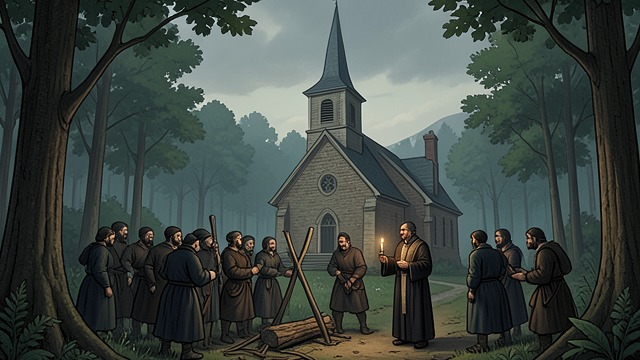
Medieval Custom
Ritual Society
The stories place werewolves within feudal punishments, church authority, forest laws, and village ceremonies. Supernatural belief is embedded in institutions.
Historical Texture
The setting does not merely decorate horror. It explains why reputation, rank, and religious sanction can determine a person’s fate.
Royal Treason
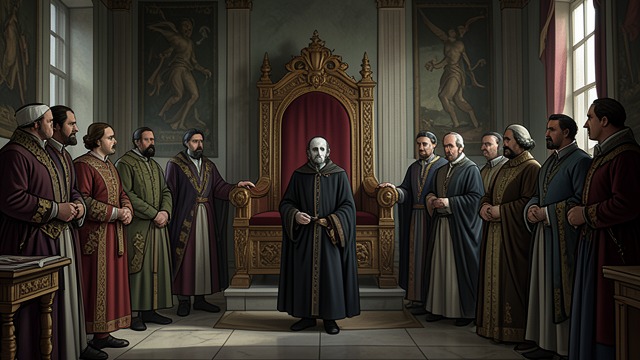
Royal Treason
Political Stakes
Gaspar de Marcanville’s fate begins in the rivalry surrounding Francis I and imperial ambition. Werewolf imagery later carries political betrayal into the forest.
Personal Cost
A court accusation destroys a loyal man more thoroughly than any wolf attack. History supplies the original horror.
Religious Theater
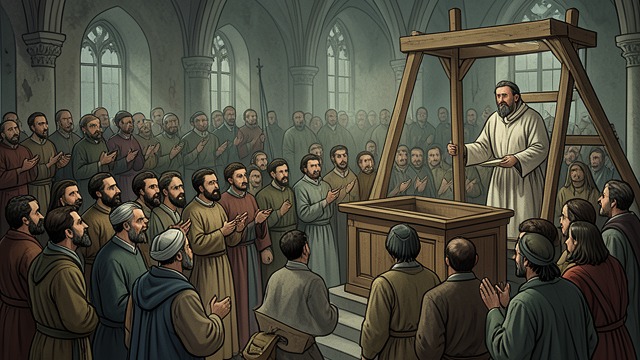
Religious Theater
Public Orthodoxy
Mass, clergy, judgment, and execution transform a legal killing into sacred spectacle. Religious language gives cruelty an aura of necessity.
Fragile Authority
The crowd’s reversal shows that ritual authority depends on collective belief. The same public can demand fire and mercy within minutes.
Local Custom
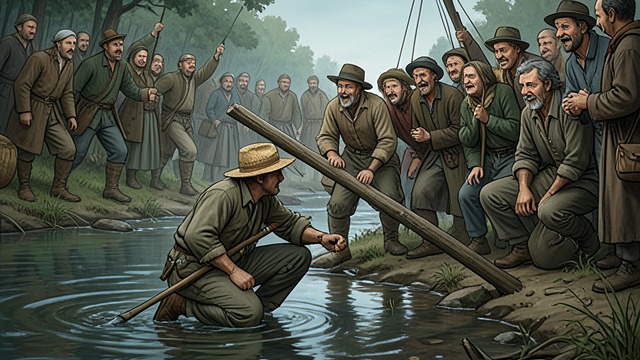
Local Custom
Communal Performance
The fisherman-ducking ritual at Josselin joins feudal hierarchy to popular amusement. The Sire’s humiliation emerges from a custom treated as ordinary.
Social Theater
The event prepares the story’s later movement from public comedy to private terror. Authority is always vulnerable before an audience.
Historical Memory
Historical Memory
Recovered Texts
The anthology preserves stories first printed in periodicals and then forgotten. Literary history becomes an act of restoration.
Monster Genealogy
By arranging folklore, poetry, fiction, and editorial commentary, the book presents the werewolf as a historical development rather than a timeless formula.
the Middle Ages settings
Francis I’s wartime court
the Loques execution
the Josselin festival
the anthology’s closing reflections
