
The Humanization of the Monster
The Best Werewolf Short Stories 1800-1849This flow traces the anthology’s movement from animal horror toward sympathy for people labeled monstrous.
increasing Bearing strength in each event
 decreasing
Bearing strength in each eventdecreasingThe Beast as Folklore
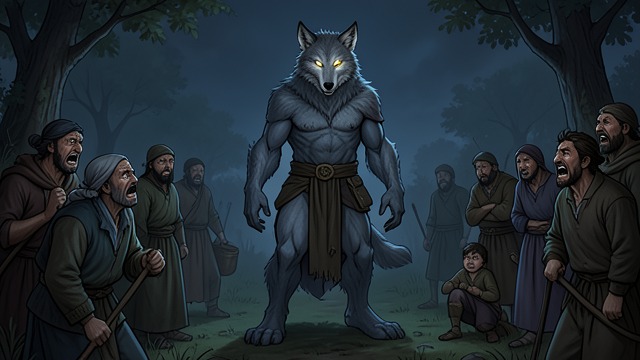
The Beast as Folklore
Demonic Image
Early werewolf lore emphasizes sorcery, Satan, and predation. The monster is an object of communal fear.
Narrative Limitation
Such an image explains behavior but not interior life. Later stories deepen the figure by giving the alleged beast motives and suffering.
Hugues as Victim
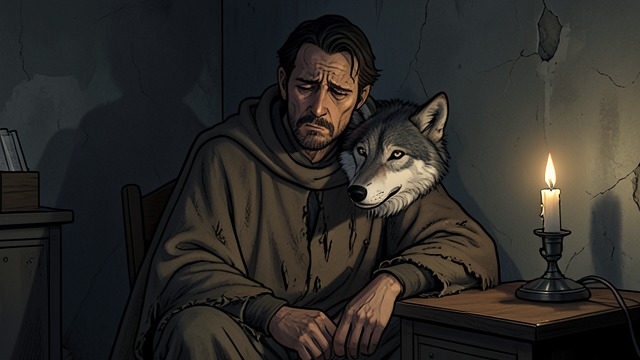
Hugues as Victim
Human Interior
Hugues Wulfric grieves, hungers, loves, and resents. His emotional life contradicts the village’s image of an inhuman predator.
Moral Complexity
His disguise enables extortion, but the narrative places that wrongdoing inside social abandonment. The monster is also a victim of human systems.
Francoise as Accused Beast
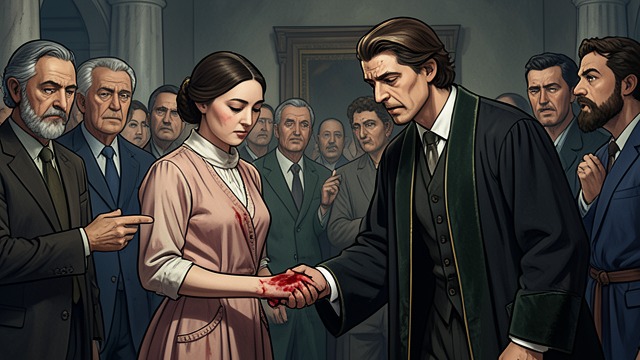
Francoise as Accused Beast
Innocent Body
Francoise’s injured hand allows the community to imagine her as a wolf. Her cultivated gentleness is ignored by a court seeking confirmation.
Sympathy
The horror lies less in her supposed transformation than in what ordinary people do to her. The werewolf story becomes a critique of persecution.
Christina as Predator
Christina as Predator
Human Cruelty
Christina is beautiful, domestic, and apparently kind before her appetite is exposed. Her wolf nature is frightening because it hides inside familiar intimacy.
Moral Contrast
Unlike Hugues Wulfric or Francoise, she is genuinely predatory. The anthology therefore distinguishes between social monstrosity and actual violence.
The Monster’s Double Meaning
The Monster’s Double Meaning
Human and Animal
The werewolf can signify hunger, guilt, oppression, erotic danger, or literal supernatural transformation. No single interpretation exhausts the figure.
Ethical Reorientation
By shifting attention from claws to suffering, the stories ask readers to examine who creates monsters through fear. Sympathy becomes a method of reading.
the historical introduction
after the deaths of Hugues Wulfric’s family
during the witch trial
the graveyard revelation
near the book’s conclusion
