Dogs of the Night
The Best Werewolf Short Stories 1800-1849“Dogs of the Night” is a learned expression applied to wolves in the book’s discussion of werewolf belief. Its significance lies in the contrast it creates: the phrase belongs to a tradition of naming and interpreting the animal, while the surrounding evidence repeatedly shows how hunger, fear, rumor, and alleged sorcery turn real wolves into signs of demonic or human corruption.
Meaning and Etymology
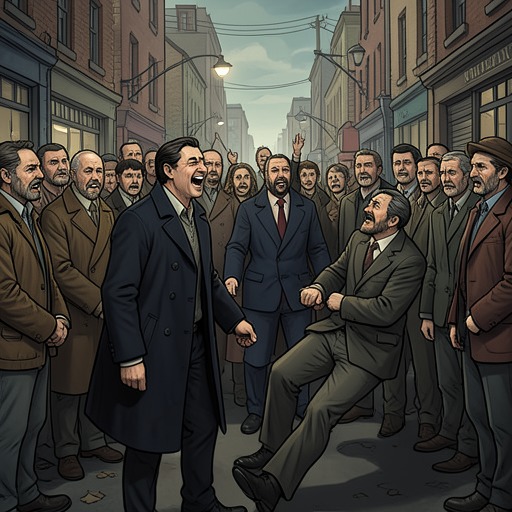
The expression appears when the Doctor corrects Jerome Malbois, who has called a supposed Wehr-Wolf’s cry a bark. The Doctor insists that wolves do not bark and invokes the classical phrase “Dogs of the Night” as the more learned designation. His correction is delivered with theatrical disdain toward the rustics, making the expression part zoological observation, part display of erudition.
The phrase therefore does not simply mean a pack of wolves. It presents wolves as nocturnal beings whose sounds and movements belong to the darkness, while preserving a boundary between the animal and the human imagination that has made it supernatural. The Doctor’s Latin citation, “Ast Lupus ipse vlulat, frendit agrestis aper,” reinforces the distinction between the wolf’s howl and the dog’s bark, even as his pedantry becomes comic within the fearful village conversation.
Wolves and Werewolf Belief
The book’s wider account of the werewolf explains why an expression such as “Dogs of the Night” acquires more than natural-history significance. Werewolves are described as sorcerers who use an ointment and an enchanted girdle to assume the appearance and nature of wolves, then kill and consume human beings. In France, the supposed sorcerer is called a Loup-garou, while German tradition preserves the related name Wehr-Wolf.
This belief depends upon a real animal characteristic being enlarged into a moral and demonic theory. The text states that a wolf which has tasted human flesh is believed to prefer it thereafter, and it connects that belief with the long-standing fear of wolves that devour livestock, attack children, or disturb graves. A natural predator thus becomes, in popular explanation, an animal possessed by a spirit more terrifying than ordinary appetite.
A Nocturnal Name in Social Fear
The expression also belongs to a culture in which naming the wolf is itself considered dangerous. In the account of Great Britain, peasants are said to avoid the true name and instead use terms such as “the old one,” “the grey one,” or “the great dog.” Such euphemisms reflect the belief that direct speech may provoke the creature. “Dogs of the Night” consequently stands at the meeting point of description and avoidance: it names the animal, but does so through a traditional substitute rather than plain speech.
The same process governs the reputation of the Hugues Wulfrics in the Weald of Kent. Their Anglo-Saxon neighbors believe that a lycanthropic stain has passed through the family for generations, and blame them for fires, ruined barns, destroyed crops, diseased cattle, illness, and premature births. Wolves that emerge from the forest during severe winters and disinter corpses are treated as confirmation of the family’s supposed guilt, although the narrative identifies natural explanations for at least some of these incidents. The phrase’s nocturnal imagery therefore helps convert uncertainty into accusation.
Animal Reality and Supernatural Interpretation
The book repeatedly keeps the actual wolf in view. A large white wolf lures Krantz’s father upward through the pine forests of the Harz Mountains, retreating, stopping to snarl, and then speeding away again. The pursuit is shaped by the rarity of the animal and by the hunter’s desire to shoot it, but the wolf’s calculated movement leads him into a place believed to be inhabited by evil influences. The animal is consequently both a creature of the forest and an agent within a supernatural story.
The distinction becomes still more violent in the death of Krantz. In the jungle, an enormous tiger carries him away with the speed of an arrow, leaving Philip with only Krantz’s clothing and gold. That scene separates the book’s various predators while preserving a common pattern: animals possess physical power that humans reinterpret through prophecy, guilt, and terror. “Dogs of the Night” thus belongs to a vocabulary in which animal behavior is never wholly detached from the meanings imposed upon it.
Narrative and Thematic Function
As an expression, “Dogs of the Night” condenses the book’s unstable boundary between knowledge and superstition. The Doctor uses learned language to challenge a rustic error, yet the surrounding narrative shows that supposedly rational explanations do not prevent communities from believing in witches, werewolves, or inherited supernatural stains. The same society that can observe wolves entering a breached cemetery can transform that observation into proof against an already ostracized family.
The phrase also illuminates the social consequences of such interpretations. The Hugues Wulfrics are refused work, excluded from markets, pilgrimage, church communion, and village festivities; Hugues is denied employment and has dogs set upon him. Michael Thilouze and Francoise Thilouze are carried from Cabanis on a charge of witchcraft after a rumor claims that Francoise becomes a wolf, and a wolf’s foot is accepted in court as decisive evidence. In these episodes, the language surrounding wolves does not remain decorative. It helps create the categories through which vulnerable people are isolated, prosecuted, and condemned.