Michael Thilouze
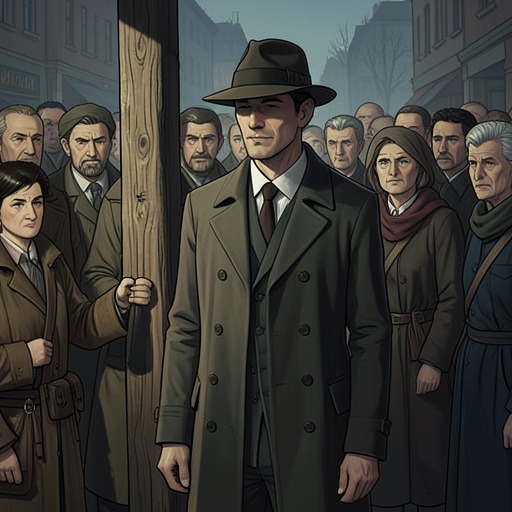
The Best Werewolf Short Stories 1800-1849Michael Thilouze is an elderly physician and alchemist living near Cabanis in Auvergne, and the father of Francoise Thilouze. His life is defined by an uneasy combination of genuine learning, imaginative speculation, and destructive devotion to alchemical hopes. He educates Francoise beyond the limits expected of her social position, yet his most cherished project ultimately helps place her before a court that condemns her as a witch.
Identity and Background
Michael is described as a strange old man, learned in the mystical lore of the Middle Ages. After the death of Francoise’s mother, he raises his daughter according to his own intellectual ideals. He teaches her to gather knowledge from books, identify herbs and flowers in the fields, and understand their properties. He also directs her attention toward the heavens, explaining what is known about the golden spheres above her. His education therefore includes both practical natural knowledge and speculative cosmology, joining observation with the era’s occult assumptions.
Michael’s household is solitary. Absorbed in study, he has lived apart from ordinary society, while Francoise, placed socially above the peasantry but below the gentry, has had no companion except Manon Thierry. This isolation gives their relationship unusual closeness, but it also leaves them vulnerable when Manon becomes Francoise’s enemy and village superstition turns against the family.
The Alchemical Pursuit
Michael is also an alchemist whose experiments consume both his health and his money. For years he keeps nightly vigils over crucibles, spending his dwindling means in the hope of discovering the elixir of life or the philosopher’s stone. By the time he is nearly seventy, Francoise is seventeen, and neither treasure has rewarded his labor. His hopes and finances are failing together when a letter from Paris announces that an Italian has supposedly discovered the grand secret.
Rather than continue searching without guidance, Michael sends Francoise to stay with her cousin Manon in Loques and travels to Paris. There he learns from the Italian Alascer that the philosopher’s stone has not actually been found, although its discovery is said to be near. The substance is promised not only to bring unlimited wealth but also perennial youth. Its final requirement is a virgin who is innocent, pure, and capable of keeping the necessary secret inviolate.
Michael immediately believes that Francoise possesses precisely these qualities. He has repeatedly tested her fidelity and trusts her ability to keep a secret. Convinced that her cooperation can complete the work that has governed his life, he promises Alascer that he will return with the long-sought treasure and restore the old man to health, wealth, and vigorous youth. His joy is therefore not merely greed: it is the ecstatic confidence of a scholar who thinks his life’s purpose has finally become attainable. Yet the confidence also reveals how completely the alchemical objective has displaced ordinary caution.
Fatherhood and Catastrophe
After returning to Cabanis, Michael sets Francoise to the operation required by the Italian’s instructions. The procedure severely injures her hand, and the damage becomes so serious that he must amputate it. The physical loss destroys the alchemical hope on which he has built his future, since Francoise is no longer considered eligible to assist in the process.
The injury has a second, more devastating consequence. Because a wolf’s foot is found in one of Pierre Bloui’s traps and news soon arrives that Francoise has lost a hand, Pierre concludes that Francoise must have transformed into a wolf and escaped by abandoning the limb. His interpretation is false, but the coincidence supplies the persecutors with what they regard as proof. Michael’s experiment thus becomes entangled with the accusation against his daughter, and the very event that defeats his ambition helps produce the evidence used to condemn them.
Michael is devastated less by his own failure than by Francoise’s suffering. He is old, disappointed, and largely indifferent to his personal fate, but he cannot accept the prospect of his young daughter being executed by a cruel and ignominious death. In prison, he and Francoise are alone, helpless, and forsaken. His grief contains both paternal tenderness and belated recognition: the knowledge he pursued as a means to restore life and defeat age has instead left Francoise maimed, imprisoned, and facing execution.
Trial, Rescue, and Death
The court sentence formally condemns Michael and Francoise for what it calls abominable and devilish magic arts. It specifically alleges that Michael’s arts, together with Francoise’s own, bewitched Count Victor de Vardes and enabled Francoise to transform visibly into a wolf. The lost hand is incorporated into the legal case as corroboration of the supposed transformation. Michael’s identity as physician and learned experimenter is consequently recast as evidence of sorcery.
At the public execution in Loques, Michael kneels and begs the multitude to spare his daughter and let him die alone. His plea briefly moves some spectators, but an authoritative voice from the nobles orders the executioner to proceed. Michael and Francoise are placed on the pile, and the assistants approach with torches before Manon Thierry arrives dragging a dead wolf. Her evidence interrupts the execution and exposes the instability of the accusation: the wolf lacks a foot, whereas Francoise has lost a hand, reversing the earlier superstition that had treated the severed limb as proof of guilt.
The rescue is secured through Victor de Vardes’s appeal to Henry IV. Pierre Bloui, carrying the lovers’ cause, obtains a royal mandate commanding that the execution be postponed for further investigation. Once the king’s favor becomes known, public opinion reverses itself, and Michael and Francoise are recognized as harmless. Their escape is therefore brought about not by a rational correction within the local court, but by royal authority and the force of a decisive counter-sign.
Michael survives the immediate danger, and under the king’s protection Francoise marries Victor. The narrative makes his survival inseparable from Francoise’s restored safety: she is safe and happy, while his own life project has collapsed. Soon after Manon’s death, Michael follows her to the grave. His despair is intensified by the extinction of the alchemical hope that had organized his existence; with Francoise secure and no longer needing him, he feels that the death of his ambition has drained life of its remaining purpose.
Narrative Significance
Michael’s fate joins private devotion to the wider social machinery of persecution. He is not presented simply as a villainous practitioner of forbidden arts. His medical learning, botanical instruction, and astronomical teaching suggest real intellectual value, while his alchemy embodies the period’s inability to separate experimental inquiry from mystical promise. The same culture that permits him to be learned also makes it possible for an injured hand and a severed wolf’s foot to become instruments of legal terror.
His story also gives material form to the novel’s critique of evidence. First, the wolf’s missing foot is treated as proof that Francoise is a witch; later, a wolf lacking that foot becomes proof of her innocence. The object does not change its physical meaning by itself. What changes is the social interpretation imposed upon it. Michael’s alchemical experiment, Francoise’s amputation, Pierre Bloui’s superstition, and the court’s sentence form a chain in which bodily injury is converted into narrative certainty.
The memorial carved over the old De Vardes chateau preserves the episode in the image of a wolf missing one forefoot, beneath the inscription “In perpetuam rei memoriam.” That emblem remembers not only the accusation against Francoise but also Michael’s failed pursuit, his paternal anguish, and the danger of treating coincidence as knowledge. His life ends as the final cost of an ambition that promised wealth, youth, and mastery over decay, but the enduring lesson of his character lies elsewhere: learning without judgment can become another instrument of harm, especially when fear and authority are ready to give conjecture the force of truth.