Shapeshifting
The Best Werewolf Short Stories 1800-1849Shapeshifting is the central imaginative operation of werewolf literature: the passage from human identity into animal form, and sometimes the collapse of the distinction between the two. Its importance lies not merely in spectacle. Across the traditions surveyed in Shapeshifting the Werewolf in Literature, transformation carries explanations of violence, witchcraft, social fear, and the limits of what witnesses can know. The werewolf becomes terrifying precisely because the familiar human body may conceal an animal will, while an apparently ordinary wolf may be treated as a human being under an enchantment.
Definition and Early Supernatural Model
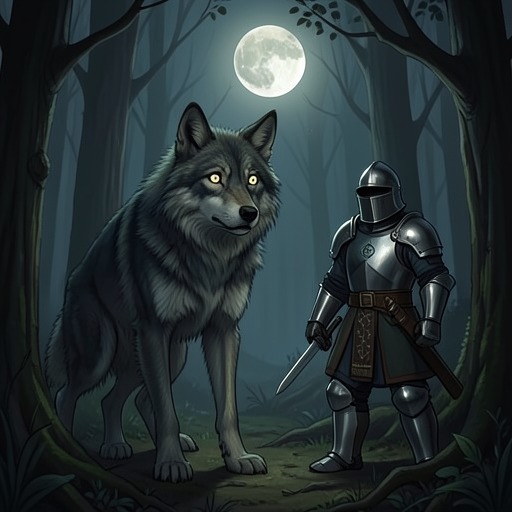
The older werewolf tradition presents transformation as an acquired or imposed condition rather than a natural animal change. A passage cited from The Menageries: Quadrupeds, drawing on Verstegan’s account of 1605, describes werewolves as sorcerers who anoint themselves with an ointment made through the devil’s influence and put on an enchanted girdle. While wearing it, they appear to others as wolves and also believe themselves to possess both the shape and nature of wolves. The girdle therefore functions as the operative instrument of transformation: it does not simply disguise the body, but alters perception, identity, and behavior at once. The transformed figure acts as a wolf by worrying, killing, and wasting human beings.
This model also locates shapeshifting within a moral and religious system. The transformation is associated with sorcery, the devil, and deliberate human violence, so the wolf-form is treated as evidence of spiritual corruption rather than as an unexplained biological mutation. In France the transformed sorcerer was called a loup-garou, while related traditions used names such as Wehr-Wolf, Bisclavaret, and Wild Wolves. The variety of terms shows that the underlying idea traveled across languages even as each culture supplied its own vocabulary and emphases.
From Classical Poetry to Literary Metamorphosis
Werewolf shapeshifting entered recorded poetry through Ovid’s Metamorphoses, where Lycaon is made so ferocious in wolf form that Jupiter deprives him of the possibility of ever regaining human shape. The episode establishes a decisive pattern: transformation can be both punishment and permanent sentence. The human is not merely concealed beneath fur; the loss of human form records a moral judgment that cannot be reversed.
The physical details of Ovid’s account make the change legible as a sequence of bodily substitutions. Garments pass into hairs, arms become legs, and the transformed figure becomes a wolf while retaining traces of its former appearance. The same grayness and the same ferocious aspect remain visible, preserving a residue of the human subject inside the animal body. At the same time, the figure wants to speak but cannot. Shapeshifting thus damages language as well as anatomy: recognition persists through visual traces, while communication fails.
The evidence identifies this combination of altered clothing, changed limbs, retained identity, and lost speech as the first recorded poetic description of its kind. Medieval poets continued the lycanthrope tradition, including the late-twelfth-century Roman de Guillaume de Palerne, later translated into English as William and the Werwolf, and Marie’s thirteenth-century Lai du Bisclavaret. These works helped preserve transformation as a flexible literary pattern rather than a single fixed legend. Michael Drayton’s The Moon-Calf, written in the late sixteenth or early seventeenth century, further shaped the British tradition by presenting the “wär-wolf” as a fierce creature thirsty for cattle’s blood.
Shapeshifting and the Werewolf Short Story
The nineteenth century marks the greatest literary expansion of shapeshifting in the supplied history. During this period the werewolf moved decisively from poetry into the short story, just as short fiction itself was developing darker forms. The fifty years from 1800 to 1849 are described as the cradle of the werewolf short story: the genre remained young and relatively sparse, yet produced stories whose importance lies partly in their ability to concentrate transformation, fear, pursuit, recognition, and punishment within a compact narrative form.
The scarcity of werewolf novels makes this development especially significant. Charles Maturin’s The Albigenses, published in 1824, addressed werewolves without making them central to the Gothic novel. H. Laurence’s 1827 novella Norman of the Strong Arm included the imprisonment of a man accused of befriending a werewolf. George W. M. Reynolds’s Wagner, the Wehr-Wolf, serialized from November 6, 1846, to July 24, 1847, became the first English novel in which a werewolf serves as protagonist. Against this limited novelistic record, the short story offered a particularly effective vessel for transformation, and the period’s literary importance does not depend on the novel’s prestige: Edgar Allan Poe explicitly regarded the tale as the best prose opportunity for displaying the highest talent.
The tradition also preserves uncertainty about what qualifies as transformation. “Ursel. The Water-Wolf,” published in 1839, was excluded from the collection because the evidence does not establish that its water-wolf is a transformed human. The creature is never described, and the only suggestive detail is that land wolves howl when it approaches a boat from the water. This hesitation matters because it distinguishes shapeshifting from mere monstrosity. A strange wolf is not automatically a werewolf; the defining question is whether a human identity has crossed into animal form.
Social Fear, Accusation, and False Transformation
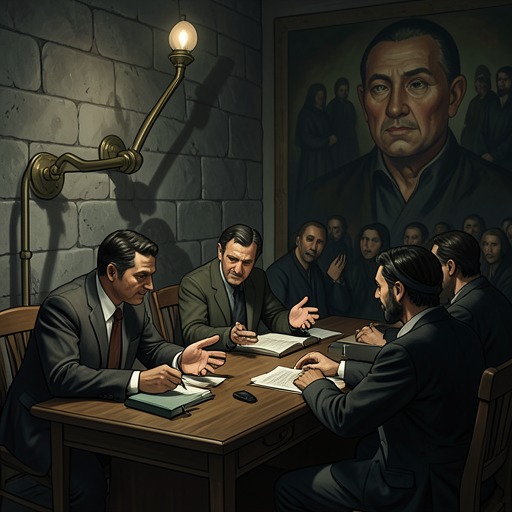
Shapeshifting becomes particularly dangerous when it functions as an accusation rather than a witnessed fact. In the story concerning Victor de Vardes, Francoise Thilouze, and the hostile aristocratic families, suspicion against Michael Thilouze and Francoise intensifies after the Marquis de Montmorenci and the Count de Vardes express ill will toward them. Once the powerful have declared the pair suspect, supposed proofs appear from every direction. Rumor claims that hunters repeatedly saw Victor de Vardes and Francoise walking together in remote parts of the domain, only for Francoise to change into a wolf and run away when they approached.
The allegation draws on a familiar belief that witches can transform themselves into wolves, cats, and hares. A particularly large wolf that had repeatedly escaped the foresters’ guns is then made the supposed animal form of Francoise. The process reveals how shapeshifting can be manufactured socially: an unexplained animal, a romance that rank-conscious observers find implausible, and the hostility of the powerful combine into a supernatural explanation. Francoise need not be seen actually transforming for the story to acquire the force of evidence. The rumor converts coincidence into metamorphosis and prejudice into proof.
This pattern extends beyond the individual accusation to communal treatment. The Wulfric family in Ashford is blamed for witchcraft, theft, murder, and sacrilege, with the alleged crimes attributed at different times to the father, mother, or daughter. Wolves emerging from forest lairs during severe winters and disinterring corpses from the churchyard, as well as the accidental death of a drunken beggar at the carved stone cross, are interpreted as the work of the Wulfrics in their supposed wer-wolf guise. The family, aware that it cannot overcome the calumny, withdraws from public life: its members avoid Ashford by day, do not attend Canterbury market, do not join pilgrims at Becket’s shrine, and are excluded from church communion and the village hostelry. Here shapeshifting is less an event than a social sentence imposed on people whom the community has already marked as other.
Pursuit, Lure, and the Boundary of the Human
The white wolf episode in the Hartz Mountains presents shapeshifting through pursuit and delayed explanation. A hunter’s father sees a large white wolf about thirty yards away. Rather than flee outright, the animal retreats slowly, growling and snarling, then alternates between leaving him far behind and stopping to challenge him before running again. Because the white wolf is rare, the hunter continues after it for several hours and ascends the mountain.
The pursuit leads into an open space in the pine forest regarded by huntsmen as inhabited by evil influences. The wolf appears to slacken her speed there, drawing the hunter close enough to raise his gun, but suddenly disappears before he can fire. The scene turns shapeshifting into a problem of perception: the hunter believes snow may have dazzled him, yet the disappearance occurs at precisely the moment when animal pursuit would have become a killing encounter. The wolf’s apparent agency, the forbidden location, and the abrupt failure of ordinary explanation make transformation inseparable from lure and trespass.
The tradition also reverses the direction of the human-animal boundary. In the account of Krantz’s death, Philip sees the naked form of Krantz carried away through the jungle by an enormous tiger after a roar, a rush like mighty wind, and a blow that throws him onto his back. The scene is not a werewolf transformation, but it clarifies the larger logic surrounding shapeshifting: clothing, bodily form, animal force, and human identity can be violently separated. Krantz disappears while his clothes and gold remain on the sand, leaving material remnants where a person had been. The transformation motif therefore includes not only the visible conversion of human into animal, but also the terrifying possibility that the human body may be reduced to an absent or unreadable trace.
Literary and Thematic Significance
The history of shapeshifting traces a movement from superstition to folklore, from folklore to legend, and finally into literature. Its persistence comes from its ability to hold several meanings in the same image. The wolf can be a devilish punishment, a sorcerer’s chosen form, a predator whose taste for human flesh has been mythologized, a suspected witch’s disguise, or an ordinary animal made monstrous by communal fear. The transformation binds these meanings together without making them identical.
The motif also exposes the instability of recognition. In Ovid, traces of the old form remain even after the arms become legs and the garments become hair. In the Ashford stories, no transformation is required for the Wulfrics to be treated as wolves; rumor supplies what sight cannot. In the Francoise episode, a powerful man’s suspicion organizes the landscape so that a large wolf becomes a woman’s alleged alternate body. In the white-wolf narrative, disappearance at the edge of a forbidden place leaves the witness between natural and supernatural explanations. Shapeshifting thus tests not only bodies but methods of knowing.
Finally, the motif helped make the werewolf especially adaptable to short fiction during the nineteenth century. A single change can carry a history of witchcraft, a conflict between social classes, a moral reversal, a pursuit, a revelation, or a death. Because the form is compact, the narrative can move rapidly from ordinary observation to supernatural possibility while preserving the crucial interval of doubt. Shapeshifting is therefore not an ornamental effect added to werewolf stories; it is the structural hinge on which their fears, accusations, recognitions, and consequences turn.