The escape from Transylvania
The Best Werewolf Short Stories 1800-1849The escape from Transylvania is the decisive flight that tears Krantz’s family from a legally oppressive household in Transylvania and carries it into the secluded Hartz Mountains. Provoked by the discovery of his wife’s affair with the Hungarian nobleman who owned him, Krantz’s father commits a double murder, then abandons his native country with his children before the authorities can seize him. The flight is both an act of immediate survival and the founding circumstance of the family’s exile, poverty, isolation, and later association with the wilderness.
Causes and Circumstances
Krantz’s father had been born a serf of a powerful Hungarian nobleman in Transylvania. Although he was wealthy, intelligent, respectable, and elevated by his lord to the position of steward, his status remained legally fixed: whoever was born a serf had to remain one. That social condition shaped the escape, because the father understood that the law would not treat even intense provocation as a justification for his actions.
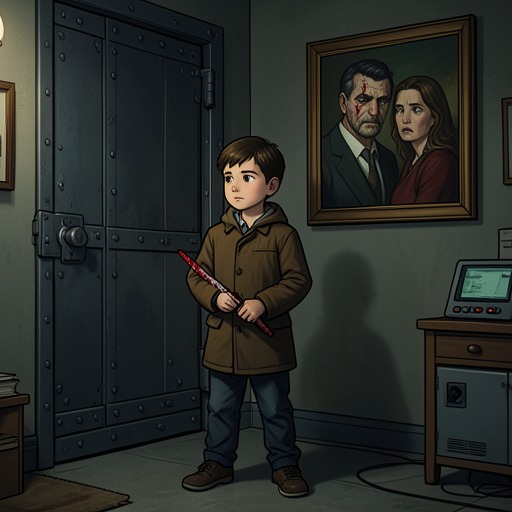
The immediate cause was his wife’s infidelity. During his absence on a mission, the lord of the soil pursued her, and she yielded to his attentions. The father returned unexpectedly and found her in the company of her seducer, making the evidence of the affair, as Krantz later recounts it, unmistakable. The conflict therefore joins private betrayal to a rigid hierarchy in which the husband possessed neither equal legal standing nor any realistic expectation of mercy.
The Flight
After discovering the intrigue, Krantz’s father waited for an opportunity when the two lovers were together and murdered both his wife and the nobleman. He then gathered whatever money he could find, harnessed his horses to the sleigh, and set out in the middle of the night. The timing was especially perilous: it was the depth of winter, yet the cold and darkness offered concealment and made rapid departure possible.
He took all three children with him: the eldest, Cæsar, Hermann—who later narrates this family history as Krantz—and their sister Marcella. Knowing that pursuit was inevitable and that the authorities could apprehend him anywhere in his native country, he did not pause after leaving. He continued without interruption until he had hidden the family in the Hartz Mountains, exchanging the controlled but dangerous world of Transylvania for the forests and seclusion of northern Germany.
Krantz explicitly distinguishes between what he witnessed and what he learned afterward: the account of the murders and flight was told to him later, while his oldest memories begin only after the family had reached its new refuge. This separation gives the escape the character of inherited trauma, a foundational crime known through family history rather than direct recollection.
Exile in the Hartz Mountains
The flight ends not in safety but in a harsh, self-contained existence. Krantz remembers a rude yet comfortable cottage standing at the edge of vast forests, about two miles from any other habitation. His father had purchased the cottage and its surrounding land from a forester who hunted and burned charcoal to smelt ore from neighboring mines. A few acres produced a doubtful summer harvest, but that yield was sufficient to support the family.
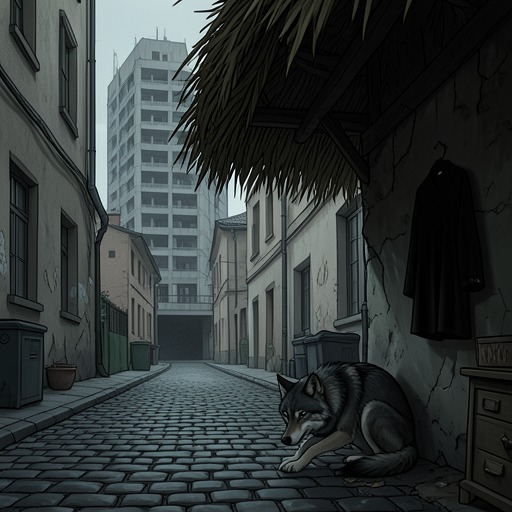
The landscape made the consequences of escape visible. From the mountain, the children looked over tall pines and the wide forest descending toward a distant valley. In summer the prospect was beautiful; in severe winter it became almost entirely desolate. Wolves prowled continually around the cottage during the cold season, and Krantz’s father often locked the children indoors while he went hunting. The family had escaped legal pursuit, but its new home imposed another kind of confinement through distance, weather, and the surrounding wilderness.
Consequences for the Family
The father’s double murder and flight removed the children from their former society and placed them under the care of a man marked by violence and distrust. He had no helper and could not easily find a female servant willing to live in such solitude. More significantly, he would not have accepted one even if she had been available, because the betrayal by his wife had produced in him a horror of women.
That aversion affected the children unevenly. Krantz observes that his father’s treatment of the two boys differed markedly from his treatment of Marcella, identifying the girl as the particular victim of the emotional legacy left by the murder and escape. The family’s refuge thus preserves them physically while reproducing the original household’s damage in altered form: the father has fled the authority that condemned him, but the violence and suspicion generated by his marriage continue inside the cottage.
Narrative Significance
As a plot action, the escape combines pursuit and exile. Its objective is immediate concealment, its agent is Krantz’s father, and its threatened consequence is capture by the authorities of his native country. Yet its larger function is genealogical: it transports the family into the Hartz Mountains, establishes the isolated setting of Krantz’s childhood, and supplies the buried history behind his later identity.
The movement from Transylvania to the Hartz Mountains also creates a contrast between human law and natural danger. In Transylvania, the father is vulnerable to a social order that preserves serfdom even for a prosperous and educated man; in the mountains, he is vulnerable instead to winter, wolves, distance, and deprivation. The escape therefore does not resolve the family’s conflict. It converts public persecution into private seclusion and turns a single night of flight into the enduring condition of the next generation.