Charlie Hamilton's disappearance
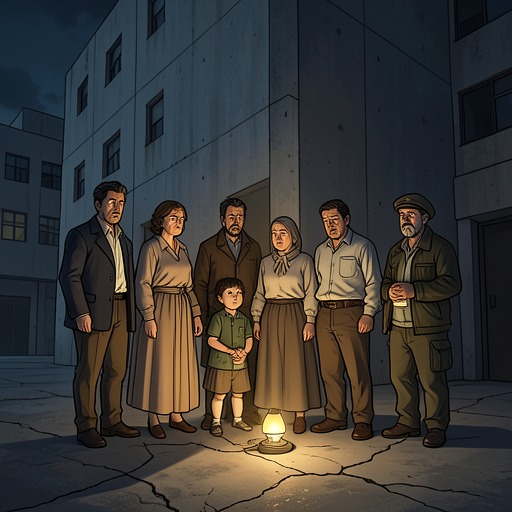
The Birthday PartyCharlie Hamilton's disappearance transforms an ordinary family afternoon into an urgent search shaped by uncertainty: her parents know where she was last seen, but not when or how she vanished. As the investigation widens from the birthday party to nearby roads and woods, the possibility of an abduction grows, yet the available evidence does not immediately establish who took her or even exactly where she went. The story's central tension lies in that gap between a child's familiar routine and the frightening possibilities her absence opens up.
Last Known Whereabouts
On Saturday, Kathy Hamilton dropped five-year-old Charlie at a birthday party at the House on Lexington Lane, where the children of Mitch Hamilton's brother were celebrating. Kathy left before two in the afternoon. Megan Carter, Charlie's babysitter, was supposed to collect her at four. When the adults could not find Charlie, the family's last confirmed sighting remained the party; Mitch had already driven around looking for Charlie and Megan, without finding either of them.
The initial account gives the disappearance a deceptively simple shape: a child is missing, and the person expected to collect her cannot be reached. Kathy tries to call Megan, concerned that neither Megan nor Charlie has returned, but gets no answer. When Chase Cooper asks what she told the dispatcher, he learns that the family cannot locate their daughter and believes she may be with the babysitter. That assumption is the first uncertainty the investigation must test: the expected handoff did not provide a confirmed explanation for Charlie's whereabouts.
At the party, people had been coming and going throughout the day, and the front door was not locked. Chase learns that no one saw Megan arrive to collect Charlie. That absence does not prove who was with the child, but it makes the expected pickup less likely and forces the investigators to consider that someone else may have taken her. The scene's openness cuts both ways: it could have allowed Charlie to leave unnoticed, but it also makes it difficult to establish who entered, left, or saw her last.
Search and Escalating Alarm
Chase treats the missing pickup as a reason to act quickly rather than wait for a clearer account. He tells Kathy that another person may be with Charlie and says the department must assume the worst while the circumstances remain uncertain. He plans to seek authorization for an AMBER Alert and arrange for backup to interview the party guests. The response is driven not by proof of kidnapping but by the risk of losing time if Charlie has been taken.
The possibility that Charlie wandered away remains part of the search. Police had briefly sent dogs into the woods behind the party site the previous night, without finding anything, and Chase organizes a more thorough search there. Kathy would rather believe Charlie had become lost than imagine a deliberate abduction, but she doubts that Charlie would have left when a pony was available to play with. Her fear moves between two possibilities: that her daughter is alone, hungry, and frightened, or that somebody has taken her. Neither possibility is confirmed by the search described here.
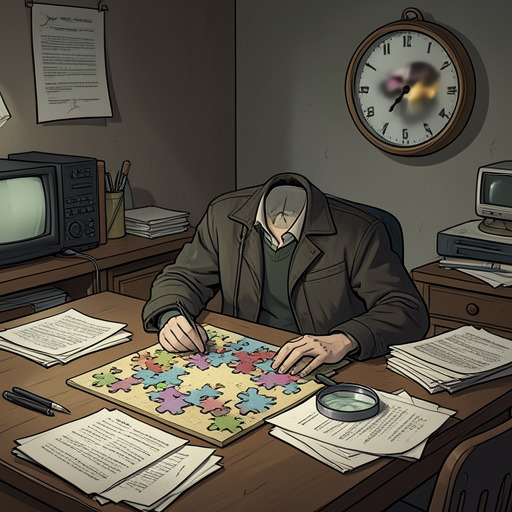
Investigators also try to narrow the window in which Charlie disappeared. A woman at a meat market reported hearing a single scream, possibly from a girl, in its parking lot on Saturday afternoon, around the time Scott Bowers was there collecting supplies. Chase estimates the likely disappearance window as between 1:45 and 3 p.m., based on witness accounts, while emphasizing that he cannot fix the exact time. Police seek surveillance footage from the store and check whether nearby businesses have cameras or witnesses. The reported scream and Scott's presence create a lead to check, not a finding that he caused Charlie's disappearance.
From Missing Child to Suspected Abduction
As the search produces no clothing, blood trails, or eyewitness account that identifies a taker, Chase considers what the absence of evidence may mean. In his assessment, the abduction may have been planned by someone in the family or by someone who knew the family: taking Charlie from a birthday party would require knowing where she would be, when she would be there, and how to leave. He contrasts that possibility with an opportunistic disappearance, which he believes would be more likely to leave signs of a hurried, unplanned act. This remains an investigative inference, not a conclusion established by physical evidence.
The investigation's uncertainty also brings suspicion close to the people who know Charlie. Megan's missed pickup places her at the center of the family's first explanation, while her history of substance use makes her vulnerable to being judged by that history. When questions are asked about whether she has dangerous associates, Megan says she has not used drugs or alcohol that year and insists that she is focused on surviving rather than seeking trouble. Kathy, in turn, asks her parents to treat Megan kindly because she has already endured a terrible ordeal. Her mother's response blames Megan's way of life; Kathy's defense resists turning a difficult past into proof of responsibility for Charlie's absence.
That concern extends to the prospect of searches and premature blame. Kathy hears the warning that police might focus on an easy suspect and search Megan's apartment after searching the Hamilton home. She does not accept that prediction as inevitable: she trusts Chase to pursue Charlie's real kidnapper. The exchange makes plain that the search is also a struggle over whose account will be believed, and whether Megan's social vulnerability will be mistaken for evidence.
Family and Public Consequences
Charlie is still missing on Monday morning, the second morning Kathy wakes without her. Reporters have multiplied since the previous evening's press conference, and Mitch tells her she may now be the headline because she misled police about where she had been. The investigation is no longer confined to private fear or official interviews; the family's conduct is being examined in public while the search continues.
The absence is measured against the ordinary plans that should have filled that Monday. Kathy had intended to shop with Charlie for vacation clothes, take her to a favorite diner, and let her have a sundae usually reserved for special occasions. Remembering the small pleasure she had sometimes refused makes her wish she had said yes each time. The detail does not explain the disappearance; it shows how its uncertainty recasts everyday decisions as regrets.
That night, the search's strain had carried Kathy into Charlie's bedroom. Mitch joined her there, and the two cried and prayed for Charlie to find her way home. They blamed themselves for not both attending the party and for not being the family they thought Charlie needed; eventually they fell asleep holding one another. Their closeness does not resolve the guilt or the missing-child investigation, but it shows how Charlie's absence presses on the marriage as well as on each parent's private grief.
Unresolved Status
The investigation later reaches an especially grave uncertainty when Chase is called to an abandoned brewery, where a small female body has been found. Asked whether it is Charlie, Detective Brown says there is no way to tell in its present condition. The medical examiner has yet to arrive, and Chase recognizes that identification will take time; without a head, DNA testing may take days to confirm who the child is. He considers how to inform Megan while knowing that the family will want every update, but the scene does not establish the body's identity as Charlie's.
The disappearance therefore remains defined by the difference between urgent suspicion and confirmed fact. Charlie was last known to be at a crowded party, the expected pickup by Megan was not witnessed, and the evidence leads Chase to consider a planned abduction by someone with access to family information. Searches, interviews, and leads—including the reported scream—intensify the stakes without immediately answering where Charlie went. Even the discovery of a child's body cannot close the question until identification is certain.