Charlie’s Placement with the Hamiltons
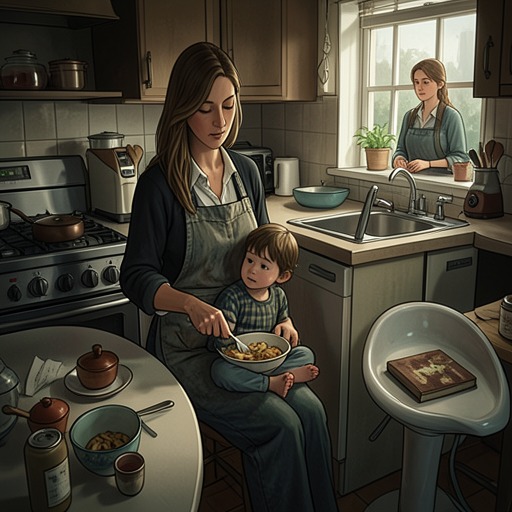
The Birthday PartyCharlie’s Placement with the Hamiltons began as a response to an immediate threat: after Megan overdosed, child services arrived at the hospital and said they would take Charlie from her. Mitch and Kathy agreed that Charlie would live with them, while Megan retained access to her daughter. The decision offered practical security, but it also established a concealed version of Charlie’s family history that shaped the lives and relationships of all three adults and the children in the household.
Circumstances and Decision
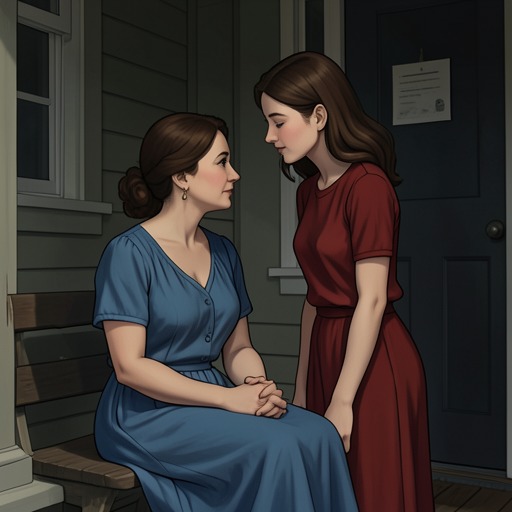
Megan’s overdose occurred on Christmas Day, a difficult time for her as someone from a fractured family. She later explained to Kathy that the relapse was not intentional: she had believed she could control her substance use, but had been unable to resist it. When child services said they would take Charlie, Megan contacted Mitch to sort out her life. The hospital crisis thus brought into the open the precarious circumstances that had surrounded Charlie’s care.
Mitch told Chase that Megan’s overdose had made Charlie’s living situation urgent. He understood the choice as either Charlie living with him or child services taking her. Megan, looking back on the decision, described the alternative as Charlie being taken permanently or going to live with her well-off father. She wanted to raise Charlie herself, but believed that, in those circumstances, living with Mitch was the necessary choice. The placement was therefore neither a simple rejection of Megan’s motherhood nor a settled resolution of her addiction; it was a family arrangement made under pressure, with Megan’s hope of having Charlie full-time left intact.
Terms of the Arrangement
Mitch agreed to pay Charlie’s expenses and Megan’s apartment costs on the condition that Megan stay clean. Kathy and Mitch also agreed that Megan could visit Charlie whenever she wanted. The arrangement preserved an ongoing relationship between mother and daughter even as their day-to-day lives were separated. Megan later emphasized that she wanted the ordinary work and closeness of parenting: making breakfast, shopping for clothes, and reading Charlie a bedtime story. She said she loved Charlie, while acknowledging that her Christmas relapse could make others question her ability to care for her.
Charlie already had a good relationship with Mitch, and the move meant she would spend more time with her father. Mitch said she was confused at first, but could see that Megan was struggling. He did not think Charlie understood that the change might be permanent. The difference between the adults’ understanding and the child’s understanding mattered: what the adults treated as a necessary arrangement was, for Charlie, a change whose lasting implications she was too young to grasp.
Concealment and Family Life
The adults presented the arrangement as an adoption. Mitch said he and Kathy agreed to tell people that Charlie had been adopted and that Megan was her babysitter. Charlie took the Hamilton surname, although Megan privately wished she could be known as Charlie Carter instead. Kathy later asked Megan directly whether it had been difficult to let Mitch change Charlie’s last name and pretend they had adopted her. That question made clear that the placement involved more than where Charlie lived: it also required Megan to accept a public account that obscured her place as Charlie’s birth mother.
Mitch explained the secrecy through several pressures. He had his business to consider, and Connie did not want the family name brought into disrepute. Kathy, he said, was private and feared that the town would discuss Mitch’s affair and regard her as a doormat for remaining with him. The concealment also hid the history from Fay: Mitch said she believed Charlie was adopted, and that he and Kathy had not told her because she was already seeing a therapist and they feared the news would worsen her anxiety. Kathy treated Charlie as she treated Fay, and turned to the church and her parents for guidance, even as the false account remained in place.
Later Consequences and Significance
The placement’s secrecy became part of a wider pattern in the family, where attempts to protect children from painful truths also left them exposed to the consequences of adult decisions. Kathy’s therapist linked Kathy’s own food-related difficulties to her parents’ arguments while she was growing up. Later, when Kathy considered the effect of her silence about Mitch’s affair on Fay, she recognized a resemblance between the marriage she had tried to preserve and the household she had grown up in. She resolved to break that cycle. Those reflections do not erase the immediate care the placement provided; they show how its surrounding concealment carried emotional costs beyond the original crisis.
The arrangement also acquired a different significance once the concealed histories came into view. Kathy confronted Connie over the earlier decision that had separated Kathy from her first daughter, and accused her of taking away her choice. Later, as the family faced Connie’s betrayal and its consequences, Fay said she no longer wanted to be a Hamilton. Kathy suggested that Fay Carter suited her, while Mitch also wanted to abandon the Hamilton name and return to Bowers. The name that had helped make Charlie’s placement look legitimate had become inseparable from secrecy and family harm. Charlie’s move into the Hamilton home had secured her care at a moment of crisis, but the false adoption story surrounding it could not remain a neutral convenience: it shaped the family’s understanding of belonging, parenthood, and what protection required.