Chase Cooper
The Birthday PartyChase Cooper, a detective with almost twenty years of experience, leads the investigation into Charlie Hamilton’s disappearance. His casework depends on looking past respectable appearances and testing assumptions against evidence; its emotional complication is his history with Kathy Hamilton, the mother of the missing child and his former teenage love. As the search exposes concealed family relationships and suspected crimes, Chase must pursue the investigation without pretending that his connection to Kathy is merely professional.
Identity and Investigative Approach
Chase arrives at the Hamilton home already aware of the contrast between what a household presents and what may lie beneath it. The landscaped yard, expensive cars, and solid oak door prompt immediate assumptions, but experience has taught him to distrust first impressions. He understands that a prosperous family may want visitors to see precisely that polished surface, and he approaches the case looking for what it conceals. His skepticism is not presented as a license to treat suspicion as proof: he gathers accounts, builds a timeline, and follows leads that can be checked.
He is forty-four, the same age as Kathy, and has worked as a detective for nearly twenty years. As lead investigator, he receives credible sightings called in to the station and decides whether they merit follow-up. He interviews witnesses while their memories are fresh, asks the family about possible threats and conflicts, and explains that their answers help establish the sequence of events. The role requires him to move between broad public appeals and close examination of individual accounts, without allowing any one theory to substitute for corroboration.
The Search for Charlie
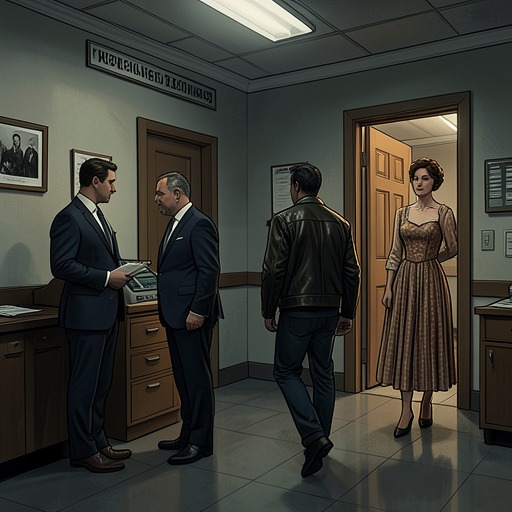
After Charlie is reported missing, Chase sends an officer to Megan Carter’s apartment to check whether she has returned, then arranges an AMBER Alert. He treats rapid public notification as a practical way to circulate Charlie’s description and enlist help before the situation worsens. At the party site, he interviews guests before they disperse. Their recollections place Charlie last on a pony near the woods, but no one initially provides a clear answer about where she went.
Chase works with Detective Frank Brown as the inquiry expands. He argues that Charlie’s disappearance may be connected to Megan’s attack, a possibility Brown also considers promising: solving one case might resolve the other. Chase does not treat that connection as established fact; he needs a motive and continues to test leads. One account brings him to Charlie’s teacher, Stuart Barren. A party guest had felt uneasy about Barren’s attention to the children, particularly those near the pool, and Mitch Hamilton had also mentioned him. Chase considers him worth questioning, while the possibility that a teacher might have appeared at the party in a clown costume remains a line of inquiry, not a conclusion.
A later tip supplies a more specific timeline to investigate. A woman at a meat market reportedly heard a single, possibly female scream in the parking lot around the time Scott Bowers was collecting supplies. Chase places Charlie’s disappearance, based on witness accounts, between 1:45 and 3:00 p.m. on Saturday. He seeks the store’s surveillance footage and checks whether nearby businesses have cameras or witnesses. The scream and the timing sharpen the inquiry, but do not by themselves establish who took Charlie.
Kathy and the Personal Past
Chase’s first conversation with Kathy is charged by a history the other people in the room do not know. He remembers her as the girl he loved in high school and believes she had not taken that attachment seriously. Their reunion brings back teenage intimacy, including his uncertainty about why it ended so abruptly. He wishes they were meeting under different circumstances, while acknowledging that it has been a long time. The investigation therefore begins with both an urgent present crisis and an old relationship that neither can simply treat as settled.
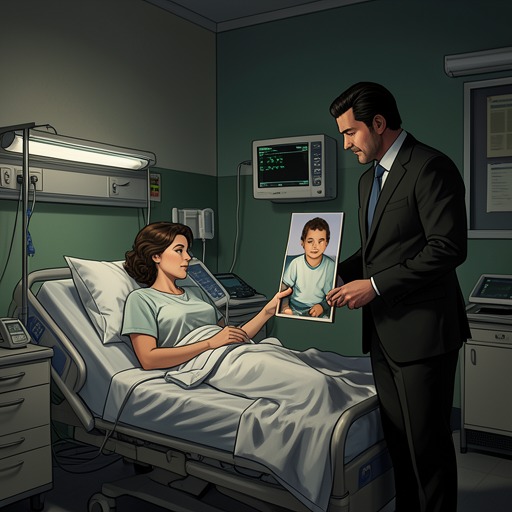
Kathy’s vulnerability around Chase becomes visible in private moments. When he sees her leaving a store and checks on her, she opens the car door and breaks down in his embrace. He comforts her, and she later tells him she had wanted to be with him as a teenager, even after believing he had stood her up. Chase says he was arrested for something he did not do that night. Kathy suspects there may be an explanation for why that happened when it did, but says it no longer matters. The scene revises their shared memory without resolving what the past might have meant for them.
Their closeness does not remove the demands of the case. When Kathy asks him to tell her that a suspect is innocent, Chase refuses to promise what he does not yet know; he will tell her more after conducting the interview. He also notices that Megan seems more upset than a babysitter would ordinarily be, pressing on a discrepancy in the family’s account. Later, after Kathy’s concealed information becomes harder to maintain, she tells him that Charlie is adopted and has been living with the Hamiltons for six months. Mitch objects, but Chase’s investigation has made disclosure necessary in Kathy’s view. Her decision gives the inquiry a crucial fact about Charlie’s family history while exposing the strain between the couple.
Arrests and the Capture of Evan Harris
As the case intensifies, Chase arrests Mitch Hamilton and Scott Bowers on suspicion of abducting Charlie. He tells Kathy he has reason to believe Charlie’s body is buried in the basement of a house in Glenwood that the men were renovating. His statement presents the grave possibility that the search is no longer solely a rescue effort, while remaining clear that the body’s location is a belief under investigation at that point.
The investigation later leads Chase to Evan Harris. Chase pursues him and struggles to hold him when he resists arrest. Kathy fires Chase’s gun into the air, startling Evan and giving Chase the opening to restrain him. She says she could kill Evan for what he did to Charlie and to her family, but refuses to become like him. Chase uses the moment to secure Evan until nearby officers can arrive. The scene makes Kathy an active participant in the capture, while Chase remains responsible for taking Evan into custody rather than letting the encounter become an act of revenge.
In the interview room, Chase states the charges he is pursuing: the abduction and murder of Charlotte Hamilton on June 12, and the attempted strangulation of Megan Carter that same day. Evan asks to wait for his attorney before speaking. Chase recognizes that this is a sensible choice, even as it frustrates the effort to obtain answers. He does not present Evan’s silence as a confession; instead, he presses for honesty because Charlie’s family has already suffered enough.
Relationships and Narrative Role
Chase’s connection to Kathy creates a tension between care and professional restraint. He comforts her, holds her hand, and responds to the trust their shared past allows her to place in him, yet he continues to question the people close to her and to investigate her husband. His work cannot shield her from painful disclosures or arrests. Nor does his affection establish a romantic resolution: the story shows an old attachment reopening under pressure, but leaves its future unsettled.
As an investigator, Chase links the domestic secrets surrounding Charlie to the evidence-gathering process: witness interviews, a developing timeline, surveillance requests, follow-up on a teacher, and the pursuit of suspects. His own history with Kathy gives those discoveries personal weight, but the investigation’s stakes extend beyond their relationship. By helping bring Evan into custody while preventing Kathy’s anger from becoming a killing, Chase embodies the distinction between seeking accountability and taking revenge. The case does not make him a detached observer; it shows him continuing to work where duty, grief, and private history meet.