Luke Phillips—Patrick
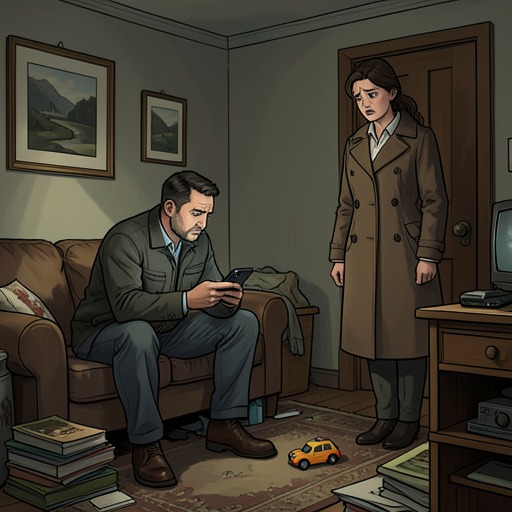
The Birthday PartyLuke Phillips is Patrick’s biological father, but the two have had little contact for years. Their relationship is entangled with the affair that established Patrick’s paternity, Shannon Watts’s departure, and Chase Cooper’s later role as a more present father figure. When Patrick reappears, Luke’s wish to see him becomes a practical question of access, stability, and parental responsibility.
Paternity and Separation
Luke’s connection to Patrick began in secrecy. While Shannon Watts was in a relationship with Chase Cooper, she was also sleeping with Luke, then Chase’s first detective partner. When she became pregnant, she tried to pass the child off as Chase’s. Chase might have believed her if Luke had not insisted on a DNA test, which established that Patrick was Luke’s son.
The revelation did not immediately end Chase’s involvement in the child’s life. He did not make Shannon leave while she was pregnant, and he later remembered Patrick with guilt, reflecting that he had spent more time with the boy than Patrick had spent with his biological father. That contrast gives the relationship its central difficulty: Luke is Patrick’s father by biology, while Chase has been a significant presence in the boy’s life. The evidence does not specify the full arrangements between the adults over the intervening years, but by the time Patrick is about eight, Luke has been separated from him for long enough to fear that the boy may not know who he is.
Renewed Contact Through Chase
Shannon’s unexpected arrival at Chase’s home brings Patrick back into the immediate orbit of both men. She has let herself into Chase’s place using a key she still possesses, and Luke later hears that she and Patrick are there. He suspects Chase and Shannon may have resumed their relationship, but Chase clarifies that Shannon appeared without warning and told him only after entering.
Luke’s first question is whether Patrick is with her. When Chase confirms that he is, the possibility of seeing his son becomes immediate. Luke doubts Shannon would allow him into the home, making access dependent not only on his relationship with Patrick but also on Shannon’s willingness to permit contact. Chase offers to arrange a time when he is home and let Luke in himself. The offer is a concrete intervention: rather than assume Shannon will facilitate the meeting, Chase proposes to act as an intermediary.
Luke’s reaction shows how uncertain that opening feels to him. He is initially incredulous that Chase would help, then asks whether Shannon is likely to agree. Chase does not promise that she will. The distinction matters: an invitation from Chase creates a possible route to Patrick, but it does not resolve the conflict over who can decide when Luke sees his son.
Access, Care, and Responsibility
Chase’s support develops beyond arranging a visit. He argues that Patrick needs more than a life centered exclusively on Shannon: he needs somewhere to settle and to be enrolled in school. Chase does not claim that Shannon is physically harming the boy; his concern is that Patrick does not appear to be a priority in her life. The proposed custody arrangement therefore grows from a concern about consistent care and stability, rather than from a stated claim that Luke should be rewarded for his past or that Shannon should be punished.
Chase advises Luke to seek legal advice and pursue some form of custody arrangement. The advice converts a fragile offer of access into a possible formal step toward parental involvement. Luke responds with resolve, saying he will make a call, and thanks Chase before leaving. The exchange marks a change from worrying that Shannon will keep him away to considering how he might secure a more dependable place in Patrick’s life.
The relationship’s immediate outcome remains unsettled. Luke has not yet obtained a custody arrangement, and the account does not establish whether Shannon agrees to visits or how much contact follows. What does change is Luke’s willingness to act: with Chase’s practical help and encouragement, he begins pursuing a formal way to be present for Patrick.
A Complicated Family Triangle
Luke and Patrick’s relationship cannot be understood apart from Chase’s role. Chase’s earlier care for Patrick does not make him the biological father, but it complicates any simple division between the men. He carries guilt about having been more present than Luke, yet he uses that position to facilitate rather than obstruct contact. His offer to let Luke see Patrick recognizes Luke’s parenthood while acknowledging the practical barrier Shannon presents.
The narrative thus frames fatherhood through both parentage and care. Luke’s biological connection is established by the DNA test, but years of distance have left the lived relationship uncertain. Chase, meanwhile, has shared more of Patrick’s childhood despite not being his father. Luke’s emerging objective is not merely to assert a title; it is to gain access and help provide the settled home and schooling Chase believes Patrick needs. The evidence leaves their future bond open, ending at the point where a proposed call may begin to turn long-standing separation into renewed contact.