Megan Carter—Charlie Hamilton
The Birthday PartyMegan Carter and Charlie Hamilton’s relationship is both an intimate bond built through everyday care and a concealed biological kinship. Megan is Charlie’s birth mother, but an arrangement made after Megan’s struggles with addiction places Charlie with her father, Mitch Hamilton, and gives her the Hamilton name. Their closeness survives that separation: Megan remains a familiar caregiver and cherished presence in Charlie’s life, while the disappearance turns ordinary attachment into fear, guilt, and a determined wish to bring her daughter home.
A Bond Built Through Care
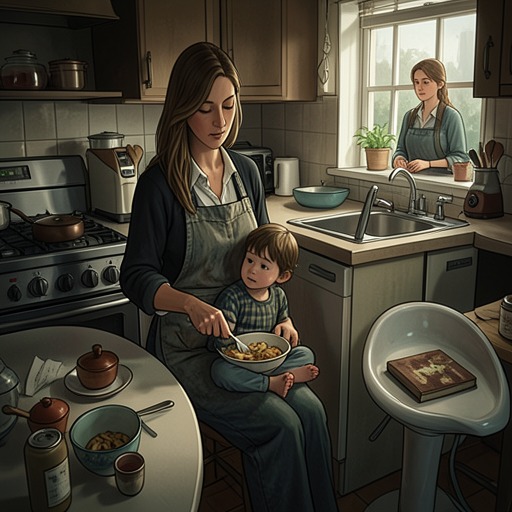
Megan Carter first enters Charlie Hamilton’s life as a babysitter. Mitch Hamilton meets Megan at the sports bar where she works and later tells her that the family needs someone to care for the children; Megan volunteers for the extra work. Kathy Hamilton sees that Megan is wonderful with Charlie. The practical arrangement develops into affection that is not limited to the hours Megan is paid to watch her.
Megan lives in Glenwood, the next town over, and often looks after the girls when Kathy Hamilton and Mitch Hamilton need to work late or go out. Charlie loves her. On the evening before the birthday party, Megan spends hours in the backyard playing games with Charlie as the sun goes down. She also buys Charlie soft toys, and her attention becomes part of the child’s sense of family. When Megan is due to collect Charlie from the party, the plan assumes the familiar rhythm of care will continue: Kathy Hamilton and Mitch Hamilton will be at work, and Megan will pick Charlie up at four.
The bond is visible in the details Charlie records at school. In a notebook, she names Megan as her favorite person, describing Megan’s dark hair, brown eyes, and freckles, the ice cream she buys, and the brightly painted nails they share. She writes that Megan needs care, as her china dolls do, and that being with her makes her feel warm and happy. The entry makes their intimacy legible from Charlie’s perspective: Megan is not merely a visitor or babysitter, but someone Charlie both loves and feels responsible for.
Separation and Hidden Kinship
The family arrangement obscures the biological relationship beneath a social one. Mitch Hamilton had a brief affair with Megan Carter six years earlier, and Charlie was born from that relationship. Megan says that deciding to let Charlie live with Mitch was difficult: she wants the daily work of motherhood, from making breakfast and choosing clothes to reading a bedtime story. But after her addiction and an overdose on Christmas Day, she accepts that Charlie living with her well-off father is preferable to the risk of child services taking Charlie permanently. Mitch has visited Charlie regularly, and Charlie has lived with the Hamiltons for six months by the time Kathy Hamilton tells the police that Charlie is adopted.
The name change deepens the separation without undoing the attachment. Megan agrees to Mitch’s decision to give Charlie the Hamilton surname and to present the placement as an adoption. She later reflects that the name could be changed back: Charlie should be Charlie Carter, not Charlie Hamilton. Her agreement is not a relinquishing of love. She wants Charlie with her full-time, yet recognizes that her circumstances have constrained what she can provide. The difference between the name Charlie bears, the home where she lives, and the mother she calls her favorite person reveals how family belonging is shaped by both formal arrangements and daily care.
Megan’s recovery remains part of the relationship’s circumstances. She has been through rehabilitation and says she slipped once, on Christmas Day. When Charlie goes missing, Megan is staying with the Hamiltons while recovering from an attack, and she fears that her history will count against her as a mother. She hopes eventually to seek custody, but doubts that a court would favor her over Mitch Hamilton until she has at least a year free of drugs and alcohol. Her desire to reclaim ordinary mothering therefore exists alongside an awareness that she must establish the stability to care for Charlie.
The Disappearance and Megan’s Guilt
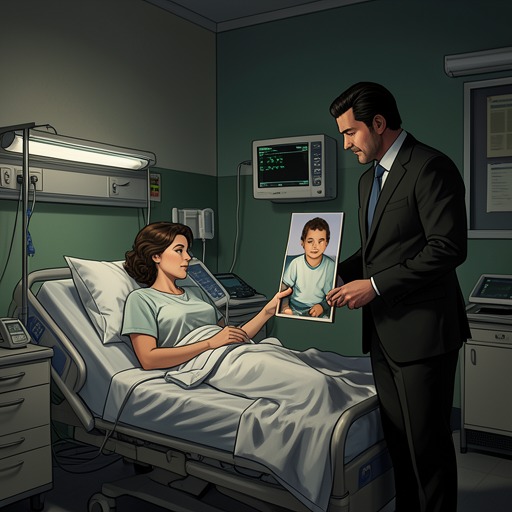
The birthday party becomes the rupture neither mother nor child can anticipate. Megan is supposed to collect Charlie later that day, but after the attack she is hospitalized and cannot go. When Kathy Hamilton visits, Megan’s first concern is whether Charlie has been found. Learning that there are no clues or sightings, she wants to join the search, despite her injuries. She fears Charlie may be alone or with a stranger and believes investigators should scrutinize people connected to the party. Her urgency is maternal, not abstract: she wants to be where Charlie is and help bring her home.
Megan’s inability to collect Charlie hardens into guilt. In the hospital, she thinks that if she had been able to fight off her attacker, she would have been at the party. She knows that she could not control the attack, but measures herself against the missed pickup and the possibility that Charlie needed her. The second night of Charlie’s disappearance makes the fear more acute: Megan imagines her daughter outside, lost and afraid of the dark, and dreads the alternative. Her wish to help is frustrated both by her need to recover and by the sense that others do not trust her or want her involved.
After moving into Kathy Hamilton and Mitch Hamilton’s home, Megan’s longing takes a more private form. She goes into Charlie’s bedroom without asking, drawn to the pink comforter, plastic ponies, and soft toys she has bought. Charlie’s school notebook and a photograph of Megan taken when she was pregnant connect the child’s present affection to the concealed history of her birth. Reading Charlie’s account of her as a favorite person makes Megan feel a craving for her daughter stronger than her craving for cocaine. She resolves that she needs to be well for Charlie’s return and imagines taking her away from the town and the Hamilton family. That impulse comes from devotion and distrust, but it also shows the strain between Megan’s wish for full-time motherhood and Charlie’s established attachments in the home where she has been raised.
Recognition, Loss, and Belonging
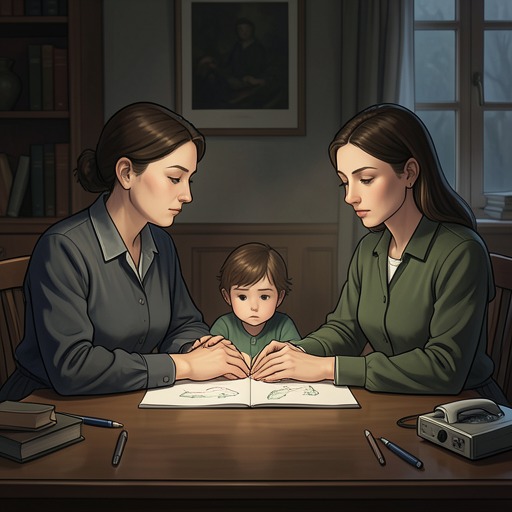
Megan and Kathy Hamilton eventually speak openly about what the arrangement has cost them. Megan tells Kathy that she wants to make Charlie breakfast, shop for her clothes, and read to her at night; her earlier relapse does not cancel her love. Kathy acknowledges that it was difficult to discover Mitch’s secret visits and affair, but insists that Charlie should not suffer for her father’s actions. She has welcomed both Megan and Charlie, even while the marriage has become painful. This conversation recognizes Megan’s motherhood without pretending the household’s history is simple.
The women’s relationship changes when Megan tells Kathy that she intends to do everything possible to find Charlie, rather than leave the search to Mitch Hamilton or the police. Kathy agrees. Megan feels relief at the prospect of joining forces with her, and the alliance gives her a way to act on her love instead of remaining helpless. It also complicates her earlier suspicion that the Hamilton family has failed Charlie: Kathy’s care for the child is real, even as Megan remains determined to reclaim her own place in Charlie’s life.
Charlie’s death leaves Megan with grief rather than the reunion she had hoped for. At the cemetery, Mitch Hamilton tells Megan that Charlie was lucky to have her as a mother and recognizes the difficult decision Megan made when she could not care for Charlie herself. Megan is grateful to have somewhere to come and talk to her daughter. Kathy then asks Megan how she would feel about changing her own surname to Carter. The proposed name cannot restore the life Megan wanted with Charlie, but it publicly recognizes the kinship the concealed arrangement had obscured. Their bond finally stands acknowledged through both memory and family identity: Charlie remains Megan’s daughter, not only in biology, but in the care, longing, and lasting grief that define their relationship.