Motherhood and Maternal Belonging
The Birthday PartyMotherhood and Maternal Belonging is a central concern of the novel, which treats family as something made through biological ties, adoption, everyday care, naming, and emotional recognition—not through any one of them alone. Charlie’s disappearance forces Megan Carter and Kathy Hamilton to confront their shared relationship to the child: Megan is Charlie’s birth mother, while Kathy has helped raise her as a daughter. The revelation that Megan herself is Kathy’s long-lost daughter makes maternal belonging a question that reaches across generations, where love and care coexist with secrets, loss, and decisions made by others.
Kinship Beyond Biology
The novel first presents Charlie’s place in the Hamilton household through the distinction between her parentage and the family arrangement that raised her. When Kathy understands that the police investigation may uncover the truth, she tells Chase Cooper that Charlie is adopted and explains that the child has lived with the Hamiltons for only six months. Her disclosure makes private family knowledge part of the search, but it also begins to undo the appearance that Charlie’s place in the family can be described by a surname alone.
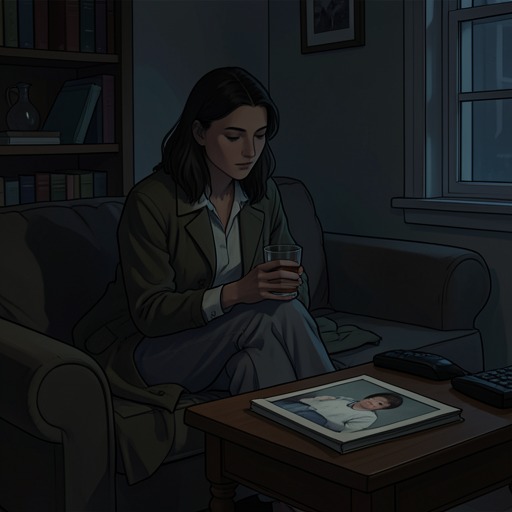
The household’s daily life supplies another account of belonging. In Charlie’s bedroom, Megan sees the pink comforter, plastic ponies, soft toys she has bought, and a school notebook. In it, Charlie describes a woman with black hair, brown eyes, and freckles who buys her ice cream and paints her nails, and identifies that woman as her favorite person and mother. The notebook offers intimate evidence of the bond as Charlie experiences it: the relationship is expressed through attention, gifts, familiar routines, and a child’s own naming of the person she loves. Megan’s photograph beneath the writing, taken six years earlier while she was visibly pregnant, places that present attachment alongside the history of Charlie’s birth.
Megan’s Motherhood and the Question of Care
For Megan, maternal belonging is bound to both fierce attachment and regret. Seeing Charlie’s room awakens a longing for her daughter that she understands as stronger than her former craving for cocaine. She wants to be well when Charlie is found and imagines taking her away from the town and the Hamilton family. Her resolve is not simply a rejection of Charlie’s other attachments; it reflects Megan’s fear that the people who have cared for Charlie have failed to protect her.
In conversation with Kathy, Megan describes the path of her substance use, her time in rehabilitation, and a relapse the previous Christmas. She acknowledges that addiction took precious time from her daughter and that, for a period, she could not put Charlie first. Yet she explains that allowing Mitch Hamilton to change Charlie’s surname and present her as adopted was a painful decision made under constrained circumstances: she wanted Charlie with her full-time, but believed that otherwise child services might take the child permanently. She accepted the arrangement because Charlie could live with her well-off father, while privately holding on to the possibility of restoring the Carter name. Her account connects motherhood not to an uncomplicated claim of possession but to an attempt to protect a child while living with the consequences of addiction and limited choices.
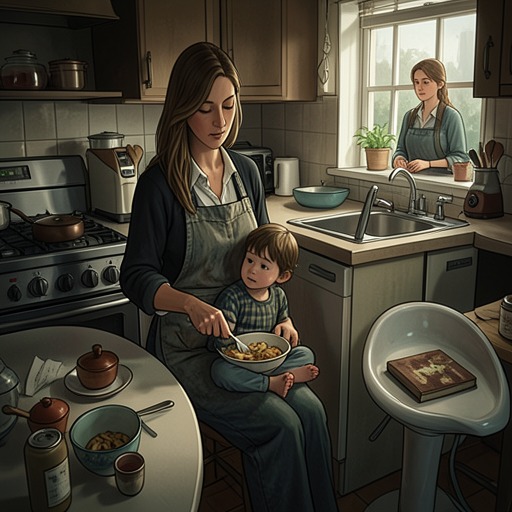
Megan also considers seeking custody if she can establish at least a year free from drugs and alcohol, though she doubts whether a court would favor her over Mitch. She wants to make Charlie breakfast, shop for clothes with her, and read to her at bedtime; these ordinary acts give concrete form to the life together she hopes to regain. The uncertainty over whether Charlie will even be found shadows that hope. When Kathy apologizes for not staying with Charlie and says the child will always be welcome in her home, Megan accepts the kindness and recalls that Charlie loves the Hamilton household. The exchange lets Megan acknowledge that Charlie’s attachment there is real even as she wants to reclaim her daughter’s daily care.
Kathy’s Confession and the Rediscovered Daughter
Kathy’s relationship to motherhood is shaped by an earlier loss that she has not resolved. In a later conversation, Megan reveals that she was adopted as a baby and that the woman she had understood as her mother was not her birth mother. She then tells Kathy that her birth name is Hope Hamilton. Kathy recognizes the connection from Megan’s age: the daughter she was made to give up has returned to her life under another name, and the woman with whom Mitch had a daughter is also Kathy’s own child.
The discovery reframes Kathy’s involvement with Megan and Charlie. Before learning Megan’s identity, Kathy had already expressed sorrow that Megan could not raise Charlie full-time and admitted how difficult it was to see a child infrequently. She had also chosen to welcome Charlie despite Mitch’s past affair, saying that a child should not suffer for a parent’s actions. After the revelation, those acts of care sit beside the history of Kathy’s own forced separation from Hope. Motherhood becomes both a relationship renewed in the present and a loss whose effects have shaped the family for years.
Kathy’s earlier counseling notes describe her as tearful and despondent after learning that she could not rely on her parents, followed by a shift toward determination. The notes also record that she would not discuss her disordered eating. Later, reflecting on her parents’ arguments and the therapist’s account that those conflicts contributed to her food-related difficulties, Kathy recognizes a resemblance between her parents’ marriage and her own. She fears that hiding marital conflict from Fay Hamilton may repeat the harm she experienced as a teenager. Her recognition turns motherhood into an obligation to examine what children absorb from the emotional lives adults try to conceal.
Secrecy, Inheritance, and Maternal Harm
The history behind Kathy’s separation from Hope exposes how family authority can determine which forms of motherhood are permitted. Connie Hamilton tells Kathy that the baby would eventually destroy the family. Kathy answers that Connie destroyed it by making her give the baby up and taking away her choice. When Kathy asks whether she would have been allowed to keep the child if the baby had been a boy, Connie says that she could have raised a son to carry on the Hamilton name. The exchange reveals that the separation was tied not only to family reputation but also to an unequal preference for preserving the family name through a male child.
That past becomes more devastating when Kathy learns that Connie advised Evan Harris to eliminate Megan and Charlie. Connie says she advised him to eliminate the problem, without specifying how. Kathy understands the advice as part of a plan that could remove both women from the family’s life and frame Mitch for crimes he did not commit. The betrayal connects the concealment of Kathy’s daughter’s birth to a later threat against Megan and Charlie: in both cases, family standing is treated as more important than the women and child whose lives are being controlled.
The novel also shows how names make belonging visible and contestable. Charlie has been given Hamilton in place of Carter, and Kathy’s eventual proposal to change her own surname to Carter signals a wish to recognize the daughter she lost and found again. She asks whether Fay would accept the name Carter too; Fay has said that she no longer wants to be a Hamilton after Connie’s betrayal. Kathy does not present the change as an erasure of other relationships, but as a deliberate break with the family identity that once carried prestige and now bears the weight of concealed harm.
Recognition and a Possible New Family
By the cemetery, Kathy asks Megan whether she can become Kathy Carter. Megan is surprised and welcomes the idea; Kathy also asks her father, Jack, for his approval, and he supports her. Fay Carter is proposed as a fitting name for Kathy’s younger daughter as well. Mitch, who has moved out and is living independently, is also ready to leave the Hamilton name and return to Bowers. These are intentions rather than a completed account of every legal change, but together they mark a family reconsidering the names through which it has defined itself.
The ending gives maternal belonging a form that does not depend on restoring the past exactly as it was. Megan has a place to visit and speak to Charlie at the cemetery, while Kathy’s proposal offers recognition of the daughter she once lost. Fay is still processing Connie’s betrayal and spends time with both her parents. Mitch remains ashamed of the affair and troubled that Kathy did not feel able to tell him what happened to her as a teenager; his separate home has a room for Fay, who visits often. The family is not simply repaired, and the losses are not undone. Instead, the novel closes this strand with people attempting to choose their connections more honestly: through care, acknowledged history, and names no longer imposed by the demands of family prestige.