Olivia Jenkins's unresolved disappearance
The Birthday PartyOlivia Jenkins’s unresolved disappearance is both an open missing-child case and a measure of whose suffering holds public attention. Eight months after seven-year-old Olivia was taken after getting off a school bus, she had not been seen again; while her mother tried to keep the case in the news, the media moved on. Her disappearance shadows the search for Charlie Hamilton, raising the possibility of a connection while exposing the unequal attention given to children from different backgrounds.
Disappearance and Its Aftermath
Olivia was seven when she was abducted after getting off a school bus in the middle of the afternoon. She remained missing for eight months, with no reported sighting in that period. The account establishes neither what happened to her after she was taken nor who was responsible; her fate and the circumstances of her disappearance remain unresolved.
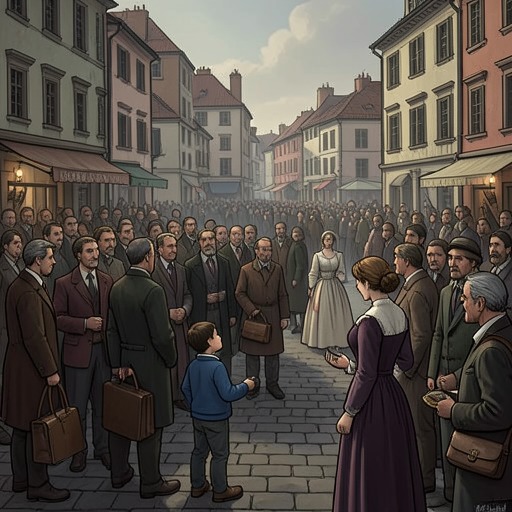
Her mother tried to keep the case relevant in the news, but media attention dwindled. The narrative links that retreat to Olivia’s home in a trailer park: reporters did not stay long, and their viewers were assumed to have little interest in the people who lived there. The case’s disappearance from public view thus compounds the family’s uncertainty: Olivia is still missing, but the story of her absence has also been pushed aside.
A Shadow Over Charlie’s Search
Olivia’s case returns to view when Charlie Hamilton disappears. At a press conference, a reporter asks whether the two disappearances are connected. The response is that investigators do not believe they are linked. That answer records the official position at that point, not a resolution of Olivia’s case or proof that a connection is impossible.
Megan Carter nevertheless considers whether the same person might have taken both girls. The possibility unsettles her, and she worries that Charlie’s case could suffer Olivia’s fate in the news: a brief period of attention followed by neglect. Olivia’s disappearance is therefore not simply background information. It supplies a precedent that makes the search for Charlie feel vulnerable to both an unknown perpetrator and the public’s limited attention.
Attention, Class, and Unequal Visibility
Megan contrasts Olivia’s family’s experience with the Hamiltons’ social position. Olivia lived in a trailer park, and Megan fears that the media’s lack of interest in that community helped the case fade. The Hamiltons, by contrast, are well known and well connected, and live in a more affluent neighborhood. Megan expects those advantages to bring Charlie’s disappearance greater police resources and keep her from being forgotten.
The contrast does not establish that investigators neglected Olivia’s case, nor does it confirm exactly how resources were allocated. It shows how Megan understands the difference in public visibility: a child’s prospects of remaining in the news may depend not only on the urgency of her disappearance but also on her family’s class and connections. Susan Cartwright invokes Olivia when urging Kathy Hamilton to accept help, reminding her that Charlie is not the only girl recently abducted from town and that Olivia is still missing after eight months. Olivia’s unresolved absence becomes both a warning about how long a case can remain open and an indictment of how quickly public concern can recede.