Police Search the Woods and Stream Behind the Party Site
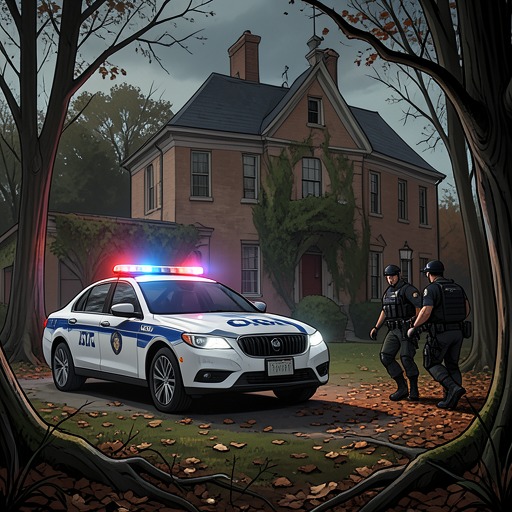
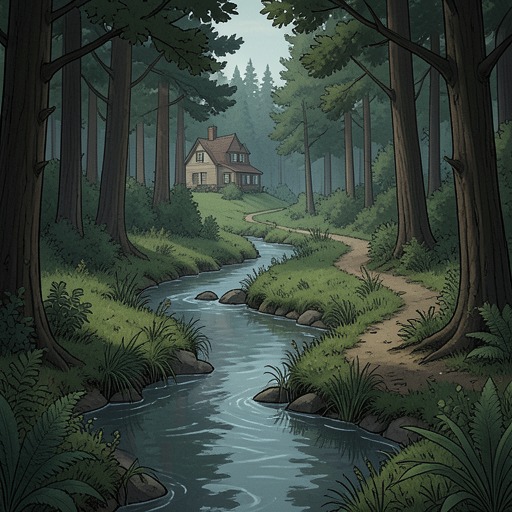
The Birthday PartyThe search of the woods and stream behind the party site is an early attempt to locate Charlie after she vanishes from a crowded birthday party. Led by Chase Cooper, it follows two competing possibilities: that Charlie wandered away and may have fallen into the creek, or that someone used the woods to take her unseen. The search finds no immediate trace of her, and its urgency is sharpened by the possibility that the same terrain could conceal either a lost child or evidence of a crime.
Background and Search Rationale
Chase organizes a thorough search of the woods behind the home of Kathy Hamilton’s brother-in-law. Police had sent dogs into the area briefly the previous night, but they found nothing. The new search therefore revisits a plausible location without treating the earlier failure as conclusive. To Kathy, a child lost in the woods would be preferable to the alternative that Charlie had been taken, yet she doubts Charlie would have wandered away when a pony was available to play with. The uncertainty does not comfort her: the possibility that Charlie is hungry and frightened competes with the thought that she may have been abducted.
The party’s geography gives the woodland particular importance. Scott Bowers’s yard backs onto it without a security fence, unlike the yards of his nearest neighbors. A person could hide among the trees, and the party had been planned months in advance and was known around town. Chase considers whether an abductor could have used that cover to leave the property without drawing attention. The search is thus not only a response to the possibility of accidental wandering; it tests whether the woods offered a concealed route from a highly visible gathering.
Last Seen and Competing Possibilities
Information from the pony rides places Charlie near the woods shortly before she disappeared. Elaine, the pony’s handler, recalled that Charlie had taken her third turn on the white pony, then returned to the back of the line for another ride. She never got that turn. When Elaine no longer saw her, she assumed Charlie had gone to get cotton candy. The detail gives investigators a last known activity and location, while also showing how a child could pass out of notice amid the party’s many distractions.
At the search site, Detective Brown reports that there is no sign of Charlie and begins to doubt she came that way. Chase, however, still asks how an abductor could have removed her from the party undetected if not through a route that avoided other guests. Brown offers another explanation: Charlie may have wandered off and fallen into the creek. A separate team is searching there, and Chase has divers on standby in case the search produces a reason to send them in. These are possibilities under investigation, not findings: the creek is a place to check, not evidence that Charlie fell into it.
The difference between the two theories shapes the search’s emotional and investigative stakes. Kathy hopes for an accidental disappearance because it leaves open the possibility that Charlie can be found alive, but does not believe that account. Chase’s work has to proceed without settling the question. The woods’ proximity to the party makes them both a likely place for a child to wander and a possible means for someone to hide an abduction.
Preserving the Scene
Mitch Hamilton and Scott want to join the search, but Chase stops them. He explains that their DNA could become mixed with anything investigators find, including Charlie’s clothes or a weapon. If a suspect were later charged, a defense team might use their DNA at the scene to cast doubt on the case. Keeping them out is therefore a measure to protect the integrity of the evidence, not an announcement that either man is guilty.
Mitch nevertheless takes the restriction as a sign that Chase thinks Charlie is dead. Chase tells him he does not think that: if Charlie had died, he believes investigators would probably have found something by then. He also describes a general pattern in which abductors act within the first few hours and then discard a body to reduce the risk of detection. That reasoning does not resolve Charlie’s fate; it explains why Chase distinguishes his present judgment from the need to preserve a clean search area.
The Wider Investigation and Its Limits
The woodland search unfolds alongside efforts to find other evidence. Chase has officers canvassing the neighborhood about what residents saw that afternoon and is checking whether anyone has home-surveillance footage. He finds no such footage: residents’ sense that the town is safe has left investigators without smart doorbells or cameras to consult. The absence of recordings makes witness accounts and physical searches more important, but supplies no direct answer about Charlie’s route.
Later, a caller’s recollection of a piercing scream in the meat-market parking lot between approximately 1:45 and 2:15 draws Chase’s attention because Scott was at the market around 2:40. Separately, accounts from party guests who did not recognize Charlie help Chase infer that she was not at the gathering long enough to be noticed, narrowing the period of her disappearance. These leads belong to the broader investigation rather than proving what happened in the woods. The search’s immediate result remains inconclusive: the woods and creek have been examined as urgent possibilities, but neither has yet revealed Charlie’s whereabouts.