
Chance and the Stories People Invent
The Black-Eyed BlondeThis flow follows the tension between accidental events and the human urge to impose a coherent plot, as Marlowe learns that discovering connections does not give him control.
increasing Bearing strength in each event
 decreasing
Bearing strength in each eventdecreasingA Job That Opens Unexpectedly
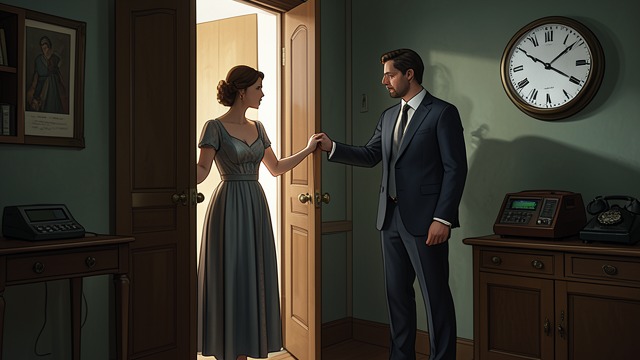
The Accidental Beginning
A Client’s Arrival
Clare Cavendish’s request to find Nico Peterson gives Philip Marlowe a defined job, but the apparent simplicity is deceptive from the start. Her delayed approach, knowledge of Nico’s presumed death, and carefully managed omissions suggest a larger design without showing Marlowe what it is.
Suspicion Without Mastery
Marlowe’s professional habit makes him search for a hidden pattern. Yet suspicion is not the same as knowledge: he senses that the case is wrong before he can say how. The novel begins by distinguishing an investigator’s instinct from actual control over what happens next.
The Expanding Circle
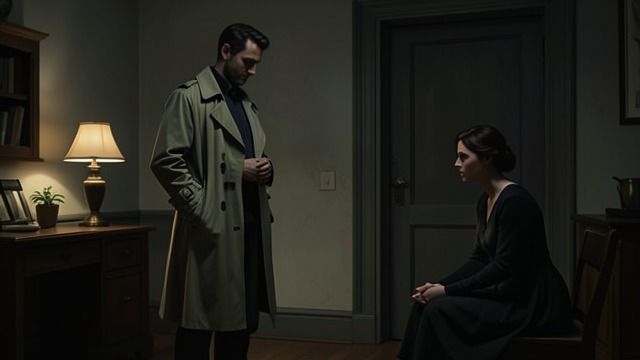
One Report Multiplies
A New Possibility
Clare’s claim that she saw Nico alive transforms an inquiry about a missing lover into a possible homicide investigation. Philip Marlowe tells Joe Green about the contradiction, then learns that the body had been identified and cremated.
Consequences Without a Plan
Marlowe tries to limit the consequences by telling the police that his client may have been mistaken. But the report has already set further questions in motion, and his later visit to the Peterson residence brings him into contact with armed men. One choice produces events whose scale exceeds the reason for which it was made.
A Clue from a Storybook
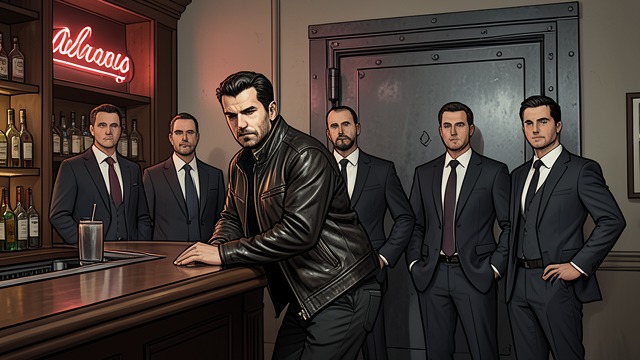
The Lost Boys Connection
A Metaphor Becomes a Lead
At the Cahuilla Club, a vulnerable employee calls Floyd Hanson Captain Hook and describes the workers as the Lost Boys. What first sounds like a delusion later gives Marlowe a practical way to reconsider who might have supplied the substitute corpse in Nico’s staged death.
Inference Rather Than Certainty
Marlowe connects the club’s hiring policy, Hanson’s access, and the unidentified body, then shares the theory with Bernie Ohls. The clue matters because it allows an imaginative association to become a testable line of inquiry. Still, the inference does not make Marlowe the author of the events he is trying to understand.
The Palimpsest Case
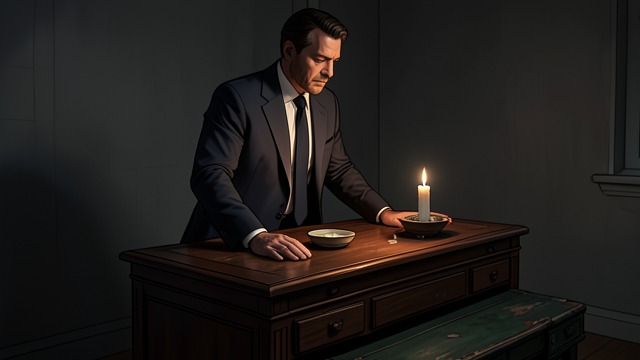
A Hidden Version Beneath
The Limits of the Visible Record
Marlowe thinks of a palimpsest: a surface on which an earlier text has been erased but not fully removed. The metaphor gives shape to his sense that the case’s visible events conceal another sequence—Nico’s staged death, the suitcase, the divided loyalties, and Clare’s unexplained purpose.
Pattern and Projection
The detective knows that missing facts matter, but he also recognizes the danger of forcing disconnected events into a neat plot. His reasoning can uncover relationships, yet it can also turn coincidence into apparent design. The metaphor therefore describes both his investigative method and its limit: a hidden story may exist, but it is not necessarily the story he first imagines.
The Cost of a Coherent Ending
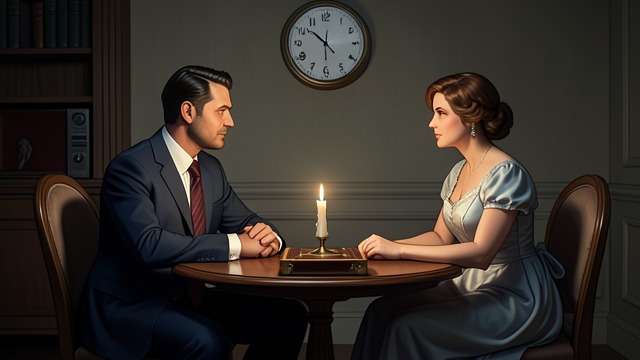
A Story Chosen, Not Proven
The Revealed Arrangement
Marlowe discovers that Terry Lennox used Clare’s commission to bring him onto Nico Peterson’s trail, hoping to find the heroin shipment. This explanation links the investigation to Terry’s debts and Mendy Menendez, but it does not make Marlowe’s relationship with Clare or his memories of Terry simple.
A Pascalian Choice
Marlowe decides to believe that Clare came to him and shared his bed by her own choice, even though he cannot prove that she was not acting for Terry. His decision is not a solved fact but a wager about how to live with uncertainty. By the close, the detective accepts that some meanings must be chosen rather than established, and that a coherent ending may be an act of emotional survival.
At the opening of the case
After Marlowe hears of the San Francisco sighting
After Marlowe escapes Wilberforce Canning’s custody
During Marlowe’s solitary reflection after the club violence
In the final reflections after Terry Lennox’s death
