Everett Edwards III
The Black-Eyed BlondeEverett Edwards III is Clare Cavendish’s brother, a privileged but troubled young man whose heroin addiction shadows his family life and culminates in the death of Terry Lennox. First encountered as an apparently carefree, faintly insolent figure at Langrishe Lodge, he later appears in acute medical distress and, near the end of the story, holding a pistol. His trajectory turns on the contrast between the vulnerability his family has tried to shelter and the violence for which he is ultimately responsible.
Identity and First Appearance
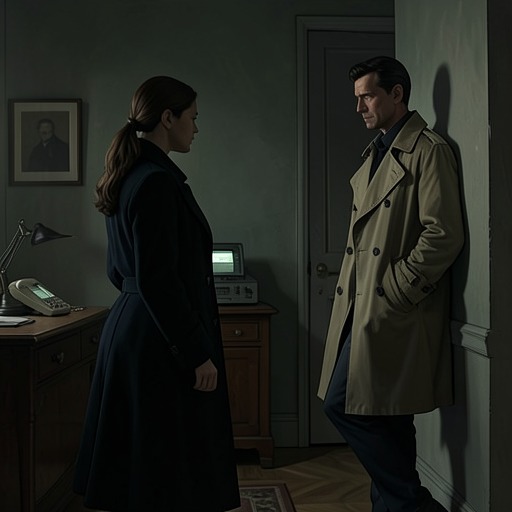
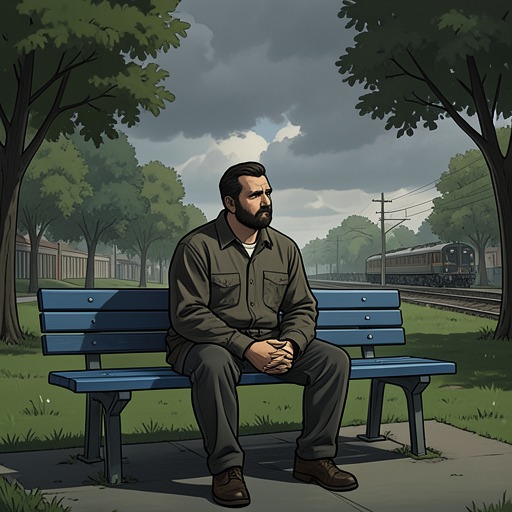
At Langrishe Lodge, Everett is introduced crossing the lawn with a golf club, knocking the heads off daisies. He wears conspicuously smart clothes and shoes; his dark hair falls over his forehead, and he repeatedly flicks it out of his eyes with a nervous hand. His manner seems languid, and his slender, unsteady-looking walk initially makes him appear younger than he is. Philip Marlowe guesses that he is in his late twenties. The resemblance to Clare Cavendish is immediate: Everett has her almond-shaped black eyes.
His first exchange with Marlowe establishes a familiar mixture of hauteur and playfulness. Taking Marlowe for a chauffeur, he greets him with a faint sneer; when asked who he is, he identifies himself formally as Everett Edwards, the Third. The imposing name briefly gives way to self-mockery: he accepts that it is a foolish name and grins. Clare calls him Rett, without the h, and connects the nickname to Rhett Butler, while noting how little Everett resembles Clark Gable. To Marlowe, however, the young man’s sulky expression suggests someone spoiled and bored. Everett points him toward the conservatory to find Clare, then jokes that an insurance salesman would be wasting his time. His teasing does not erase the impression of a sheltered family member accustomed to treating an unfamiliar visitor as an amusement.
Family and Early Connections
Everett’s relationship with Clare includes a remembered childhood intimacy that contrasts with the crises of their adult lives. At the beach, Clare recalls bringing him there when he was little; they spent whole afternoons paddling in the surf and building sand castles. In the present, she still acts as his caretaker when she discovers him incapacitated in the house. That history gives their later scenes a double aspect: she is not simply protecting a dependent brother, but responding to someone she once watched and entertained as a child.
Everett also connects Clare to Nico Peterson. When Marlowe asks where Everett gets drugs, Clare says Nico used to supply him occasionally and that Everett introduced the two of them. The detail places Everett inside the relationships surrounding the investigation into Nico’s disappearance, but it also reveals that Clare’s acquaintance with Nico began through her brother rather than through the investigation itself. Everett’s drug use thus touches both the family’s private life and the case Marlowe has been hired to pursue.
Addiction and Medical Crisis
Everett’s dependence becomes impossible to dismiss when Clare finds him unconscious after he has wandered through the house and collapsed on the stairs. She brings him to her own bedroom and calls Marlowe. He is unresponsive, and marks on his arm indicate a history of injections rather than a single isolated episode. Clare says that she has never seen him in such a bad state before, though she knows he has taken something. She has thrown away the needle and has not called a doctor because she is afraid to do so.
Dr. Loring examines Everett and identifies heroin as the likely cause. Everett’s heart and breathing rates are dangerously low, and the doctor says he had been close to death. He administers adrenaline and expects Everett to regain consciousness, but warns Clare that continuing the habit is likely to kill him sooner rather than later. In Dr. Loring’s assessment, Everett is particularly vulnerable and should be taken to a clinic; without further help, Clare risks losing him. The scene makes the danger concrete while showing how secrecy delays medical care: Clare summons Marlowe but hesitates to contact a physician, and Everett’s condition is discovered within the family home rather than through formal treatment.
The episode also complicates the first impression of Everett as merely a bored, spoiled young man. His addiction is not new: some of the injection marks are old, and Clare says Nico had supplied him on earlier occasions. Yet the family’s protective habits have not made him safe. Marlowe sees a young man his mother has cosseted, but the crisis exposes the limit of that shelter. The medical warning that Everett may die does not resolve his addiction; it establishes a danger that remains present when he reappears later.
Confrontation with Terry Lennox
In the final confrontation, Everett is conscious but still appears unwell. He enters in pajamas, a silk dressing gown embroidered with dragons, and penny loafers, carrying a small pistol with a pearl handle. Marlowe is present, and Everett recognizes him as the detective who had once come looking for Clare. His amused response to the mismatch between a detective and a gun turns quickly into a threat: he makes clear that someone may be hurt. Marlowe tries to keep him talking and is careful not to treat the weapon as harmless.
Everett then confronts Terry Lennox over the beginning of his drug use. He accuses Terry of introducing him to drugs when they knew one another in Acapulco. Terry does not accept the charge in the same terms; he recalls Everett as a nervous boy and presents the drugs as something he had offered casually, while expressing regret that he may have been wrong. The exchange leaves the origin of Everett’s addiction framed by opposing accounts: Everett identifies Terry as the person who started him, while Terry minimizes his own role. Everett’s hand and pistol tremble as he speaks, making the confrontation perilous even before anyone moves toward violence.
Terry abruptly lunges for a glass ashtray, apparently intending to throw it at Everett. Everett steps forward, points the pistol, and shoots Terry. Terry dies, and Marlowe reaches Everett before he can fire again, taking the weapon from him. Everett becomes limp and stands staring at Terry; the shift from threat to collapse echoes the vulnerability already visible during his overdose, but now follows an act with irreversible consequences. Clare enters and goes to Terry, and her grief makes plain to Marlowe how deeply she had loved him.
Arrest and Narrative Significance
After the shooting, Everett is handcuffed and led away in his pajamas and loafers. His eyes are red from crying, and he looks at no one. The account does not establish the legal outcome of the case. Marlowe imagines that Everett may face years in San Quentin, while also wondering whether his mother could obtain a powerful lawyer and find a legal loophole. That possibility is speculation, not a reported resolution, but it reflects the insulation associated with the family’s wealth and status.
Everett’s final appearance also brings the family’s protective world into view from the outside. After her children have been taken away, Dorothea Langrishe enters and cannot understand the scene around her. The mother who had sheltered her son is left confused as both children are removed from the house and Terry lies dead. Everett’s story therefore links private dependence to public consequence: the addiction once hidden within the family becomes part of a confrontation that ends in arrest and death. He is neither simply a helpless patient nor merely a threatening gunman. The novel presents both conditions in sequence, without allowing the medical crisis to cancel his agency or the shooting to erase the vulnerability that preceded it.